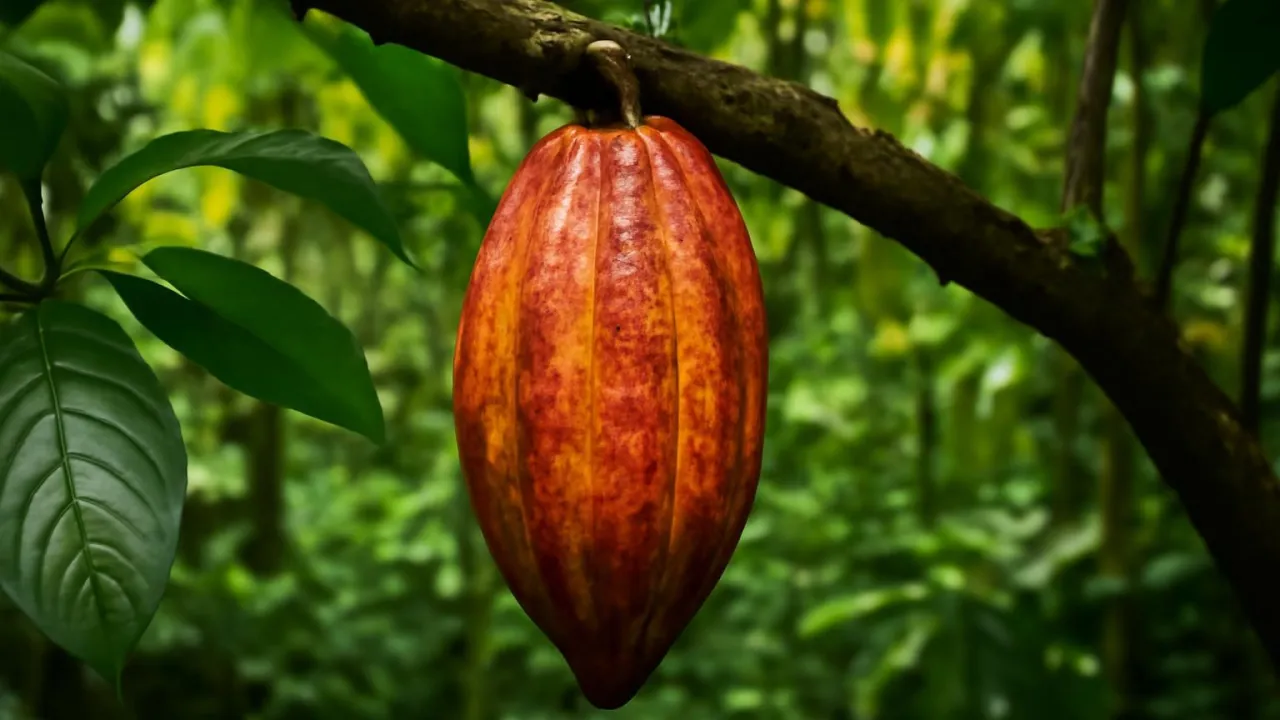
Cacao pods grow directly from the tree trunk, not just the branches!
✨ Word Sparks (Grade 2 Glossary)
Tap 🔊 to hear
ferment
A process where food changes by tiny living things
harvest
To pick plants or fruits when they are ready
roast
To cook food with heat to change its taste
🪝
Have you ever wondered where chocolate really comes from?
1
Cacao Pods Grow on Trees
Cacao pods grow on trees in warm, rainy places. The pods are thick and colorful, often red or yellow. They hang from the trunk and branches. Farmers pick the pods when they are ripe.
2
Seeds Inside the Pod
Inside each pod are many soft seeds covered with white pulp. The seeds taste bitter and need to be processed. The white pulp is sweet and helps the seeds . This is the first step to making chocolate.
3
From Seeds to Chocolate
After harvesting, farmers dry and the seeds to bring out flavors. The roasted seeds are ground into cocoa mass. This mass is used to make chocolate bars and candies. It takes many pods to make one chocolate bar.
Cacao pods grow through the trunk in a rare way called cauliflory!
✨ Word Sparks (Grade 3 Glossary)
Tap 🔊 to hear
cauliflory
When flowers or fruits grow on tree trunks
fermentation
A natural change by tiny microbes on food
agroforestry
Growing crops and trees together for nature
🪝
Did you know cacao pods hide the secret to making chocolate?
1
Where Cacao Pods Grow
Cacao pods grow in tropical rainforests, mainly in Central and South America. They develop directly on tree trunks and branches, a unique growth called . This helps animals reach the pods easily. The pods can be yellow, orange, or red, which helps them stand out in the green forest.
2
Inside the Pod: Seeds and Pulp
Inside each cacao pod are about 20 to 50 seeds surrounded by sweet white pulp. The pulp attracts animals that help spread the seeds. The seeds themselves are bitter and need to develop flavor. Fermentation is a natural process where microbes break down the pulp and change the seeds’ taste.
3
How Seeds Become Chocolate
After , seeds are dried and roasted to unlock chocolate flavors. Roasting changes the seeds’ chemical makeup and reduces bitterness. Then, the roasted seeds are ground into cocoa mass, which is the base for chocolate products. This process is an important adaptation for humans to enjoy the cacao fruit.
4
Cacao’s Role in Nature
Cacao trees are part of rainforest food webs, providing food for animals like bats and insects. The tree’s large leaves help shade the forest floor, protecting smaller plants. Farmers grow cacao in systems that keep the forest healthy. This shows how cacao pods support both nature and people.
Cacao trees rely on bats and insects for pollination and seed spreading.
✨ Word Sparks (Grade 4 Glossary)
Tap 🔊 to hear
pollination
When pollen moves to help plants make seeds
biodiversity
Many different kinds of plants and animals
deforestation
Cutting down many trees in forests
🪝
How does the cacao pod’s unique growth help rainforest life?
1
Unique Growth and Habitat
Cacao pods grow directly from the trunk and large branches, a rare trait called cauliflory that allows easier access for animals like bats and monkeys. These animals help disperse seeds by eating the sweet pulp, which benefits the rainforest ecosystem. Cacao trees thrive in warm, humid tropical rainforests of Central and South America, where they rely on shade and rich soil to grow well.
2
Life Cycle and Seed Dispersal
The cacao pod matures in about five to six months after flowering, containing 20 to 50 seeds inside a sweet, white pulp. Animals attracted to the pulp eat the fruit and carry seeds away from the parent tree, aiding seed dispersal. This natural process helps cacao trees spread through the forest and maintain genetic diversity. Farmers harvest ripe pods carefully to avoid damaging the tree.
3
Ecosystem Role and Human Impact
Cacao trees contribute to rainforest food webs by providing food for various animals, including insects and bats, which also pollinate cacao flowers. Agroforestry practices combine cacao cultivation with other trees to protect and soil health. However, and climate change threaten cacao habitats, impacting both wild trees and farmers’ livelihoods. Sustainable farming helps protect cacao ecosystems and supports local communities.
4
Physical Features and Adaptations
The thick, colorful pods protect seeds from pests and harsh weather, while the sweet pulp attracts animals for seed dispersal. The tree’s large leaves create shade that reduces soil evaporation and supports undergrowth plants. Cacao’s adaptation to grow pods on trunks helps reduce damage from strong winds and improves efficiency by making flowers more accessible to pollinators.
Cacao pods grow directly from tree trunks, a rare trait called cauliflory unique among fruit trees.
✨ Word Sparks (Grade 5 Glossary)
Tap 🔊 to hear
cauliflory
Fruit grows directly on tree trunks or big branches
fermentation
Microbes change food to create new flavors and textures
agroforestry
Growing crops and trees together to help nature and farmers
🪝
What scientific secrets make cacao pods vital for chocolate and ecosystems?
1
Taxonomy and Botanical Context
The cacao pod belongs to Theobroma cacao, a small tropical tree species in the Malvaceae family. Botanically, the cacao pod is a large fruit called a berry containing numerous seeds embedded in sweet pulp. Unlike many fruits, cacao pods grow directly from the trunk and large branches, a rare trait called that facilitates pollination and seed dispersal by animals.
2
Physiological Mechanics of Growth and Seed Development
Cacao pods develop over five to six months, reaching lengths of 15 to 30 centimeters and weighing up to 500 grams. The thick, leathery pod wall protects seeds from fungal infections and predation. Inside, seeds undergo , a biochemical process involving microbes that convert pulp sugars into acids, developing chocolate’s characteristic flavor precursors essential for roasting.
3
Conservation and Agricultural History
Historically, cacao cultivation began in Central America over 3,000 years ago, valued both as currency and food by ancient civilizations like the Maya and Aztec. Today, cacao farming supports millions globally but faces threats from deforestation, pests, and climate change. Sustainable practices aim to preserve biodiversity while maintaining cacao yields, balancing economic and environmental needs.
4
Ecological Role and Human Impact
Cacao trees contribute to tropical forest ecosystems by providing nectar for specialized pollinators such as tiny midges, and fruits for mammals and birds that disperse seeds. However, expanding monoculture plantations can reduce biodiversity and soil quality. Integrating cacao with native trees in systems enhances ecosystem services, promotes soil conservation, and supports local livelihoods.
5
Quantitative Comparisons and Interesting Metrics
Each cacao pod contains 20 to 50 seeds, with an average weight of about 400 to 500 grams per pod. Cacao trees grow best at temperatures between 65 and 90 degrees Fahrenheit (18 to 32 degrees Celsius) and require annual rainfall of 40 to 100 inches (1,000 to 2,500 millimeters). The process lasts three to seven days, crucial for flavor development before roasting at around 250 degrees Fahrenheit (120 degrees Celsius).