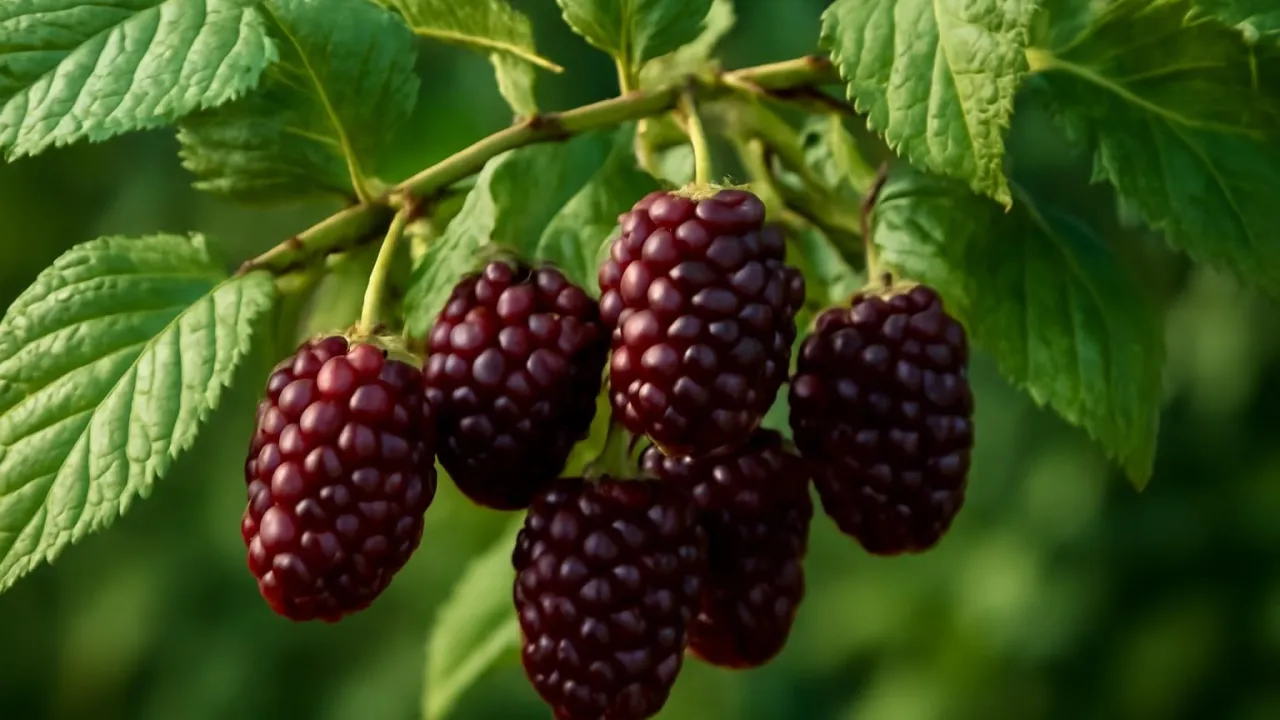
Boysenberries were created by crossing three different berries into one!
✨ Word Sparks (Grade 2 Glossary)
Tap 🔊 to hear
hybrid
A mix of two or more plants or animals
vine
A plant that grows long and climbs
ripe
Ready to eat and sweet
🪝
Did you know boysenberries are a special mix of three berries?
1
What Boysenberries Look Like
Boysenberries are red and purple fruits that grow on thorny . They look shiny and juicy when . The berries are soft and sweet with a little sour taste.
2
Where Boysenberries Grow
Boysenberries grow best in warm places with full sun and good water. Gardeners plant them in soil that drains well to keep roots healthy. They grow mainly in California and some parts of North America.
3
Why Boysenberries Are Special
Boysenberries are a made from blackberries, raspberries, and loganberries. Their flavor is a tasty mix of these three berries. People use them in jams, pies, and smoothies because they taste so good.
Boysenberries are a clever mix of three berries, giving them a unique sweet and tart flavor!
✨ Word Sparks (Grade 3 Glossary)
Tap 🔊 to hear
hybrid
A mix of two or more plants or animals
pollination
When bees help flowers make fruit
camouflage
Colors that help hide or show something
🪝
Have you ever wondered how boysenberries get their unique flavor?
1
What Are Boysenberries?
Boysenberries are a fruit made by crossing several berry types. They have a deep red to purple color and grow on thorny vines. Their juicy flesh is both sweet and tart, attracting many animals. This flavor helps the plant spread seeds through animals eating the berries.
2
How Boysenberries Grow
Boysenberries grow best in warm climates with full sun and moist soil. Their thorny vines climb over fences and bushes to reach sunlight. The plant’s roots absorb nutrients and water needed for healthy growth. This adaptation helps boysenberries survive in garden ecosystems.
3
Boysenberry’s Role in Nature
Boysenberries provide food for many animals like birds and insects, supporting the food web. Their bright color acts as among leaves but also signals ripeness to predators. by bees helps the flowers turn into fruit, ensuring new plants grow. This interaction shows how boysenberries fit into their ecosystem.
4
Why They Taste So Good
The boysenberry’s unique flavor comes from combining blackberry, raspberry, and loganberry traits. This blend creates a sweet and tart taste that people enjoy in desserts and jams. The berry’s soft texture helps spread seeds when animals eat them. These adaptations help the boysenberry survive and reproduce.
1. What helps boysenberries grow tall and reach sunlight?
2. How do bees help boysenberries?
🤯 Mind-Blowing Fact • Grade 4
Boysenberries support ecosystems and economies by feeding animals and people around the world!
✨ Word Sparks (Grade 4 Glossary)
Tap 🔊 to hear
hybridization
Mixing different plants to make a new one
biodiversity
Many different kinds of plants and animals
pollination
Bees help flowers make fruit and seeds
🪝
Did you know boysenberries play an important role in their ecosystems and human history?
1
Boysenberry Origins and Growth
Boysenberries originated in North America through of three berry species, combining traits for flavor and size. They thrive in warm climates with full sun exposure and well-drained soil, requiring regular watering for optimal growth. Their thorny vines climb over other plants, allowing them to capture sunlight efficiently. This growth habit also helps protect the berries from some herbivores.
2
Ecological Role and Pollination
Boysenberries support local ecosystems by providing food for birds, insects, and mammals, which helps maintain . by bees and other insects is crucial for fruit development, ensuring the plant’s reproduction. The bright color of ripe boysenberries signals ripeness to animals, aiding seed dispersal. This mutual relationship benefits both the plant and the animals in the food web.
3
Human Uses and Agricultural Impact
Humans cultivate boysenberries for their delicious flavor, using them in jams, pies, and juices worldwide. Their cultivation supports local agriculture but requires careful pest management to protect crops. Sustainable farming practices help preserve soil health and reduce chemical use. Boysenberries also contribute economically to berry farming regions, especially in California.
4
Geographic Distribution and Adaptations
Boysenberries are mainly grown in California but can be cultivated in similar temperate regions worldwide. Their thorny vines and rapid growth help them adapt to different environments, but they prefer moderate temperatures. These adaptations allow boysenberries to survive seasonal changes and compete with other plants. Understanding these traits helps farmers improve berry production.
Boysenberries combine genetics, ecology, and agriculture to create a delicious, sustainable fruit!
✨ Word Sparks (Grade 5 Glossary)
Tap 🔊 to hear
taxonomy
How scientists classify living things
perennial
A plant that lives for many years
mutualistic
A helpful relationship between two species
🪝
What makes the boysenberry a fascinating fruit in science, agriculture, and ecology?
1
Scientific Classification and Hybrid Origins
The boysenberry (Rubus ursinus × Rubus idaeus) is a hybrid between the North American blackberry and the European raspberry. This crossbreeding was first developed in the early 20th century by Rudolph Boysen. The hybrid inherits physical and flavor traits from its parent species, resulting in a unique berry with complex taste and texture. Understanding its helps scientists study berry genetics and breeding.
2
Physiological Mechanics of Growth and Fruit Development
Boysenberries grow on thorny, vines that can reach several feet in length, climbing to access sunlight. Their roots absorb water and nutrients efficiently from well-drained soils, supporting vigorous growth. The fruit develops after flowers are pollinated by bees, with seeds embedded in the juicy drupelets. These physiological processes ensure successful reproduction and fruit quality.
3
Conservation, Cultivation, and Agricultural History
Boysenberries were nearly lost before being revived by farmers in California, where they became an important crop. Modern cultivation requires managing pests, diseases, and soil health to maintain yields. Sustainable practices like crop rotation and organic fertilizers promote long-term farm viability. Conservation efforts also focus on preserving wild relatives to maintain genetic diversity.
4
Ecological Importance and Food Web Contributions
Boysenberries provide vital food resources for birds, mammals, and insects, linking various trophic levels in ecosystems. Their bright coloration attracts animals that disperse seeds, facilitating plant propagation. Pollinators such as bees are essential for fruit set, demonstrating relationships. These roles highlight the boysenberry’s contribution to biodiversity and ecosystem stability.
5
Quantitative Comparisons and Agricultural Metrics
Boysenberries typically measure about one inch (2.5 cm) in diameter and weigh approximately 5 grams each. They grow best in temperatures ranging from 60 to 85 degrees Fahrenheit (15 to 29 degrees Celsius). Commercial farms can yield up to 10,000 pounds (4,500 kilograms) per acre annually under optimal conditions. These metrics guide farmers in maximizing production and quality.