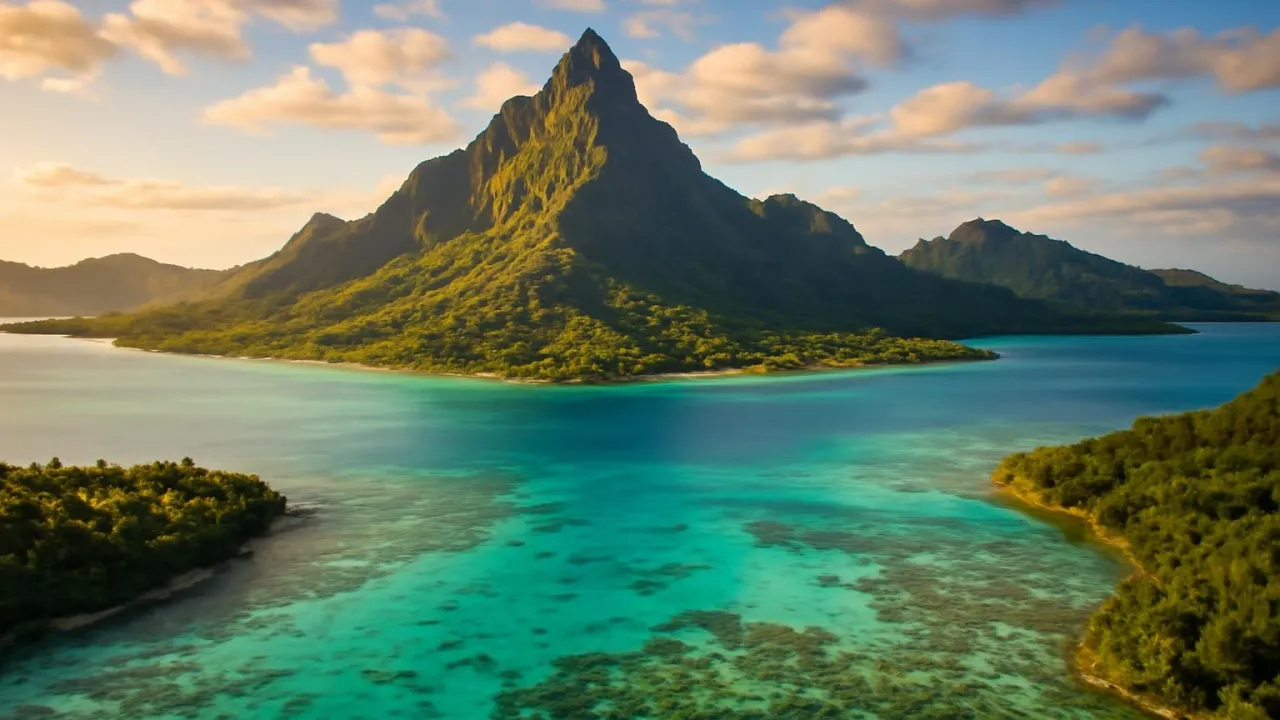
Mount Otemanu is made from an ancient volcano that is now quiet.
✨ Word Sparks (Grade 2 Glossary)
Tap 🔊 to hear
volcano
A mountain that once had hot lava
snorkel
Swim with a tube to see underwater
reef
A place where coral grows in water
🪝
Can you imagine swimming in water as blue as the sky?
1
A Mountain in the Middle
Mount Otemanu rises high in the center of Bora Bora. The mountain is covered with green plants and tall trees. People see it from almost anywhere on the island.
2
A Lagoon Full of Life
The lagoon circles the island like a blue ring. Colorful fish and coral live in the warm water. Visitors to see the bright sea creatures.
3
Fun on the Island
People ride boats and swim in the lagoon every day. Soft sand beaches are perfect for playing or relaxing. Many families come to enjoy the sun and views.
Bora Bora’s lagoon is so clear, you can see fish swimming from a boat!
✨ Word Sparks (Grade 3 Glossary)
Tap 🔊 to hear
erosion
Wind and water slowly wear away rock
extinct
No longer active or alive
reef
A ridge of coral under the sea
🪝
What secrets do you think a giant mountain and a sparkling lagoon could hold?
1
A Volcanic Island’s Story
Mount Otemanu is the highest peak on Bora Bora, formed by an ancient volcano. Over millions of years, shaped the mountain and created the lagoon. The volcano is now , but its rocky spire towers above the island. Today, green plants and trees cover the steep slopes.
2
A Lagoon Like a Blue Necklace
Bora Bora’s lagoon is surrounded by a coral , making the water calm and clear. The coral creates a safe home for many colorful fish and sea creatures. People love to swim, snorkel, and watch the vibrant underwater world. The lagoon’s bright blue color comes from the white sand and sunlight.
3
Living and Visiting Here
People live on the island and welcome visitors from around the world. Boats and canoes glide across the lagoon, carrying people to small motu, or islets. Tourists enjoy the beaches, explore the coral gardens, and learn about Polynesian culture. The island is famous for its beauty and peaceful setting.
4
Nature’s Wonders
Mount Otemanu and the lagoon are home to many birds and plants. The coral protects the island from big ocean waves and storms. Scientists study the lagoon’s ecosystem to learn about ocean life and conservation. Bora Bora’s natural wonders inspire artists, photographers, and travelers.
Bora Bora’s lagoon is home to more than 500 species of fish and marine animals.
✨ Word Sparks (Grade 4 Glossary)
Tap 🔊 to hear
ecosystem
A community of living things and their home
conservation
Protecting nature and its creatures
motu
A small island in a lagoon
🪝
If you sailed to a faraway island, what would you discover in a lagoon surrounded by coral and a towering mountain?
1
How a Volcano Made an Island
Millions of years ago, a volcano erupted from the ocean floor, slowly building up the land that would become Bora Bora. Over time, the volcano became extinct, and erosion from wind and rain carved Mount Otemanu’s sharp peak. The volcanic rock still forms the heart of the island, while lush plants now cover its slopes. Today, the mountain’s dramatic shape is the island’s most famous landmark.
2
The Lagoon’s Secret World
Encircling the island, Bora Bora’s lagoon is protected by a living coral reef, which acts as a natural barrier against strong ocean waves. The reef’s structure creates calm, shallow waters where countless fish, rays, and even small sharks thrive. Sunlight reflects off the white sand at the bottom, giving the lagoon its famous turquoise color. Snorkelers and divers from around the world visit to explore the vibrant underwater .
3
People and Polynesian Traditions
Bora Bora has been home to Polynesian people for centuries, and their culture is still celebrated today. Locals build houses on stilts over the lagoon and use boats to travel between the main island and smaller . Traditional music and dance are important parts of island life, especially during festivals. Visitors come to experience the warm hospitality and learn about ancient legends of the mountain and sea.
4
Protecting a Natural Wonder
The coral reef and lagoon are delicate habitats, so scientists and locals work together to protect them. programs teach people how to keep the water clean and help coral grow. Tourists are encouraged to respect the environment and avoid harming sea life. By caring for Bora Bora’s natural treasures, everyone helps keep this island paradise beautiful for future generations.
2. Why do people work to protect Bora Bora’s lagoon?
🤯 Mind-Blowing Fact • Grade 5
Mount Otemanu is the eroded core of an extinct volcano that once towered even higher above the South Pacific.
✨ Word Sparks (Grade 5 Glossary)
Tap 🔊 to hear
calcium carbonate
A mineral that builds coral reefs
biodiversity
The variety of living things in one place
sustainable
Using resources without harming the future
🪝
What if you could trace the story of an ancient volcano by exploring its towering peak and the glittering lagoon below?
1
A Volcanic Birth and Geological Marvel
Bora Bora’s dramatic landscape began forming nearly three million years ago, when volcanic activity thrust molten rock upward from the seafloor. Over time, the main volcano became extinct, leaving behind Mount Otemanu as its jagged central remnant. The process of erosion, driven by wind, rain, and tropical storms, carved the peak’s sharp ridges and valleys. Today, Mount Otemanu rises 2,385 feet (727 meters) above sea level, dominating the island’s skyline and providing a living record of the island’s fiery origins.
2
The Lagoon’s Coral Fortress
Surrounding the main island, Bora Bora’s lagoon spans approximately 12 square miles (30 square kilometers) and is encircled by a nearly continuous coral reef. This reef acts as a natural breakwater, absorbing the energy of powerful Pacific waves and creating a tranquil, shallow lagoon. The coral itself is built by countless tiny polyps that secrete , forming intricate structures over centuries. The interplay of sunlight, white sand, and clear water produces the lagoon’s iconic shades of turquoise and blue.
3
A Biodiverse Underwater Ecosystem
Bora Bora’s lagoon and reef system support an astonishing variety of marine life, including over 500 species of fish, rays, sea turtles, and even harmless reef sharks. The coral gardens provide food and shelter for these creatures, making the lagoon a hotspot for . Scientists study the delicate balance of this ecosystem to understand how coral reefs respond to climate change, pollution, and human activity. Conservation efforts help protect these habitats, ensuring that future generations can experience their wonders.
4
Human Culture and Sustainable Tourism
For centuries, Polynesian people have lived on Bora Bora, developing traditions that respect the land and sea. Modern residents continue to practice canoe building, fishing, and storytelling, preserving their cultural heritage. Today, Bora Bora is a world-renowned travel destination, attracting visitors with its overwater bungalows, water sports, and vibrant festivals. tourism initiatives encourage guests to minimize their environmental impact while learning about island ecology and culture.
5
Protecting Paradise for the Future
The health of Bora Bora’s lagoon and reef is threatened by rising ocean temperatures, coral bleaching, and pollution from increased tourism. Local scientists and conservationists partner with international organizations to monitor reef health, restore damaged coral, and educate both residents and visitors. By supporting eco-friendly practices and respecting natural habitats, people can help safeguard Bora Bora’s unique beauty and for generations to come. The story of Mount Otemanu and its lagoon reminds us how nature, history, and human stewardship are deeply connected.