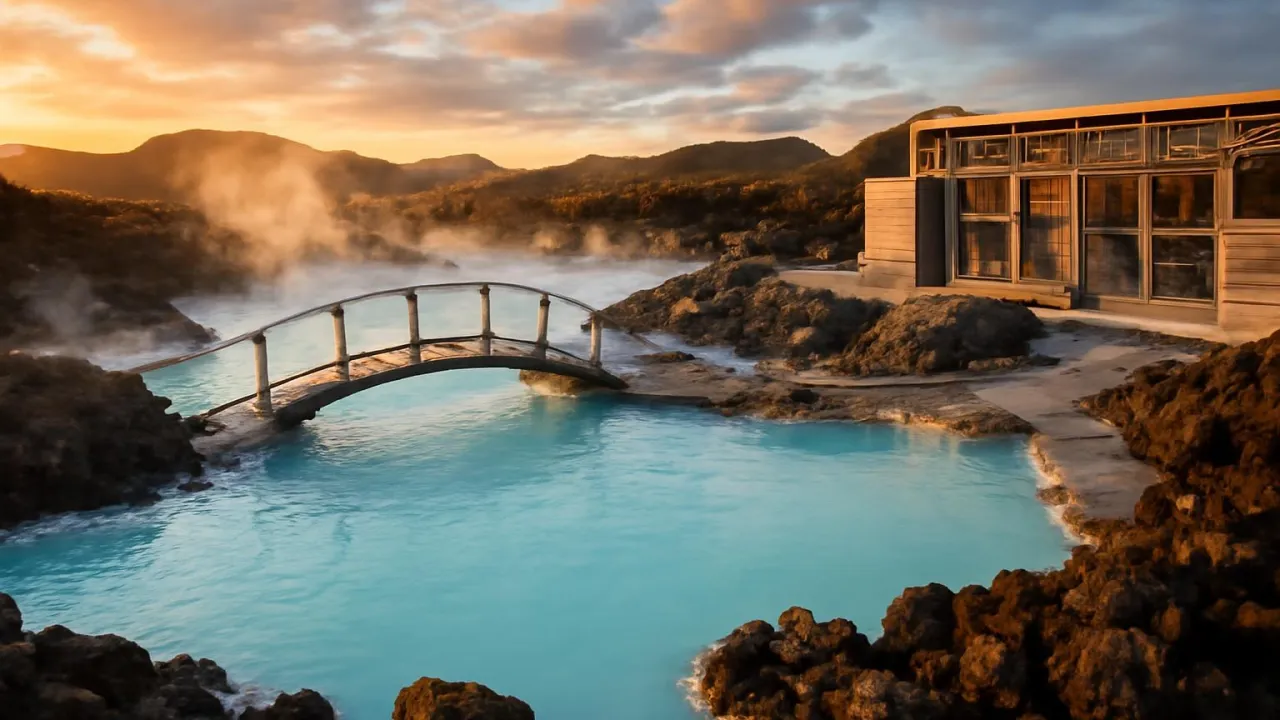
The Blue Lagoon was created by accident from a power plant's hot water!
✨ Word Sparks (Grade 2 Glossary)
Tap 🔊 to hear
volcano
A mountain that can erupt hot lava
mineral
Tiny rocks that help your body
relax
To rest and feel calm
🪝
Can you imagine swimming in a pool made by volcanoes?
1
A Pool in Iceland
The Blue Lagoon is a big, blue pool in Iceland. Steam rises all around, making it look magical. People visit to swim and in the warm water.
2
How It Stays Warm
Hot water comes from deep inside the Earth. The ground in Iceland is full of and hot rocks. This makes the water warm, even when it is cold outside.
3
Minerals Make It Special
The water has special that make it look milky blue. These minerals are good for your skin and make the lagoon famous. Visitors love to float and play in the lagoon.
2. Where does the Blue Lagoon's warm water come from?
🤯 Mind-Blowing Fact • Grade 3
The Blue Lagoon is so big it could fit 3 Olympic swimming pools inside!
✨ Word Sparks (Grade 3 Glossary)
Tap 🔊 to hear
geothermal
Heat energy from deep inside Earth
silica
A mineral that makes water look cloudy
lava field
A big area covered by cooled lava
🪝
What would it feel like to float in a steamy, blue lagoon surrounded by black lava rocks?
1
A Magical Place in Iceland
The Blue Lagoon sits among black in Iceland. Steam drifts above the bright, milky-blue water, making the air feel mysterious and warm. Visitors from all over the world come to swim and relax here. The lagoon looks like a giant outdoor bathtub in the middle of nature.
2
How Geothermal Energy Works
Hot water in the lagoon comes from deep underground, where the Earth’s heat is strongest. This process is called energy, and it happens because Iceland sits on a volcanic zone. Superheated water rises through cracks in the rocks and fills the lagoon with warmth. The water is always around 98–104°F, even in winter.
3
Minerals and Milky Blue Color
The lagoon’s water contains minerals like , which make it look cloudy and blue. Silica forms tiny particles that reflect sunlight, giving the lagoon its famous color. These minerals are also good for people’s skin and are used in spa treatments. The Blue Lagoon’s water is changed often to stay clean and fresh.
4
A Modern Wonder by Accident
The Blue Lagoon was not made by nature alone—it was created by accident in 1976. Hot water from a nearby power plant spilled into a and formed the lagoon. People soon discovered the water felt great and started to visit. Today, the Blue Lagoon is one of Iceland’s most popular landmarks.
2. How often is the Blue Lagoon’s water completely renewed?
🤯 Mind-Blowing Fact • Grade 4
The Blue Lagoon contains over 6 million liters of mineral-rich water at any time!
✨ Word Sparks (Grade 4 Glossary)
Tap 🔊 to hear
tectonic plates
Huge pieces of Earth's outer layer
reservoir
A place where water is stored
sustainable
Something that can last a long time
🪝
Have you ever wondered how a steamy blue lagoon can exist in the chilly lands of Iceland?
1
A Lagoon Born from Lava and Steam
The Blue Lagoon sits on the Reykjanes Peninsula, surrounded by ancient black lava fields and steaming vents. Steam rises from the lagoon’s surface, mixing with the crisp Icelandic air and creating a magical mist. The water’s milky blue color stands out against the dark volcanic rocks, making it look almost otherworldly. Every year, thousands of visitors come to experience its unique warmth and beauty.
2
Geothermal Energy: Nature’s Hidden Power
The lagoon’s warm water comes from deep beneath the Earth, where geothermal energy heats underground . Iceland sits atop the Mid-Atlantic Ridge, a place where meet and volcanic activity is common. Superheated water, rich in minerals, is pumped up from 6,500 feet underground by a nearby geothermal power plant. This water fills the lagoon and keeps it at a comfortable 98–104°F all year.
3
Minerals, Silica, and Skin Health
The Blue Lagoon’s water is famous for its high mineral content, especially silica, which gives it a cloudy blue color. Silica forms tiny particles that scatter sunlight, making the water look milky and bright. These minerals are believed to help with skin conditions, so many visitors cover themselves in white silica mud. The water is completely refreshed every 40 hours to keep it clean and healthy.
4
From Accidental Pool to World Landmark
The Blue Lagoon was formed in 1976 when hot water from the Svartsengi geothermal power plant flowed into a lava field. People soon noticed the water’s soothing effects and began to swim there. Over time, the site was developed into a world-famous spa and wellness center, with hotels, treatments, and research into geothermal science. Today, it is one of Iceland’s top attractions and a symbol of energy.
1. How does the Blue Lagoon stay clean and healthy for visitors?
2. Why is the Blue Lagoon important for science and health?
🤯 Mind-Blowing Fact • Grade 5
The Blue Lagoon’s geothermal water contains six times more silica than seawater, making it uniquely blue and soothing.
✨ Word Sparks (Grade 5 Glossary)
Tap 🔊 to hear
geothermal
Energy and heat from deep inside Earth
silica
A mineral that makes water look blue
sustainability
Using resources in a way that lasts
🪝
What scientific secrets lie beneath the steamy, mineral-rich waters of Iceland’s world-famous Blue Lagoon?
1
A Volcanic Spa in the Land of Fire and Ice
Imagine stepping into a vast, open-air pool surrounded by rugged black lava and swirling steam, where the water glows an ethereal blue against Iceland’s dramatic landscape. The Blue Lagoon, located on the Reykjanes Peninsula near Grindavík, is one of the world’s most iconic spas, attracting hundreds of thousands of visitors annually. Its unique setting is shaped by the Mid-Atlantic Ridge, where two tectonic plates slowly drift apart, fueling volcanic activity and geothermal phenomena. Despite Iceland’s cold climate, the lagoon’s waters remain invitingly warm, even when snow falls all around.
2
Geothermal Engineering and the Science of Heat
The Blue Lagoon owes its existence to advanced engineering and Iceland’s volcanic geology. The Svartsengi geothermal power plant, built in 1976, extracts superheated water—reaching temperatures of 464°F (240°C)—from 6,500 feet (2,000 meters) below ground. This water, rich in dissolved minerals, is used to generate electricity and heat for local communities before being released into the nearby lava field. As the mineral-laden water cools to 98–104°F (37–40°C), it collects in the lagoon, creating a perfect environment for bathing and scientific study.
3
Mineral Chemistry and the Lagoon’s Signature Blue Hue
The Blue Lagoon’s striking color results from a unique blend of minerals, primarily , along with sulfur and algae. Silica particles suspended in the water scatter visible light, especially blue wavelengths, which gives the lagoon its milky turquoise appearance. These minerals also form a natural barrier on the skin, which is why the lagoon is famous for its soothing and therapeutic properties. Scientific research conducted at the site has shown that bathing in the lagoon can benefit people with certain skin conditions, such as psoriasis.
4
Environmental Impact and Sustainable Innovation
The Blue Lagoon is a model of sustainable resource use, demonstrating how energy can be harnessed for both power generation and wellness tourism. The lagoon’s water is completely renewed every 40 hours, ensuring high standards of cleanliness and environmental safety. Facilities are designed to minimize ecological impact, using natural materials and recycling waste heat wherever possible. The site also supports ongoing research into geothermal science, mineral extraction, and the development of eco-friendly skincare products.
5
From Accidental Pool to Global Phenomenon
Originally formed by the accidental discharge of wastewater, the Blue Lagoon has evolved into a world-renowned destination and a symbol of Icelandic ingenuity. It now features luxurious spas, hotels, and research centers, drawing visitors from every continent. The lagoon’s story highlights the intersection of geology, engineering, and wellness, showing how a challenge—managing geothermal byproducts—became an opportunity for innovation and global cultural exchange. Today, the Blue Lagoon stands as a testament to the power of science, , and human curiosity.