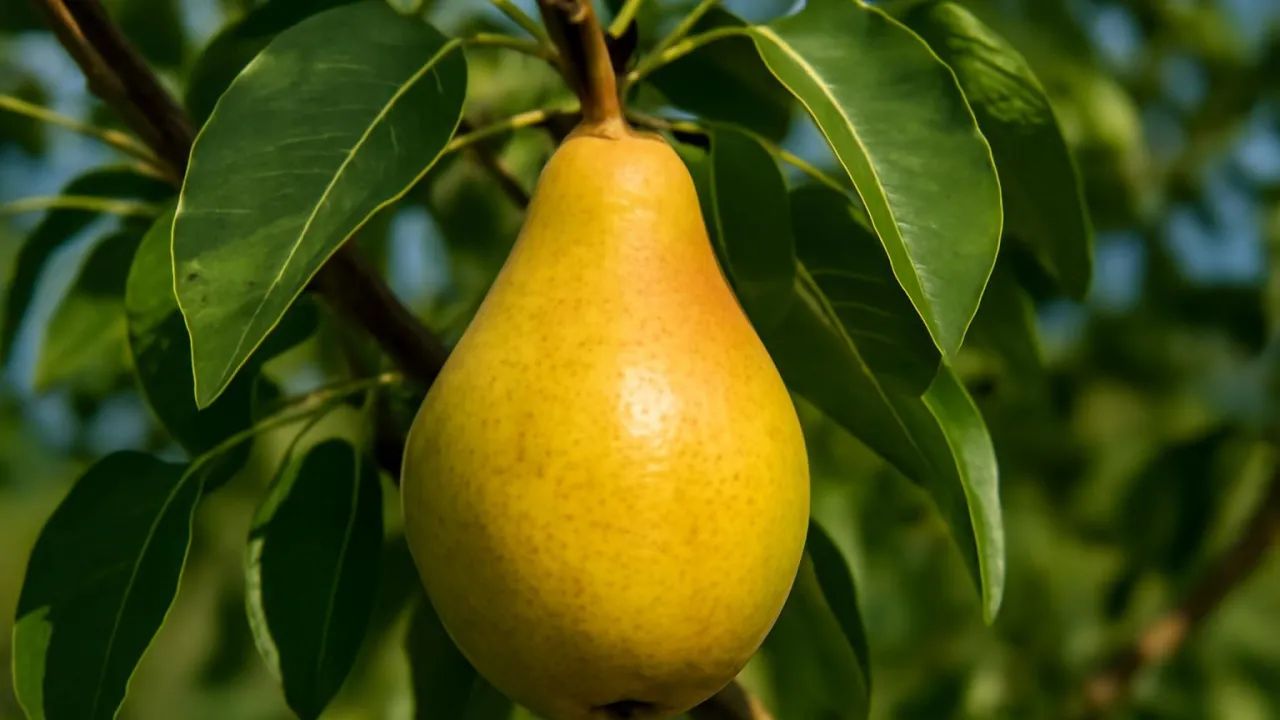
Bartlett pears rely on bees for pollination, which helps produce juicy fruit.
✨ Word Sparks (Grade 3 Glossary)
Tap 🔊 to hear
camouflage
Colors that help hide from animals
pollination
Bees help flowers make fruit
nutrients
Food plants get from soil
🪝
Did you know Bartlett pears use their shape to protect themselves from predators?
1
Bartlett Pear Appearance
Bartlett pears have a classic teardrop shape that helps them hang from branches easily. Their skin is smooth and changes from green to bright yellow when ripe. This color change signals animals that the fruit is ready to eat. The soft texture makes them juicy and sweet.
2
Growing in the Right Habitat
Bartlett pear trees grow best in temperate climates with warm summers and cold winters. They need full sun and enough water to absorb from the soil. The trees produce flowers in spring that attract pollinators like bees to help with fruit development.
3
Adaptations for Survival
The pear’s shape and color act as among leaves and branches to avoid some predators. Its sweetness attracts animals that help spread seeds when they eat the fruit. This mutual relationship benefits both the tree and animals in the ecosystem.
4
Life Cycle of a Bartlett Pear
The tree blooms with white flowers in spring, then small green pears grow during summer. As the fruit ripens, it softens and changes color. Finally, animals or humans pick the ripe pears for eating or seed dispersal.
Bartlett pears are one of the top pear varieties grown globally, vital for many farmers’ livelihoods.
✨ Word Sparks (Grade 4 Glossary)
Tap 🔊 to hear
symbiotic
Helping each other to live well
pollinators
Animals that help plants make fruit
cultivation
Growing plants carefully for food
🪝
How does the Bartlett pear tree help its environment and people?
1
Physical Traits and Growth
Bartlett pear trees grow up to 40 feet tall and produce smooth, yellow-green fruit. The fruit’s shape allows it to hang safely on branches, reducing damage from wind. Its thin skin ripens from green to bright yellow, signaling animals and humans it is ready to eat. These traits help the tree reproduce successfully and survive in changing weather conditions.
2
Ecosystem Roles and Relationships
Bartlett pears provide food for many animals, including birds and insects, which also help spread seeds. The trees support like bees that rely on their flowers for nectar. This relationship benefits both the tree and pollinators, maintaining a healthy ecosystem and promoting biodiversity.
3
Geographic Distribution and Cultivation
Originally from Europe, Bartlett pear trees now grow widely in North America and temperate regions worldwide. Farmers cultivate them in orchards that require careful watering and sunlight to produce sweet, juicy fruit. These trees contribute to local agriculture, economies, and food supplies in many countries.
4
Human Impact and Uses
People enjoy Bartlett pears fresh, cooked, or canned, making them a versatile fruit. However, overuse of pesticides can harm and soil health. Sustainable farming practices help protect the environment while producing healthy pears for consumers, ensuring long-term fruit availability.
2. Why is sustainable farming important for Bartlett pears?
🤯 Mind-Blowing Fact • Grade 5
Bartlett pears require winter chilling to flower, linking climate directly to fruit production success.
✨ Word Sparks (Grade 5 Glossary)
Tap 🔊 to hear
pome
Fruit with seeds inside a core
dormancy
A resting time plants need in winter
pollination
Transfer of pollen by insects or wind
🪝
What scientific secrets help the Bartlett pear thrive in temperate climates worldwide?
1
Taxonomy and Botanical Classification
The Bartlett pear, scientifically named Pyrus communis 'Bartlett', belongs to the Rosaceae family, which includes apples and cherries. It is a cultivated variety of the European pear species, developed for its sweet flavor and smooth texture. Botanically, pears are classified as , a type of fleshy fruit with a core containing seeds.
2
Physiological Mechanics and Growth
Bartlett pear trees require a period of winter chill to break and initiate flowering in spring. Their flowers rely on insect pollinators, primarily bees, to transfer pollen and enable fertilization. The fruit develops through cell expansion and sugar accumulation, resulting in its juicy, sweet flesh and characteristic softness at ripeness.
3
Conservation, Agricultural History, and Impact
Originating in Europe, the Bartlett pear was introduced to North America in the 18th century and has become a major commercial cultivar. Modern agricultural practices aim to balance high yield with environmental sustainability by reducing pesticide use and promoting pollinator health. Conservation efforts focus on preserving genetic diversity among pear cultivars.
4
Quantitative Comparisons and Environmental Adaptations
Bartlett pear trees typically reach heights of 30 to 40 feet (9 to 12 meters) and produce fruit measuring 3 to 4 inches (7.5 to 10 centimeters) long. The trees thrive in USDA hardiness zones 4 through 9, tolerating temperatures from -30 to 90 degrees Fahrenheit (-34 to 32 degrees Celsius). Their ability to adapt to varying climates makes them widely cultivated.
5
Economic and Nutritional Importance
Bartlett pears are among the most economically valuable pear varieties, representing a significant portion of global pear production. Nutritionally, they provide dietary fiber, vitamin C, and antioxidants. Their sweet flavor and juiciness make them popular both fresh and processed in juices, canned goods, and desserts.