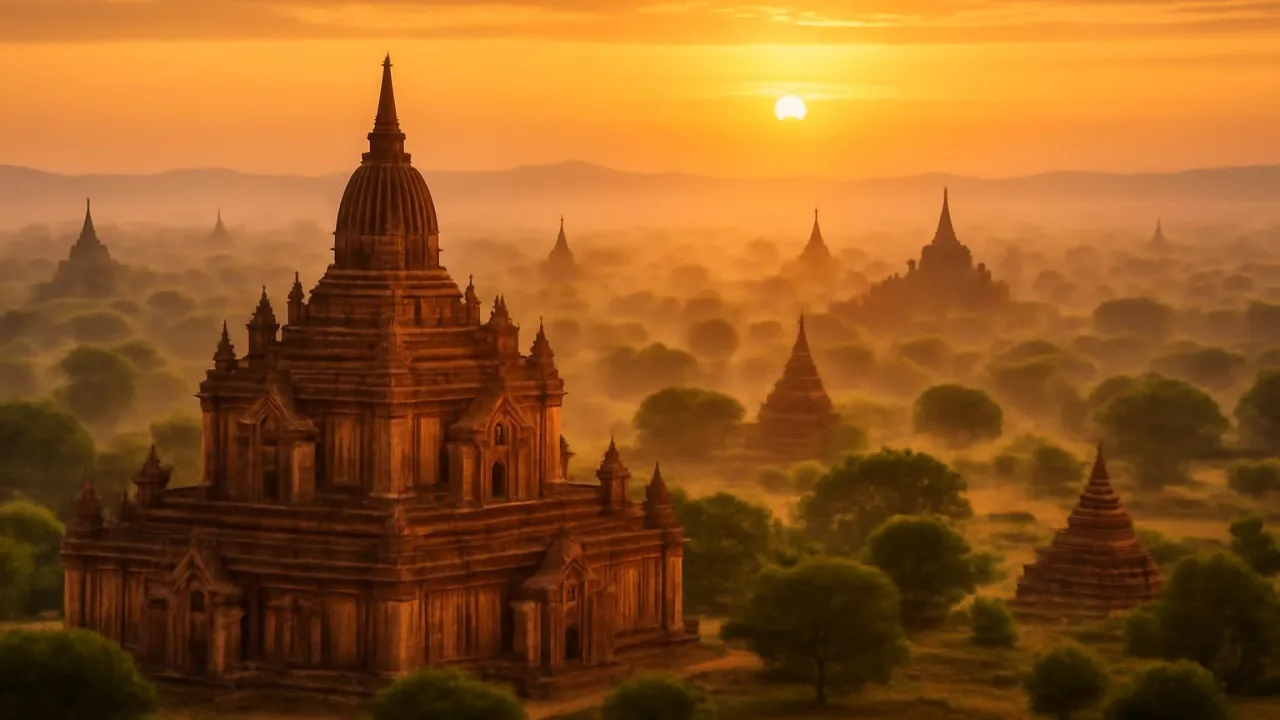
Bagan Temple Plains
A Sea of Ancient Temples in the Mist
Bagan once had over 10,000 temples and pagodas long ago!
What if you woke up to see hundreds of golden temples in the sunrise?
1 Temples in the Morning Light
The sun shines on many tall . Birds fly above the rooftops. The air feels soft and warm.
2 So Many Shapes
Some are round. Some look like towers. Each one is special and old.
3 People Visit and Explore
Visitors walk on sandy paths. They look up at the tall buildings. The view is very big and wide.
1. What do people see at Bagan in the morning?
2. What shape can a pagoda be?
Bagan once had over 10,000 templesโnow about 2,200 remain!
Can you imagine riding a balloon over thousands of ancient temples?
1 A Land of Temples
Bagan has thousands of old temples and pagodas. They shine in the golden sunrise, and birds soar above them. People come from all over the world to see these wonders.
2 Built Long Ago
The temples were built many hundreds of years ago. Builders used bricks and stones to make strong walls and tall towers. Some temples have round , while others have pointed roofs.
3 Exploring the Plains
Visitors walk or ride bikes along sandy paths. Some even take rides to see the temples from above. The view is wide, and the air feels calm and magical.
1. How do people see all the temples at Bagan?
2. What did builders use to make the temples?
Some Bagan temples have secret stairways hidden inside their thick walls!
What would it feel like to walk among thousands of ancient temples rising from the mist?
1 A Sea of Temples
Bagan is a vast plain covered with more than 2,200 ancient temples. When the sun rises, golden light shines on the brick towers and domes. Birds glide above the rooftops, and the air feels soft and warm. Visitors say it looks like a magical city from a storybook.
2 How Were the Temples Built?
Long ago, builders used millions of bricks to construct strong temple walls. Some temples have domes, while others have tall spires called . The bricks fit together tightly, making the buildings last for hundreds of years. Many temples are decorated with showing stories of the Buddha.
3 Exploring Bagan Today
People visit Bagan to walk, bike, or ride hot air balloons above the temples. From the sky, the view stretches across the wide plain like a patchwork. Inside some temples, you can hear bounce off the high ceilings. Exploring Bagan feels like stepping back in time.
4 Why Bagan Matters
Bagan is a UNESCO World Heritage Site because of its history and beauty. The temples show the art and beliefs of the people who built them. Scientists study how the bricks and have survived earthquakes and weathering. Bagan reminds us how people can create wonders that last for centuries.
1. What makes Bagan look magical at sunrise?
2. Why do scientists study Bagan's temples?
Baganโs largest temple, Dhammayangyi, is famous for its mysterious bricked-up passageways!
Imagine standing on a temple terrace as the sunrise reveals thousands of ancient spiresโhow did they all get here?
1 A Landscape of Legends
Bagan stretches across a wide plain, where over 2,200 temples and pagodas rise from the mist. As the sun rises, the brick monuments glow with golden light, creating a breathtaking scene. The air is filled with the sounds of birds and distant bells from nearby villages. Many visitors say Bagan feels like stepping into a living legend.
2 Building Marvels of Brick and Stone
Between the 9th and 13th centuries, Baganโs builders used millions of baked bricks to construct temples that could withstand time and . Some temples feature domes or stupas, while others have intricate carvings and hidden stairways inside thick walls. The bricks were made from local clay and fitted so tightly that many buildings still stand strong after hundreds of years. These temples often tell stories of the Buddha through their detailed artwork.
3 Exploring the Temple Plains
Today, people explore Bagan by walking, biking, or floating in hot air balloons above the plains. From the sky, the temples look like a sea of spires stretching as far as you can see. Inside, echoes bounce off the high ceilings, and sunlight streams through small windows, lighting up ancient paintings. Each temple offers a glimpse into the past and the culture of the people who built them.
4 Baganโs Lasting Impact
Bagan is recognized as a World Heritage Site for its unique architecture and historical importance. The site shows the creativity and engineering skills of the Pagan Kingdom, which helped spread Buddhism across Southeast Asia. Scientists and historians study the temples to learn how they survived and centuries of . Bagan inspires people around the world to protect and celebrate their own cultural treasures.
1. How did Baganโs builders make their temples last so long?
2. Why is Bagan important to people today?
Baganโs temples were built without steel or cementโjust sun-baked bricks, clever design, and teamwork!
If you could map the secrets of Baganโs temple plains, what stories would the bricks and carvings reveal about ancient Myanmar?
1 A Timeless City of Temples
As dawn breaks over the Irrawaddy River, hundreds of misty spires emerge across the Bagan plains, forming one of the worldโs most extraordinary archaeological landscapes. Between the 9th and 13th centuries, the Pagan Kingdom constructed over 10,000 religious monumentsโtemples, stupas, and monasteriesโacross 26 square miles. Today, about 2,200 of these structures remain, creating a breathtaking panorama that draws visitors, historians, and scientists from around the globe. The golden light of sunrise transforms the ancient brickwork into a shimmering sea, while the scent of earth and incense drifts through the air.
2 Engineering Marvels of the Pagan Kingdom
Baganโs builders mastered advanced engineering techniques, using sun-baked bricks made from local clay and precisely layered with minimal mortar. Many temples feature and domes, distributing weight efficiently and allowing for high, open interiors. Some of the largest temples, like Ananda and Dhammayangyi, contain secret passageways and hidden staircases within their massive walls. Earthquake-resistant construction, including thick foundations and interlocking brickwork, has helped many structures survive centuries of seismic activity and weathering. Intricate carvings and murals depict Buddhist stories, reflecting both religious devotion and artistic innovation.
3 Exploring Bagan: Past and Present
Modern visitors explore Bagan by foot, bicycle, horse cart, or hot air balloon, gaining different perspectives on the sprawling temple landscape. From above, the temples appear as a patchwork of red and gold rising from green fields and sandy paths. Inside, acoustics amplify chants and echoes, while shafts of sunlight illuminate faded murals and gilded statues. The templesโ layouts often align with astronomical directions, showing the buildersโ understanding of both engineering and cosmology. Preservationists work to repair earthquake damage and protect the ancient bricks from further .
4 Cultural and Global Significance
Bagan was a center for Buddhist learning, art, and architecture, influencing temple design throughout Southeast Asia for centuries. Its recognition as a UNESCO World Heritage Site in 2019 highlights its outstanding universal value as a cultural landscape. The siteโs temples reveal the beliefs, social organization, and technical skills of the Pagan Kingdom, offering clues about daily life and religious practice in medieval Myanmar. Scientists study the materials and construction techniques to improve conservation methods for similar sites worldwide. Bagan inspires efforts to protect cultural heritage in the face of natural disasters and modernization.
5 The Enduring Mysteries of Bagan
Despite centuries of study, many mysteries remain hidden within Baganโs temples. Some passageways and chambers are still sealed, and not all the original temple functions are fully understood. Archaeologists continue to discover new inscriptions, artifacts, and even previously unknown structures using satellite imagery and ground surveys. The resilience of Baganโs brickwork and the complexity of its temple layouts showcase the ingenuity of ancient engineers. As Bagan faces threats from tourism, earthquakes, and climate, ongoing research and preservation are crucial to ensure its stories endure for future generations. The temple plains remain a living testament to human creativity and spiritual devotion.
1. What made Baganโs temples survive many earthquakes over the centuries?
2. Why do scientists and historians still study Baganโs temple plains today?