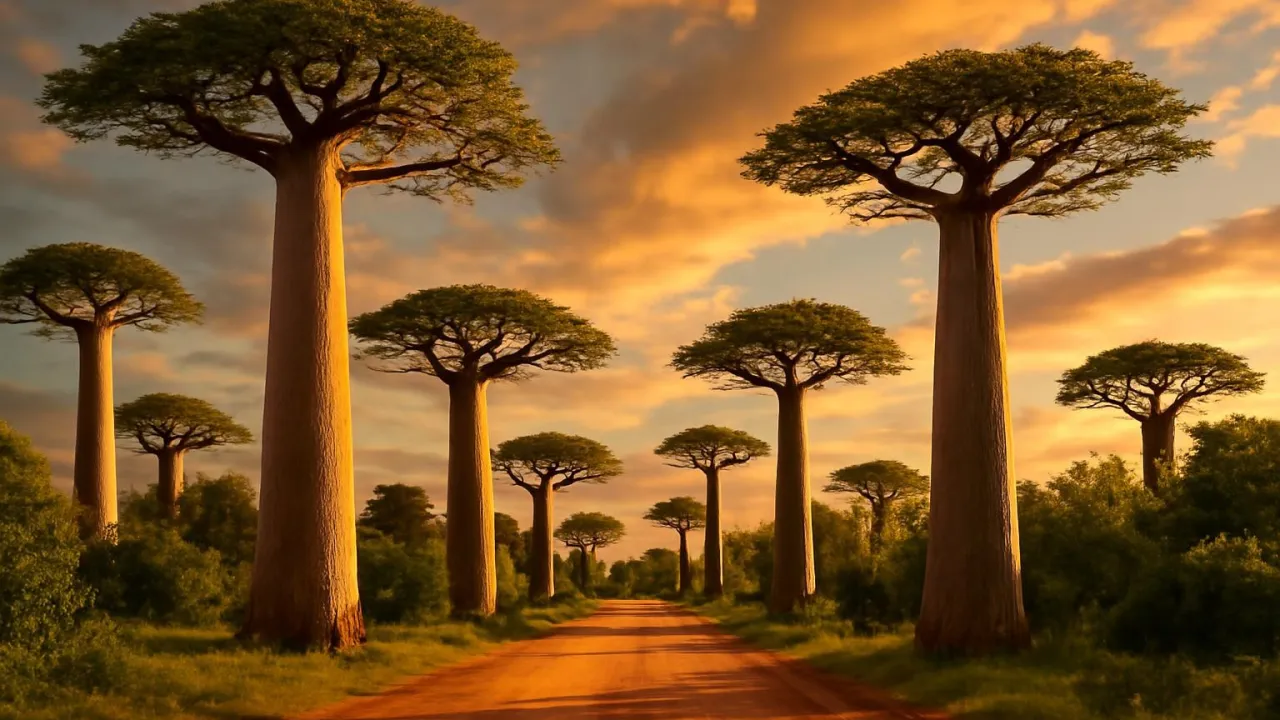
Avenue of the Baobabs
Giant Trees Standing Tall in Madagascar
Some baobab trees are over 800 years old!
What if trees were as tall as houses?
1 Tall Tree Road
Big trees stand by a dirt road. Their are wide and round. The trees look like giant bottles.
2 A Place in Madagascar
People walk and ride bikes here. The road is in . The sun shines on the trees.
3 Baobabs Are Special
can live many years. Their bark feels smooth and cool. Their branches look like roots in the sky.
1. What do the baobab trees look like?
2. Where can you find the Avenue of the Baobabs?
Baobab trees can store over 30,000 gallons of water in their trunks!
Have you ever seen a tree wider than a car?
1 A Road of Giants
Along a dusty road, huge baobab trees stand tall and proud. Their thick trunks look like giant bottles, and their branches reach out like arms. People come here to walk, ride bikes, and take pictures.
2 A Special Place in Madagascar
The Avenue of the Baobabs is found in Madagascar, an off Africaâs coast. The sun shines brightly on the smooth , making the trees glow in the light. Many visitors come to see these amazing trees each year.
3 Baobabs Can Store Water
Baobab trees are special because they can lots of water inside. This helps them survive when it does not rain for a long time. Some baobabs are hundreds of years old and still growing strong.
1. Why do baobab trees store water?
2. What do people like to do at the Avenue of the Baobabs?
The Avenueâs oldest baobabs may have started growing before Columbus sailed to America!
What would it feel like to walk beneath trees that have watched the sunset for centuries?
1 A Sunset Walk with Giants
As the sky turns orange, the baobab trees cast long, magical shadows over the dusty road. Their thick, bottle-shaped trunks can grow up to 98 feet tall and 36 feet wide. Some of these trees have been standing here for hundreds of years, making them true living . Walking here feels like stepping into a storybook full of ancient wonders.
2 A Madagascar Marvel
Youâll find this incredible avenue in the Menabe region of western Madagascar, an island off Africaâs southeast coast. The baobab trees here belong to the species Adansonia grandidieri, which only grows in Madagascar. People travel from all over the world to see these unique trees and take beautiful photographs. The road is especially famous for its views at sunrise and sunset.
3 Natureâs Water Tanks
Baobab trees have a special way to survive Madagascarâs dry seasons. Their trunks act like giant water tanks, storing thousands of gallons inside. This , called resistance, lets them live through long times without rain. Their smooth bark and root-like branches make them look even more unusual.
4 A Protected Treasure
The Avenue of the Baobabs is now a protected natural , cared for by local people and scientists. The baobabs are important for animals, people, and the environment around them. They provide food, shelter, and shade for many living things. These ancient trees remind us how nature creates wonders that last for centuries.
1. What makes the Avenue of the Baobabs special?
2. How do baobab trees survive long dry seasons?
Some baobabs on the avenue are believed to be over 1,000 years old, making them some of the oldest living trees on Earth.
What secrets could trees tell if they watched over a road for centuries?
1 A Timeless Avenue
Imagine walking down a dusty red road lined with towering baobab trees, each one older than most buildings in your city. The Avenue of the Baobabs, located in Madagascarâs Menabe region, is a natural monument famous for its ancient Adansonia grandidieri trees. These giants can reach heights of nearly 100 feet and have trunks wider than a car. Their bottle-shaped trunks and root-like branches create a landscape unlike anywhere else on Earth.
2 A Unique Place on the Planet
Madagascar is the only place where you can find these particular baobab species growing naturally. The avenue attracts travelers, scientists, and photographers from around the world, especially at sunrise and sunset when the trees cast dramatic shadows. For local communities, the baobabs are sources of food, shelter, and cultural stories. The treesâ presence shapes both the land and the lives of the people nearby.
3 Natural Engineering: Water Storage and Survival
Baobab trees have evolved remarkable adaptations to survive Madagascarâs long dry seasons. Their thick, spongy trunks can store more than 30,000 gallons of water, acting as natural during droughts. The bark is smooth and fire-resistant, helping protect the tree from natural dangers. Their branches, which look like roots reaching skyward, help collect moisture and sunlight for .
4 Protecting a Living Wonder
The Avenue of the Baobabs is now a protected natural monument, but the trees face threats from farming, , and climate change. Conservation groups and local villagers work together to protect the baobabs and teach visitors about their importance. These ancient trees remind us of the power and beauty of nature, inspiring people to care for Madagascarâs unique environments.
1. How do baobab trees help people and animals in Madagascar?
2. What is a main threat to the baobabs today?
Baobab wood is so spongy and water-filled that it can be squeezed like a giant natural sponge during droughtsâa survival strategy found nowhere else in the plant kingdom.
If you could measure time in tree rings, how many centuries would the Avenue of the Baobabs reveal?
1 A Living Corridor Through Time
Walking along the Avenue of the Baobabs is like stepping into a living time capsule, where each tree has silently witnessed centuries of change. This natural monument, found in Madagascarâs Menabe region, is home to Adansonia grandidieriâgiant baobabs that can soar nearly 100 feet high and stretch more than 36 feet wide. The avenueâs unique appearance, with its bottle-shaped trunks and root-like branches, has become an international symbol of Madagascarâs and natural heritage. At golden hour, the trees cast elongated shadows across the red earth, creating a breathtaking scene that draws visitors from around the globe.
2 Origins and Evolution of a Landmark
The baobabs of this avenue are estimated to be between 800 and 1,000 years old, predating many civilizations and surviving through dramatic environmental changes. These trees are to Madagascar, meaning they grow naturally nowhere else on Earth. Over centuries, local communities cleared surrounding forests for agriculture, leaving only the most resilient baobabs standing along the ancient dirt road. Today, the avenue is both a scientific wonder and a cultural treasure, celebrated in Malagasy folklore and art.
3 Engineering Marvels of Nature
Baobab trees possess extraordinary adaptations that allow them to thrive in Madagascarâs dry climate. Their massive trunks act as natural reservoirs, capable of storing up to 32,000 gallons (120,000 liters) of water, which sustains them during months of drought. The bark is smooth and fire-resistant, protecting the tree from natural hazards, while the branches, resembling roots, maximize surface area for sunlight absorption and efficient photosynthesis. These adaptations exemplify natureâs engineering, enabling baobabs to live for over a millennium.
4 Ecological and Cultural Importance
Beyond their impressive biology, baobabs play a crucial role in the local ecosystem and Malagasy culture. The trees provide food, water, and shelter for countless animal species, including lemurs, birds, and insects. For people, baobabs offer edible fruit rich in vitamin C, bark for making rope, and shade from the intense sun. The avenue is a source of pride and inspiration, featured on currency, in stories, and in conservation efforts that unite scientists and villagers alike.
5 Conservation Challenges and the Future
Despite their resilience, the baobabs face significant threats from , soil erosion, and climate change. Conservation initiatives now aim to protect remaining trees, restore surrounding habitats, and educate visitors about sustainable tourism. The Avenue of the Baobabs stands as a living reminder of natureâs endurance and the importance of protecting Earthâs irreplaceable wonders for future generations to explore and cherish.
1. What unique adaptation helps baobab trees survive Madagascarâs dry climate?
2. Why is the Avenue of the Baobabs important for both science and culture?