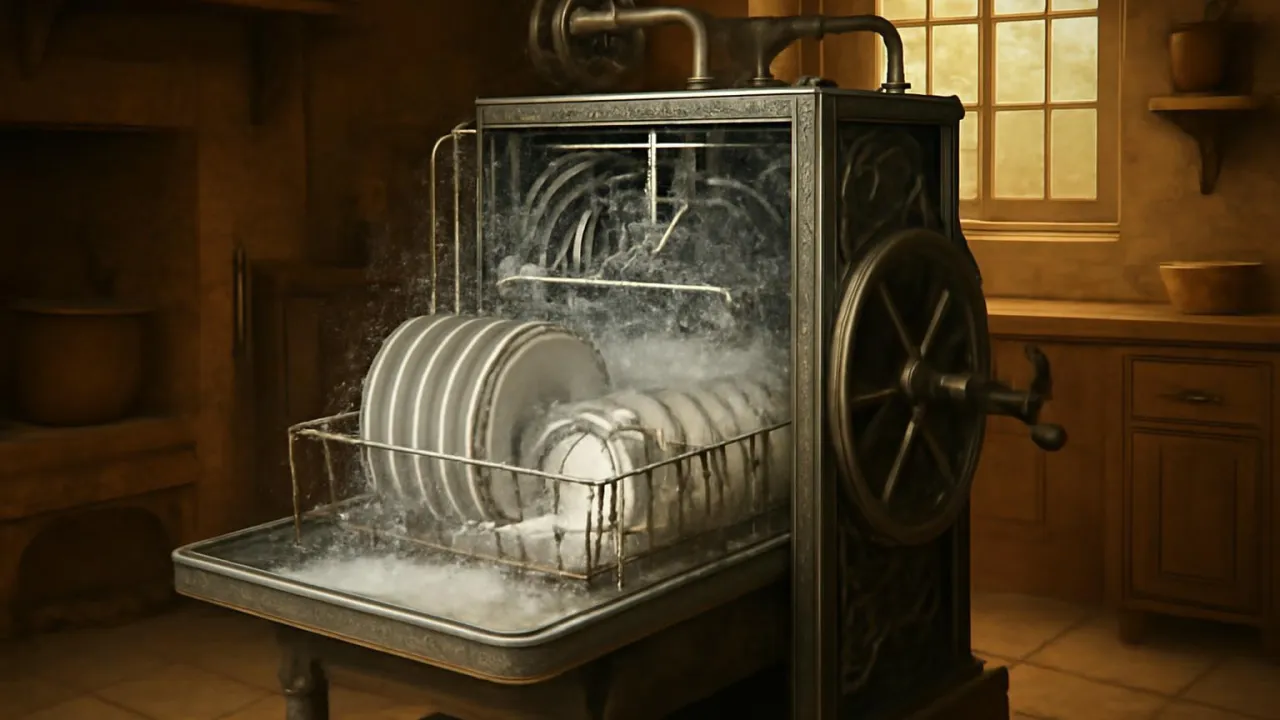
The first working dishwasher was shown at a big fair in 1893.
✨ Word Sparks (Grade 2 Glossary)
Tap 🔊 to hear
jet
A strong stream of water
rack
A shelf for holding things
germ
A tiny thing that can make you sick
🪝
Have you ever watched dishes spin inside a humming machine?
1
A Kitchen Wonder
The dishwasher is a special machine that helps people clean dishes. You put dirty plates and cups inside, then close the door and press a button. Soon, you hear water spraying and spinning all around inside.
2
How Does It Clean?
Inside, strong of hot water spray soap on the dishes. The dishes spin on , and the water washes away food and . After the wash, the machine dries the dishes with warm air.
3
Why Do People Use It?
Dishwashers save people lots of time and work in the kitchen. Many families use them every day to help with chores. Clean dishes come out shiny and ready to use again.
Some dishwashers use less than 4 gallons of water per cycle!
✨ Word Sparks (Grade 3 Glossary)
Tap 🔊 to hear
jet
A strong stream of water
vibration
A quick shaking movement
patent
A special award for inventors
🪝
Can you imagine a machine that blasts away food with spinning water jets?
1
Inventing a Helpful Machine
Long ago, people washed every dish by hand, which took a lot of time. Josephine Cochrane wanted a faster way, so she invented the first automatic dishwasher in 1886. Her machine used a hand-powered wheel to spray water over dishes in a wire rack.
2
How Do Dishwashers Work?
Modern dishwashers use electric pumps to move water through spinning spray arms. Powerful create that help shake off stuck food and grease. Hot water and soap mix together to kill germs and clean every surface.
3
Inside the Dishwasher
The dishwasher has racks for plates, cups, and silverware to keep them in place. After washing, hot air blows through the machine to dry the dishes quickly. A rubber seal around the door keeps all the water inside, so nothing leaks out.
4
Changing the Way We Clean
Dishwashers have become a common appliance in homes around the world. They save families hours of work and help use less water than washing by hand. Josephine Cochrane even earned a for her invention, making her a famous problem-solver.
1. What keeps water from leaking out of a dishwasher?
2. Why did Josephine Cochrane invent the dishwasher?
🤯 Mind-Blowing Fact • Grade 4
Modern dishwashers can heat water up to 155°F to kill germs and bacteria.
✨ Word Sparks (Grade 4 Glossary)
Tap 🔊 to hear
detergent
A special soap for cleaning
sensor
A part that detects changes
compartment
A separate space for holding things
🪝
What if powerful water jets could scrub plates while you relax after dinner?
1
A Spark of Invention
In the late 1800s, Josephine Cochrane grew frustrated with washing dishes by hand, especially when her fine china broke. She designed a mechanical device that used water pressure and a hand-cranked wheel to spray soapy water over dishes secured in wire racks. Her invention was first shown at the 1893 World’s Fair, impressing hotels and restaurants with its clever engineering.
2
How Dishwashers Work Today
Modern automatic dishwashers use electric motors to power rotating spray arms, which shoot jets of hot, soapy water at dishes from different angles. The combination of water pressure, heat, and breaks down food particles and grease. After washing, a heating element or fan dries the dishes quickly, making them ready for use.
3
Engineering and Efficiency
Dishwashers are designed with racks and to hold dishes steady while water moves at high speed. and timers control the wash cycles, ensuring the right temperature and amount of water are used. Compared to hand washing, dishwashers can save water and energy, especially with modern eco-friendly models.
4
Impact on Homes and the World
The automatic dishwasher changed daily life by reducing time spent on chores and making kitchens more efficient. Josephine Cochrane’s patent paved the way for more women inventors and inspired new home appliances. Today, dishwashers are used around the world, helping families save time and water every day.
2. What did Josephine Cochrane’s invention inspire?
🤯 Mind-Blowing Fact • Grade 5
Some advanced dishwashers now use sensors to detect how dirty dishes are and adjust water use automatically.
✨ Word Sparks (Grade 5 Glossary)
Tap 🔊 to hear
turbidity
How cloudy or dirty water is
gasket
A seal that keeps water from leaking
prototype
The first working model of an invention
🪝
Imagine opening a kitchen door to the rhythmic whoosh of water jets cleaning every dish inside—how does this marvel work?
1
A Revolutionary Solution to a Messy Problem
In 1886, Josephine Cochrane engineered the first practical automatic dishwasher after growing weary of hand-washing and breaking her fine china. Her featured a hand-cranked wheel that rotated wire racks while pressurized water sprayed from a copper boiler, a design that impressed hotels and restaurants at the 1893 World’s Fair. Cochrane’s invention was granted a U.S. patent, marking a pivotal moment in home appliance history and expanding opportunities for women inventors.
2
Mechanical and Thermal Engineering Inside
Modern dishwashers use electrically powered pumps to circulate water through rotating spray arms, which create high-velocity jets that dislodge food particles by both mechanical force and vibration. The system heats water to temperatures between 120°F and 155°F, enhancing the action of specialized detergents that break down grease and organic residue. After the wash cycle, a heating element or fan-driven system rapidly dries the dishes, preventing water spots and bacterial growth.
3
Design for Efficiency and Safety
Dishwasher interiors are engineered with adjustable racks, compartments, and silverware baskets to optimize water flow and prevent fragile items from colliding. Rubber and precision door latches ensure a watertight seal, while built-in sensors monitor water temperature, , and cycle duration for maximum efficiency. Many modern dishwashers feature eco-cycles that use as little as 3.5 gallons of water per load, compared to up to 27 gallons for hand washing.
4
Global Impact and Environmental Considerations
The automatic dishwasher has transformed household routines worldwide, saving countless hours of manual labor and reducing water consumption. Its invention sparked advances in kitchen technology, leading to safer, more hygienic food preparation and storage. Manufacturers now focus on sustainability, developing energy-efficient models and biodegradable detergents to lessen environmental impact.
5
The Evolution Continues
From Josephine Cochrane’s hand-powered to today’s smart, sensor-driven machines, the dishwasher’s evolution mirrors changes in engineering and society. Innovations like soil sensors, programmable cycles, and Wi-Fi connectivity make dishwashers smarter and more convenient than ever. The story of the dishwasher demonstrates how a single inventive spark can ripple through history, improving lives and inspiring future problem-solvers.