1. What sound do the bamboo stalks make in the wind?
2. Why do people visit the bamboo grove?
🤯 Mind-Blowing Fact • Grade 2
The sound of the bamboo grove is a protected sound in Japan!
✨ Word Sparks (Grade 2 Glossary)
Tap 🔊 to hear
tunnel
A long, covered path or way
rustling
A soft, swishing sound
protected
Kept safe by rules or laws
🪝
Have you ever heard plants make music when the wind blows?
1
Walking in Green Tunnels
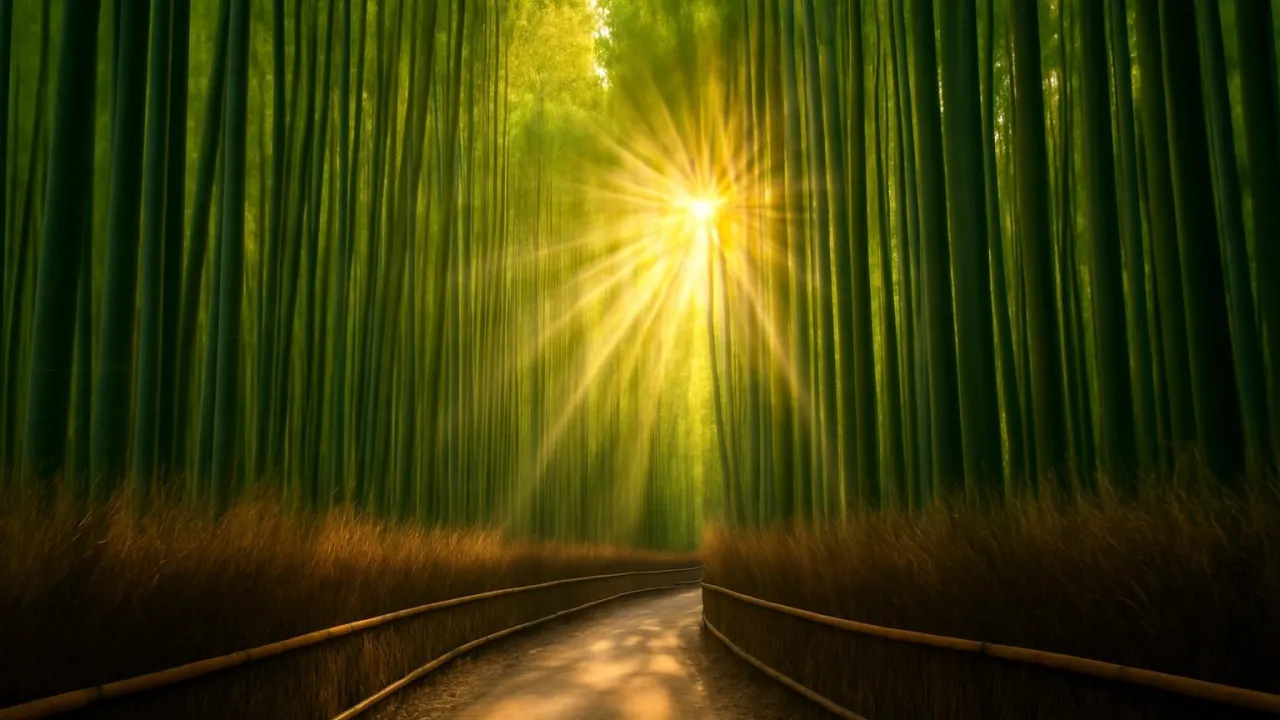
The bamboo in Arashiyama grows so tall, it forms a . Sunlight peeks through the leaves, making the path look magical. People enjoy walking under the green roof and feeling the cool air.
2
Nature’s Wind Chimes
When the wind rushes through the grove, the bamboo stalks sway and bump together. This makes a soft, sound that is famous all over Japan. Visitors often close their eyes to listen to the peaceful music.
3
A Place to Explore
Families and friends visit the grove to take pictures and enjoy nature. Some people ride bikes along the paths, while others just walk and relax. The bamboo grove is a special place for everyone.
Bamboo in Arashiyama can grow up to three feet in one day!
✨ Word Sparks (Grade 3 Glossary)
Tap 🔊 to hear
vibration
Quick back-and-forth movement
acoustic
Related to sound or hearing
culm
A bamboo stalk or stem
🪝
What if you could walk through a forest where the plants sing when the wind blows?
1
A Living Green Tunnel
The Arashiyama Bamboo Grove is famous for its towering bamboo stalks. These stalks can reach up to 98 feet tall, creating a green tunnel above the path. Sunlight filters through the leaves, making patterns on the ground. Visitors feel like they are walking in a magical world.
2
The Science of Bamboo Sounds
When wind sweeps through the grove, the bamboo stalks vibrate and tap each other. This creates a unique effect called resonance, making the grove sound like a natural wind chime. The soft rustling is so special that Japan protects it as a national soundscape.
3
How Bamboo Grows So Tall
Bamboo is a type of fast-growing grass, not a tree. Each stalk, called a , can grow several feet in just one day. The hollow structure of bamboo helps it bend in strong winds without breaking.
4
A Place of Peace and Wonder
People visit Arashiyama to walk, ride bikes, and take photos among the bamboo. The grove is also important in Japanese culture, symbolizing strength and calm. Many artists and poets have been inspired by its beauty.
The sound of the Arashiyama Bamboo Grove is one of Japan’s 100 protected soundscapes.
✨ Word Sparks (Grade 4 Glossary)
Tap 🔊 to hear
resonance
Echoing sound from vibration
culm
The main stem of bamboo
soundscape
All the sounds in a place
🪝
Imagine standing in a forest where sunlight dances and the air is filled with the gentle music of bamboo—what secrets does this magical place hold?
1
Nature’s Towering Marvel
The Arashiyama Bamboo Grove, located in Kyoto, Japan, is a breathtaking natural monument where thousands of bamboo rise skyward. Some bamboo stalks here reach nearly 100 feet tall, forming a dense, living tunnel over the winding paths. The filtered sunlight creates shifting patterns that move with the breeze, making every visit feel different. This enchanting setting draws millions of visitors each year.
2
The Physics of Whispering Bamboo
When wind passes through the grove, the bamboo stalks vibrate and collide, producing a scientists call . The unique acoustic effect is caused by the hollow, flexible structure of each bamboo . These vibrations create a soft, rustling music that is now protected by Japan as a national soundscape. The experience is so rare that many visitors pause just to listen.
3
Bamboo’s Rapid Growth and Strength
Bamboo is actually a type of grass, not a tree, and it grows incredibly fast—sometimes up to three feet in a single day. Its hollow are both lightweight and strong, allowing the bamboo to bend in strong winds instead of snapping. This natural engineering makes bamboo groves resilient to storms and heavy rain.
4
A Symbol in Japanese Culture
The Arashiyama Bamboo Grove is not only a natural wonder but also a symbol of strength and peace in Japanese culture. Artists, poets, and filmmakers often use the grove’s beauty to inspire their work. The grove’s and scenery are so unique that they are officially protected to ensure future generations can enjoy them.
1. How does bamboo’s structure help it survive storms?
2. Why is the bamboo grove’s sound protected in Japan?
🤯 Mind-Blowing Fact • Grade 5
The tallest bamboo in Arashiyama can grow nearly one meter in just 24 hours!
✨ Word Sparks (Grade 5 Glossary)
Tap 🔊 to hear
acoustic resonance
Sound made by vibrating air in a space
erosion
Wearing away of soil or land
microclimate
Small area with its own weather
🪝
What secrets of nature and engineering can you discover while wandering through a bamboo forest that sings with the wind?
1
A Living Monument of Towering Bamboo
In the heart of Kyoto’s Arashiyama district, thousands of Phyllostachys bambusoides, or giant timber bamboo, form a spectacular grove that has fascinated visitors for centuries. Some stalks soar to heights of nearly 98 feet (30 meters), creating a dense, emerald canopy that filters sunlight into shifting patterns on the forest floor. The grove’s unique , shaped by the thick bamboo, keeps the air cool and moist even during Japan’s hot summers. Walking the winding paths beneath these green giants, you experience a landscape that feels both ancient and alive.
2
The Acoustic Science Behind Bamboo’s Song
When wind gusts sweep through Arashiyama, the hollow bamboo culms act as natural resonators, amplifying vibrations into a distinctive rustling and clattering sound. This phenomenon, known as , occurs because the air inside each culm vibrates at certain frequencies, producing a harmonious soundscape. Researchers have measured the bamboo’s sound intensity and frequency, finding that the grove’s music is both calming and scientifically unique. In 1996, Japan officially designated these sounds as one of its 100 Soundscapes to preserve their cultural and ecological value.
3
Bamboo’s Rapid Growth and Structural Adaptation
Unlike trees, bamboo belongs to the grass family and is one of the fastest-growing plants on Earth, with some shoots growing up to three feet (one meter) in a single day under optimal conditions. Each bamboo culm is hollow, segmented by strong nodes, which provides both flexibility and strength. This design allows bamboo to withstand typhoons and heavy rains common in Kyoto, as the culms bend and sway rather than snap under pressure. The grove’s dense root system also prevents soil and supports the surrounding ecosystem.
4
Cultural and Historical Significance
The Arashiyama Bamboo Grove has inspired Japanese poets, artists, and filmmakers for generations, serving as a symbol of resilience, tranquility, and natural beauty. Historically, bamboo from this region was used for building, crafting traditional Japanese flutes called shakuhachi, and even in tea ceremonies. The grove’s protected status ensures that its unique soundscape and landscape remain unspoiled, allowing future generations to experience its wonders as people have for centuries.
5
Conservation and Global Impact
Today, the Arashiyama Bamboo Grove is not only a national treasure but also a model for sustainable tourism and environmental stewardship. Conservation efforts focus on maintaining the health of the bamboo, controlling invasive species, and educating visitors about the grove’s ecological importance. The site attracts over a million visitors annually, inspiring similar bamboo conservation projects around the world. As a living example of harmony between people and nature, Arashiyama continues to teach valuable lessons in ecology, engineering, and cultural heritage.