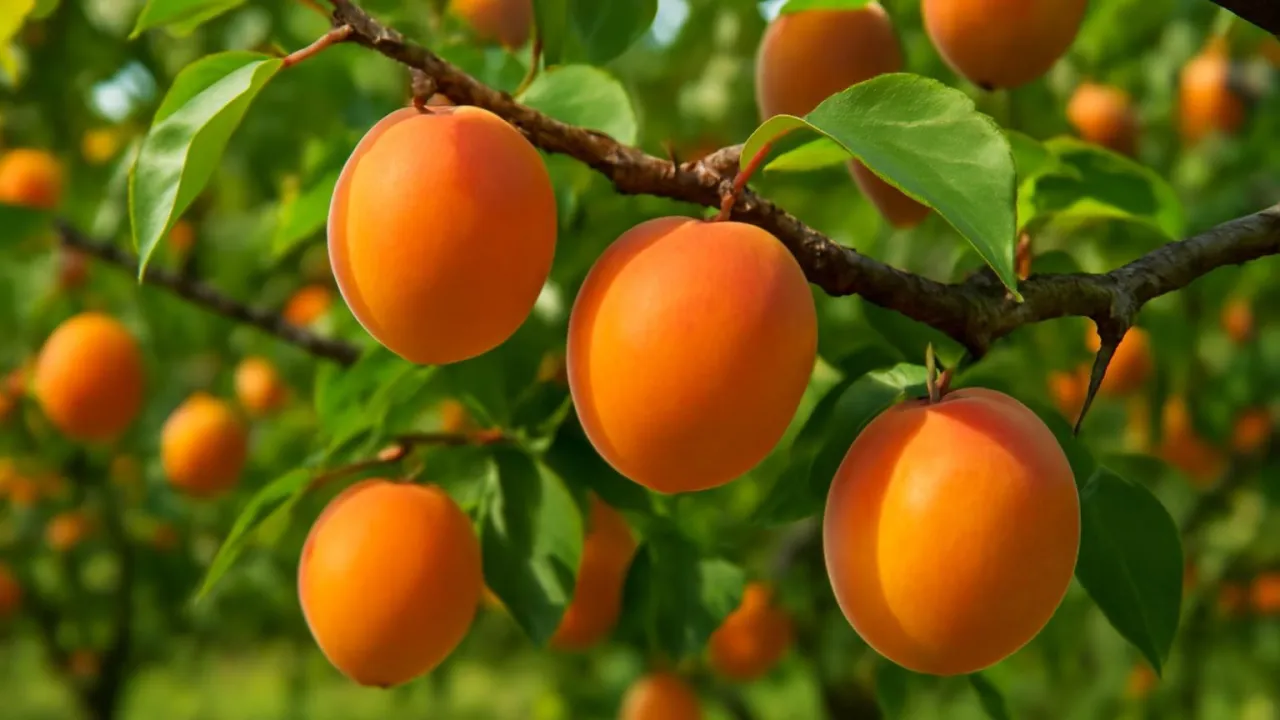
Apricots are a stone fruit, meaning they have a large seed called a pit inside!
✨ Word Sparks (Grade 3 Glossary)
Tap 🔊 to hear
adaptation
A way plants or animals survive better
pollination
When pollen helps flowers make fruit
seed
A tiny plant inside fruit that can grow
🪝
Did you know apricots have a fuzzy skin that helps protect them?
1
Apricot’s Fuzzy Skin
The apricot’s fuzzy skin helps protect it from insects and sun damage. This keeps the fruit safe while it grows. The fuzz also reduces water loss in hot weather. This is important for apricots in dry climates.
2
Where Apricots Live
Apricot trees thrive in warm, sunny places like Central Asia and the Mediterranean. They need well-drained soil and moderate water. These trees bloom with white flowers that attract pollinators. helps the fruit grow after flowers fall.
3
Apricot’s Life Cycle
Apricots start as flowers in early spring and develop into fruit by summer. The fruit ripens quickly to attract animals that spread . This helps apricots grow in new places. The seed inside the hard pit contains nutrients for a new tree.
4
Apricot’s Role in Nature
Apricots provide food for many animals like birds and insects. These animals help spread apricot in the wild. Apricots also support farmers who grow them for people to eat. This fruit plays a key role in food webs and ecosystems.
Apricot trees bloom early in spring, avoiding frost damage and ensuring fruit growth.
✨ Word Sparks (Grade 4 Glossary)
Tap 🔊 to hear
dispersal
When seeds spread to new places
frost
When cold weather freezes plants
pollinator
An animal that helps flowers make fruit
🪝
How do apricots survive hot, dry summers in their natural homes?
1
Protective Fuzz and Water Loss
Apricot fruit has a fuzzy skin that reduces water loss during hot weather, which helps it survive dry summers. This fuzz also protects the fruit from harmful insects and sunburn damage. Because apricots grow in warm regions, this adaptation is very important. Without it, the fruit might dry out or get damaged before ripening.
2
Ecosystem Role and Food Webs
Apricots provide food for many animals including birds, insects, and mammals, which helps spread their seeds across the environment. This seed supports new apricot trees growing in different places. Farmers also rely on apricots for fresh fruit and dried snacks, making apricots important for human food systems. Thus, apricots play a key role in both natural and agricultural ecosystems.
3
Geographic Distribution and Climate
Apricot trees are native to Central Asia but have spread to Mediterranean climates where winters are mild and summers are hot and dry. These trees require full sun and well-drained soil to produce healthy fruit. They bloom early in spring, which allows them to avoid damage from late . This timing is an important survival strategy in their native habitats.
4
Cause and Effect in Growth
Because apricots bloom early, they depend on like bees to help fertilize flowers before summer arrives. If pollination does not occur, fruit will not develop properly. Healthy apricot trees produce sweet, juicy fruit that attracts animals, which then help spread seeds. This cycle ensures apricots continue to grow and thrive in their ecosystems.
Apricots share a family with peaches and cherries and have been cultivated for over 4,000 years.
✨ Word Sparks (Grade 5 Glossary)
Tap 🔊 to hear
Rosaceae
The plant family of roses, cherries, and apricots
germination
When a seed begins to grow into a plant
mutualistic
A helpful relationship between two living things
🪝
Did you know apricots belong to the same family as peaches and cherries?
1
Scientific Classification and Origins
The apricot, scientifically named Prunus armeniaca, belongs to the family, which includes peaches and cherries. Native to Central Asia, apricots have been cultivated for thousands of years and spread to Mediterranean regions due to their adaptability. Their classification as a stone fruit means they contain a single hard pit surrounded by juicy flesh. This botanical trait links apricots closely to other members of the Prunus genus.
2
Physiological Adaptations and Fruit Development
Apricot trees exhibit physiological adaptations such as early spring blooming to avoid frost damage, and fuzzy skin to reduce water loss and protect against UV radiation. The fruit develops rapidly after pollination, with sugars accumulating to create the sweet, juicy flavor. Inside the fruit, the hard pit protects the seed until conditions are favorable for . These mechanisms ensure apricots thrive in warm, dry climates with seasonal temperature changes.
3
Conservation and Agricultural Importance
Apricot cultivation supports many agricultural economies, especially in Mediterranean and Central Asian countries. Conservation efforts focus on preserving genetic diversity to improve disease resistance and climate adaptability. Wild apricot varieties provide valuable traits for breeding programs aimed at enhancing fruit quality and yield. Sustainable farming practices help maintain soil health and water efficiency in apricot orchards, ensuring long-term productivity.
4
Quantitative Comparisons and Growth Metrics
Apricot trees typically grow between 15 and 30 feet tall (4.5 to 9 meters), producing fruit about 1.5 to 2 inches (4 to 5 centimeters) in diameter. The fruit ripens early in summer, often within 90 to 120 days after flowering. Apricots require full sun exposure and moderate watering, with optimal temperatures ranging from 75 to 85 degrees Fahrenheit (24 to 29 degrees Celsius). Compared to peaches, apricots have a firmer skin and smaller fruit size.
5
Ecological Role and Seed Dispersal Mechanisms
In natural ecosystems, apricots provide food for various birds and mammals, which aid in seed dispersal by carrying the hard pits away from parent trees. This relationship enhances genetic diversity and colonization of new habitats. Additionally, apricot flowers attract pollinators like bees, which are essential for successful fruit set. Understanding these ecological interactions helps improve orchard management and conservation strategies.