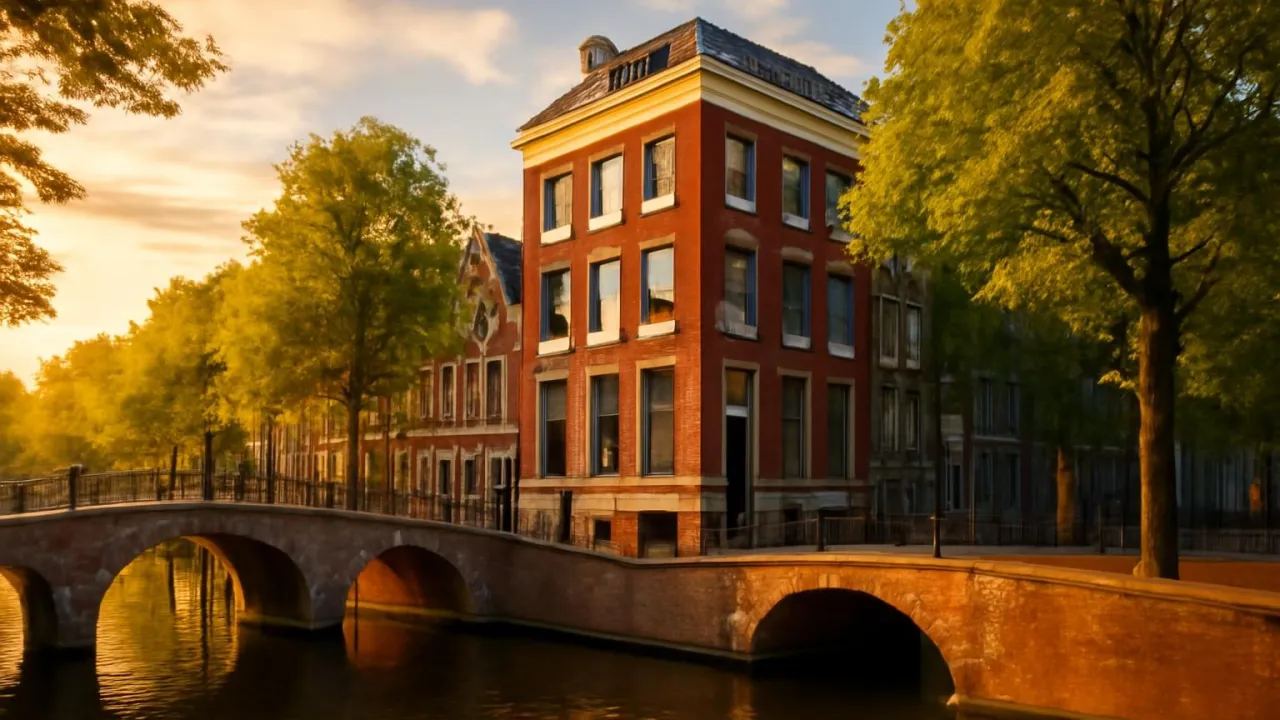
Anne Frank House & Amsterdam Canals
Stories and Waterways in the Heart of Amsterdam
Amsterdam has more canals than Venice!
What if you could peek inside a secret house by a sparkling canal?
1 A House with a Secret
This house hides a tiny room. Anne and her family lived there. They had to stay very quiet.
2 Watery Streets
Outside, boats float on blue . Ducks swim past old brick houses. The water makes the city shine.
3 People Visit and Remember
Many people visit the house today. They learn about Anneโs story. The house helps us remember her.
1. Where did Anne and her family hide?
2. What floats on the Amsterdam canals?
Amsterdamโs canals are home to over 2,500 houseboats!
Can you imagine living above a canal in a hidden room?
1 A Hidden Place in the City
Anne Frank and her family hid in a secret part of the house. The room was behind a bookcase, and they had to whisper every day. People outside did not know they were there.
2 The Canals of Amsterdam
The house sits beside a sparkling canal, where boats glide under stone . Amsterdam has many beautiful canals, and people ride bikes along the water. The canals make the city feel magical.
3 A Museum for Stories
Today, the house is a museum where learn about Anneโs life. People from all over the world come to remember her story. The museum helps us think about kindness and .
1. How did Anneโs family keep their hiding place secret?
2. What do people ride along the canals?
Some canal houses in Amsterdam lean forward to help lift goods inside!
What secrets might echo through a house beside shimmering water?
1 The Secret Annex
Behind a swinging bookcase, Anne Frankโs family hid in a small . They lived in silence, listening to the creaks and from people below. Anne wrote in her diary, sharing her hopes and fears. The hidden rooms kept their secret for over two years.
2 A City Built on Water
Amsterdamโs canals form a giant ring, built to control water and protect the city. The canals are lined with tall, narrow houses and arched bridges. Water flows through 100 kilometers of canal, shaping how people travel and live. Boats and ducks glide by, making the city lively and bright.
3 From Home to Museum
Today, the Anne Frank House is a powerful and museum. Visitors walk through the secret rooms, learning about the Frank familyโs story. The museum preserves Anneโs words and the history of the Holocaust. It helps people remember the importance of courage and tolerance.
4 Why the Canals Matter
The canals are more than just prettyโthey are engineering wonders. They prevent flooding by moving extra water out of the city. The canal ring is a UNESCO World Heritage Site, showing how people and nature can work together. Amsterdamโs canals and the Anne Frank House both tell stories of survival.
1. Why were Amsterdamโs canals built in a ring shape?
2. What did Anne Frank use to share her thoughts?
Amsterdamโs canal system uses more than 3,000 houseboats as floating homes!
If walls could whisper, what stories would the Anne Frank House and Amsterdamโs canals tell you?
1 A Hidden World Above the Canal
Tucked behind a movable bookcase, Anne Frankโs family and four others hid in the secret annex for over two years. They could hear the of footsteps and voices from the warehouse below, reminding them to remain silent. Anneโs diary became a powerful record of hope and fear during a dangerous time. The annexโs clever design, with its concealed entrance, helped protect its occupants from discovery.
2 Engineering a Watery City
Amsterdamโs canal ring, built during the Dutch Golden Age, is a marvel of engineering. The canals were designed to manage water levels and prevent flooding in a city built below sea level. Over 1,200 bridges span the canals, connecting neighborhoods and allowing boats to travel freely. The cityโs iconic narrow houses were constructed on wooden piles driven deep into the soft, wet ground.
3 A Place of Memory and Learning
Today, the Anne Frank House is a museum visited by over a million people each year. Visitors walk through the preserved rooms, seeing Anneโs original diary and learning about the Holocaust. The museum encourages reflection on human rights, tolerance, and the dangers of discrimination. It stands as a monument to courage and the power of personal stories.
4 The Global Importance of the Canals
Amsterdamโs canals are recognized as a UNESCO World Heritage Site for their unique design and historical impact. The water management system inspired cities around the world to balance nature and life. The canals support local wildlife, provide transportation, and help control and flooding. Together, the Anne Frank House and the canals show how history, engineering, and memory shape a city.
1. How did the canal system help Amsterdam grow safely?
2. Why is the Anne Frank House important today?
Amsterdamโs canals are home to more than 1,500 historic bridges, each with a unique design and story.
Imagine the gentle splash of canal water and the hush of hidden footstepsโwhat can Amsterdamโs most famous house and waterways teach us about resilience and ingenuity?
1 Secrets Behind a Moving Bookcase
In 1942, Anne Frankโs family entered a concealed annex hidden behind a moving bookcase above a busy warehouse on Prinsengracht canal. The secret entrance was ingeniously designed to blend with the rest of the office, making discovery nearly impossible. For over two years, eight people lived in constant silence, listening to the faint resonance of workers below and the cityโs canal sounds outside. Anneโs diary, written in this cramped space, captured her daily fears, dreams, and the tension of living in hiding. The annexโs architectural details, such as blackout curtains and soundproofing, were crucial for survival. Today, the preserved house offers visitors a powerful, immersive experience of this unique chapter in history.
2 Canals: Engineering the Impossible City
Amsterdamโs iconic canal ring, constructed in the 1600s, is a triumph of and urban planning. The city, built on marshy ground below sea level, required thousands of wooden piles driven deep into the earth to support its tall, narrow houses. The canals, stretching over 62 miles (100 kilometers), were meticulously designed to regulate water flow, prevent flooding, and facilitate trade. Over 1,200 arched bridges connect neighborhoods, while locks and manage water levels and prevent erosion. The canal systemโs design influenced water management strategies in cities worldwide, showcasing Dutch ingenuity in balancing nature and urban expansion.
3 History Remembered: The Anne Frank House Museum
Transformed into a museum in 1960, the Anne Frank House preserves the original annex, Anneโs diary, and artifacts from the period. Each year, more than a million visitors walk through its narrow corridors, experiencing the emotional impact of Anneโs story firsthand. The museum not only commemorates the Frank family but also educates about the Holocaust, human rights, and the dangers of intolerance. Interactive exhibits and educational programs encourage reflection on the value of empathy, resilience, and freedom. The house stands as a monument to the enduring power of personal stories in shaping .
4 UNESCO Heritage: The Global Legacy of the Canals
Amsterdamโs canal ring was designated a UNESCO World Heritage Site in 2010 for its innovative urban design and historical significance. The canals support a vibrant ecosystem, providing habitats for fish, birds, and aquatic plants within the city. Houseboats, numbering over 3,000, line the waterways, blending modern life with centuries-old traditions. The canal system helps manage urban heat, supports transportation, and attracts millions of tourists annually. Its success inspired similar projects in cities like St. Petersburg and Jakarta, making Amsterdam a global model for sustainable water management.
5 Stories Carried by Water and Walls
The Anne Frank House and Amsterdamโs canals are intertwined symbols of resilience, ingenuity, and remembrance. The canalsโ enduring engineering protects the city, while the houseโs preserved rooms echo with the voices of those who once hid there. Both landmarks invite visitors to reflect on historyโs lessons and the importance of compassion in challenging times. Together, they demonstrate how architecture and memory can shape a cityโs identity and inspire people worldwide. By exploring these places, we honor the past and imagine a future built on understanding and hope.
1. How did Amsterdamโs canal system influence other cities around the world?
2. Why do people visit the Anne Frank House today?