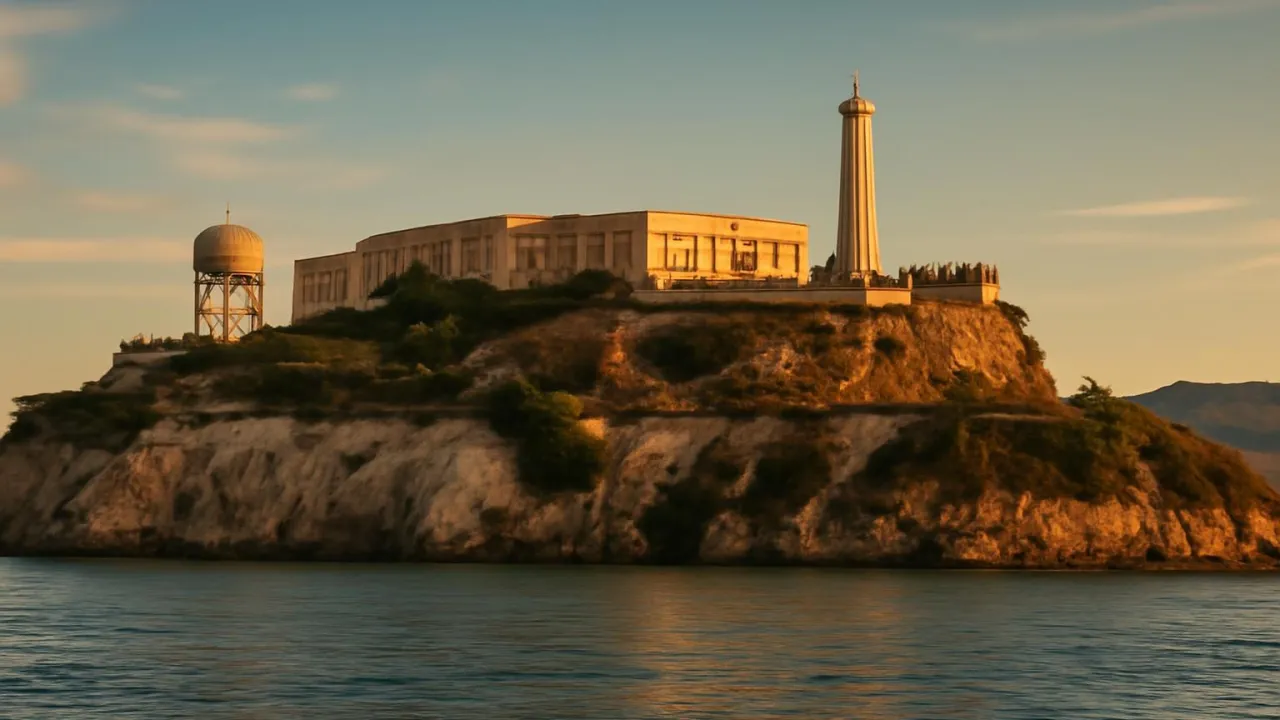
The water around Alcatraz is so cold and fast that it stopped escapes.
✨ Word Sparks (Grade 2 Glossary)
Tap 🔊 to hear
prison
A place where people are kept
guard
A person who watches and protects
escape
To get away from a place
🪝
Imagine hearing waves crash on a lonely island in the bay.
1
A Rocky Place
Alcatraz is a rocky island in San Francisco Bay, and it looks strong and tall. The island is surrounded by cold, swirling water, so it feels very far away. Many birds, like seagulls, fly and nest here.
2
A Lighthouse and a Prison
A tall white lighthouse shines bright at night, helping ships find their way. Long ago, people built a on Alcatraz, and watched over the cells every day. The prison was famous for being very hard to .
3
Exploring Alcatraz Today
Today, people ride boats to visit the island and see the old . Visitors can walk through empty cells and hear stories about the past. Alcatraz is now a place for learning and exploring.
Alcatraz’s strong ocean currents can reach speeds up to 6 miles per hour.
✨ Word Sparks (Grade 3 Glossary)
Tap 🔊 to hear
fortress
A strong building for protection
currents
Moving water in rivers or oceans
habitat
A place where plants and animals live
🪝
What secrets might echo across a foggy island in the middle of the bay?
1
An Island Fortress
Alcatraz Island rises from chilly San Francisco Bay, surrounded by swirling tides and thick fog. The island’s rocky cliffs and steep sides made it a natural for many years. Early builders added strong walls and guard towers to protect the land. The cold water and fast added another layer of security.
2
From Lighthouse to Prison
A tall lighthouse was built first to guide ships safely through the fog. Later, the government built a huge prison with thick walls and iron bars. The prison became famous for holding some of America’s most notorious prisoners. Guards watched every move, and escape seemed impossible because of the island’s isolation.
3
Nature Returns
After the prison closed, nature began to reclaim Alcatraz. Seabirds like gulls and cormorants now nest on the rocky cliffs. Plants grow in cracks between stones, and the island is home to many wildflowers. Today, scientists study how plants and animals survive in this unique .
4
Visiting the Rock
People visit Alcatraz by ferry to explore its history and natural wonders. They walk through old cell blocks, hear stories of daring escape attempts, and see the lighthouse up close. The word 'Alcatraz' even comes from the Spanish word for pelican. Visitors learn about the island’s past and how it changed over time.
The thick concrete walls of Alcatraz’s prison were up to 3 feet thick in some places.
✨ Word Sparks (Grade 4 Glossary)
Tap 🔊 to hear
erosion
Wearing away by wind or water
maximum-security
Very hard to escape from
biologist
A scientist who studies living things
🪝
Can you imagine standing on a rocky island, surrounded by swirling fog and icy waves?
1
The Natural Fortress
Alcatraz Island’s steep cliffs and jagged rocks rise dramatically from San Francisco Bay, making it almost impossible to approach without a boat. The island’s geology formed over thousands of years, creating a tough, weathered landscape shaped by wind and water . Early engineers recognized the island’s natural defenses and built thick concrete walls and tall guard towers. These features, combined with the bay’s strong tidal currents, made Alcatraz one of the most secure places in America.
2
A Beacon and a Prison
The first structure built on Alcatraz was a lighthouse, which helped ships safely navigate the foggy bay. By 1934, the United States government transformed the island into a federal prison. The prison’s design included reinforced steel bars, electronically controlled doors, and armed guards stationed in watchtowers. Famous inmates, like Al Capone, were held here because escaping the island was considered nearly impossible.
3
Nature’s Comeback
After the prison closed in 1963, Alcatraz became a haven for wildlife and rare plants. Seabirds, including gulls and cormorants, nest on the cliffs, while wildflowers and native grasses grow in cracks and old gardens. study how these species adapt to the salty air, rocky soil, and harsh weather conditions. The island’s unique habitat helps protect many rare birds and plants.
4
A Living Museum
Today, Alcatraz is a national park where visitors can explore its layered history and natural wonders. People ride ferries to the island, walk through the echoing cell blocks, and listen to stories about escape attempts and daily life on 'The Rock.' The island’s old buildings, lighthouse, and wild gardens tell stories about change, survival, and the power of nature. Alcatraz stands as a symbol of both human ingenuity and the resilience of the natural world.
Alcatraz’s lighthouse, the oldest operating on the U.S. West Coast, has guided ships since 1854.
✨ Word Sparks (Grade 5 Glossary)
Tap 🔊 to hear
penitentiary
A high-security prison for serious crimes
biodiversity
Many different living things in one place
conservation
Protecting nature and living things
🪝
What would you discover if you explored a windswept island fortress shrouded in fog and surrounded by swirling currents?
1
Geology and Natural Defenses
Alcatraz Island’s rugged landscape was shaped over millennia by tectonic uplift and relentless erosion from wind, rain, and powerful tidal forces. The island’s bedrock, primarily graywacke sandstone, forms steep cliffs that rise up to 135 feet above sea level, creating a formidable natural barrier. The surrounding waters are notoriously cold, averaging 53°F (12°C), and the tidal currents can reach speeds of 6 miles per hour, making swimming escapes nearly impossible. Early military engineers recognized these natural defenses and selected Alcatraz as a strategic site for fortifications in the 1850s.
2
Engineering the Impenetrable Prison
In 1934, Alcatraz was converted into a maximum-security federal designed to hold the nation’s most dangerous criminals. The prison’s architecture featured reinforced concrete walls up to three feet thick, steel cell doors, and electronically controlled gates, all engineered for maximum containment. Guard towers with 360-degree views and searchlights ensured constant surveillance, while the island’s isolation provided an extra layer of security. The prison operated for 29 years, gaining a reputation as 'The Rock'—the place no one could escape.
3
Historical Significance and Famous Escapes
Throughout its history, Alcatraz housed infamous inmates such as Al Capone and Robert Stroud, the 'Birdman of Alcatraz.' Despite its reputation, there were 14 known escape attempts involving 36 prisoners, but none were officially successful. The most famous escape occurred in 1962, when three inmates vanished after crafting a raft from raincoats; their fate remains a mystery. Alcatraz’s legend grew, symbolizing both the extremes of American justice and the ingenuity of those who dared to challenge its barriers.
4
Ecological Restoration and Scientific Study
After the prison closed in 1963, Alcatraz underwent a remarkable ecological transformation, becoming a sanctuary for seabirds and rare native plants. Biologists and ecologists now study how species adapt to the island’s harsh, salty environment, including the nesting patterns of western gulls and the survival strategies of drought-resistant wildflowers. Restoration projects help preserve the island’s , turning Alcatraz into a living laboratory for environmental science and .
5
Alcatraz Today: A National Park and Cultural Symbol
Today, Alcatraz is managed as part of the Golden Gate National Recreation Area, welcoming over a million visitors annually. Guided tours lead guests through echoing cell blocks, the historic lighthouse, and gardens reclaimed by nature, while exhibits share stories of prison life, escape attempts, and Native American activism during the 1969–1971 occupation. Alcatraz stands as a powerful symbol of resilience, blending engineering achievement, natural beauty, and layered American history in one unforgettable landmark.