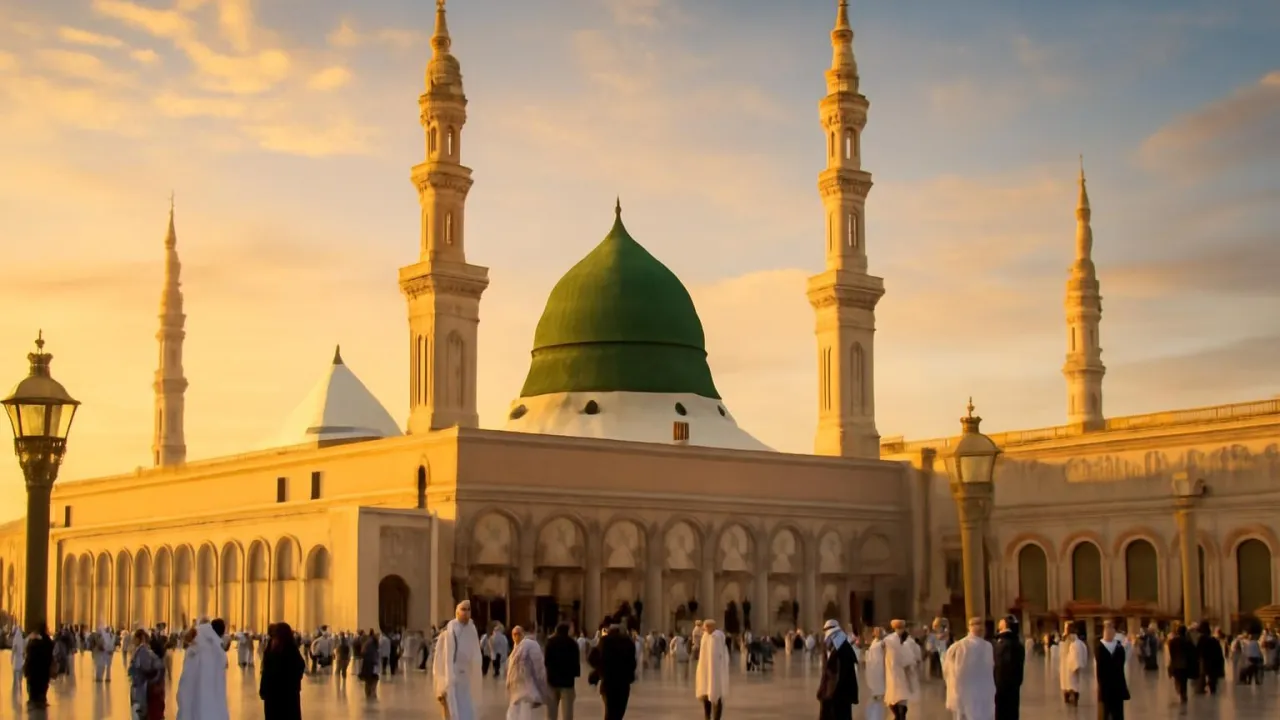
During special holidays, the mosque shines with even more lights and welcomes huge crowds.
✨ Word Sparks (Grade 2 Glossary)
Tap 🔊 to hear
prayer
Talking to God quietly or aloud
pilgrim
A person who travels for religion
courtyard
An open space inside a building
🪝
Can you imagine hearing gentle footsteps echo under a giant green dome?
1
A Shining Place
The mosque’s white floors feel cool and smooth. Tall minarets stand like watchful towers, and the green dome shines in the sun. Golden lights glow at night and make the whole mosque sparkle. It is a beautiful place that looks magical in the sunlight and at night.
2
So Many Visitors
Every year, people from many countries come to pray and learn. Families walk together, and children marvel at the big open spaces. Some visitors travel very far to see this special mosque and share with others. The mosque is always full of gentle voices, quiet footsteps, and happy smiles.
3
A Mosque Full of Stories
This mosque is very old and important to Muslims all over the world. It has beautiful doors, bright lights, and a peaceful feeling inside. The mosque’s green dome marks a very special place, and the building has grown much bigger over time. People love to visit and remember stories from long ago.
The mosque’s courtyard umbrellas are so large, each one can shade hundreds of people!
✨ Word Sparks (Grade 3 Glossary)
Tap 🔊 to hear
arch
A curved shape that holds up buildings
minaret
A tower for calling people to prayer
pilgrimage
A special journey for religious reasons
🪝
What would it feel like to stand where millions of people have gathered for centuries?
1
A Place of Gathering
Al-Masjid an-Nabawi’s marble floors echo with footsteps from around the world. The green dome and ten tall are visible from far away. Pilgrims visit to pray, learn, and reflect in its peaceful courtyards. The mosque is filled with gentle light, day and night.
2
How Was It Built?
The mosque was first built in 622 CE by the Prophet Muhammad and his companions. Over the centuries, it was expanded using strong stone, brick, and marble. Builders used to support the wide roof and let in sunlight. Today, the mosque covers nearly 100 acres and holds over a million worshippers.
3
Special Features
The mosque’s green dome marks the resting place of the Prophet Muhammad. reach high so the call to prayer can be heard across Medina. The huge courtyard has retractable umbrellas that open like flowers to shade visitors. Modern lights and cooling fans keep the space comfortable for everyone.
4
A Monument of Meaning
Al-Masjid an-Nabawi is a monument of Islamic history and faith. Its design blends ancient and modern engineering, with , domes, and advanced sound systems. Pilgrims from every continent visit, making it a symbol of unity. The mosque’s peaceful atmosphere inspires kindness and respect.
The mosque’s ten minarets are so tall, they can be seen from nearly every part of Medina!
✨ Word Sparks (Grade 4 Glossary)
Tap 🔊 to hear
acoustic
How sound moves in a space
mosaic
A picture made from tiny colored pieces
legacy
Something important left for the future
🪝
Imagine the soft hum of prayers echoing beneath a dome that has watched over centuries of history.
1
A Center of Faith and Architecture
Al-Masjid an-Nabawi stands at the heart of Medina, its vast marble courtyards reflecting sunlight and the footsteps of millions. The mosque’s ten minarets and iconic green dome are visible from miles away, serving as beacons for pilgrims. Its design features elegant arches, intricate tilework, and advanced systems that carry the call to prayer. This sacred site is one of the world’s largest and most visited religious landmarks.
2
Building Through the Ages
Originally constructed in 622 CE, the mosque was a simple structure of palm trunks and mud bricks. Over centuries, rulers expanded and rebuilt it using stone, marble, and decorative . The use of arches and domes allowed for wide, open prayer halls without columns blocking the view. Modern renovations added retractable umbrellas and climate control, blending ancient tradition with new technology.
3
A Marvel of Engineering
The mosque covers 400,500 square meters and can hold over a million people during peak times. Its ten minarets rise up to 344 feet (105 meters), helping the call to prayer reach far across the city. The courtyard’s giant umbrellas, inspired by flower petals, open and close automatically to protect visitors from sun and rain. Advanced sound and cooling systems ensure comfort for worshippers from every continent.
4
Global Impact and Lasting Legacy
Al-Masjid an-Nabawi is not only a center for prayer but also a symbol of unity and peace. Pilgrims from around the world gather here, sharing traditions and stories in many languages. The mosque’s architecture has inspired buildings across the globe, blending Islamic art with modern engineering. Its peaceful atmosphere and welcoming spirit continue to shape the lives of millions every year.
2. What makes the mosque important to so many people?
🤯 Mind-Blowing Fact • Grade 5
Each of the mosque’s 250 giant umbrellas can cover an area larger than a basketball court and is engineered to withstand powerful desert winds.
✨ Word Sparks (Grade 5 Glossary)
Tap 🔊 to hear
hydraulic
Uses liquid power to move things
sustainability
Protecting resources for the future
resilience
Staying strong through challenges
🪝
What if you could trace the footsteps of history beneath soaring domes and echoing arches, where sacred traditions meet modern marvels?
1
A Sanctuary of Spiritual and Architectural Wonder
Al-Masjid an-Nabawi, the Prophet’s Mosque, rises from the heart of Medina as a living testament to centuries of faith, innovation, and community. Its ten minarets, each reaching 344 feet (105 meters), and the iconic green dome draw millions of pilgrims annually, making it the world’s second-holiest mosque. The mosque’s vast expanse—400,500 square meters—encompasses prayer halls, courtyards, and the revered Rawdah, believed by many to be a garden of paradise. The interplay of light, marble, and shadow creates a serene atmosphere that welcomes worshippers from every continent.
2
From Simple Beginnings to Global Inspiration
Originally built in 622 CE as a humble structure of palm trunks and mud bricks, the mosque has undergone numerous expansions under various Islamic rulers. Each era contributed new engineering techniques, from the introduction of stone arches to the installation of intricate mosaics and marble columns. The Ottoman and Saudi expansions transformed the mosque into a masterpiece of Islamic architecture, blending traditional artistry with modern construction. Today, its design influences mosques and civic buildings worldwide.
3
Engineering Marvels: Scale, Structure, and Innovation
The mosque’s structural design uses a series of arches and domes to distribute weight, allowing for vast open spaces without interior columns obstructing worshippers. The ten minarets serve not only as visual landmarks but also as acoustic towers, projecting the call to prayer across Medina. The courtyard’s 250 retractable umbrellas, each spanning 26 meters, use engineering to open and close automatically, providing shade for thousands and protecting the marble floors from intense desert sun. Advanced climate control and sound systems ensure comfort and clarity for over a million visitors during peak seasons.
4
A Living Legacy: Culture, Community, and Global Reach
Al-Masjid an-Nabawi is more than a place of worship; it is a hub of learning, charity, and cultural exchange. Pilgrims from every corner of the globe meet here, sharing languages, traditions, and acts of kindness. The mosque’s architecture, with its harmonious balance of form and function, continues to inspire designers and engineers worldwide. Its peaceful environment fosters reflection, unity, and a sense of belonging for millions each year.
5
Enduring Significance in a Changing World
Throughout history, Al-Masjid an-Nabawi has adapted to changing needs and technologies while preserving its sacred legacy. It remains a symbol of , welcoming people of all backgrounds and ages. The mosque’s ongoing expansions and innovations reflect a commitment to accessibility, , and spiritual connection. As one of the world’s most visited landmarks, it stands as a beacon of hope, learning, and peace for generations to come.