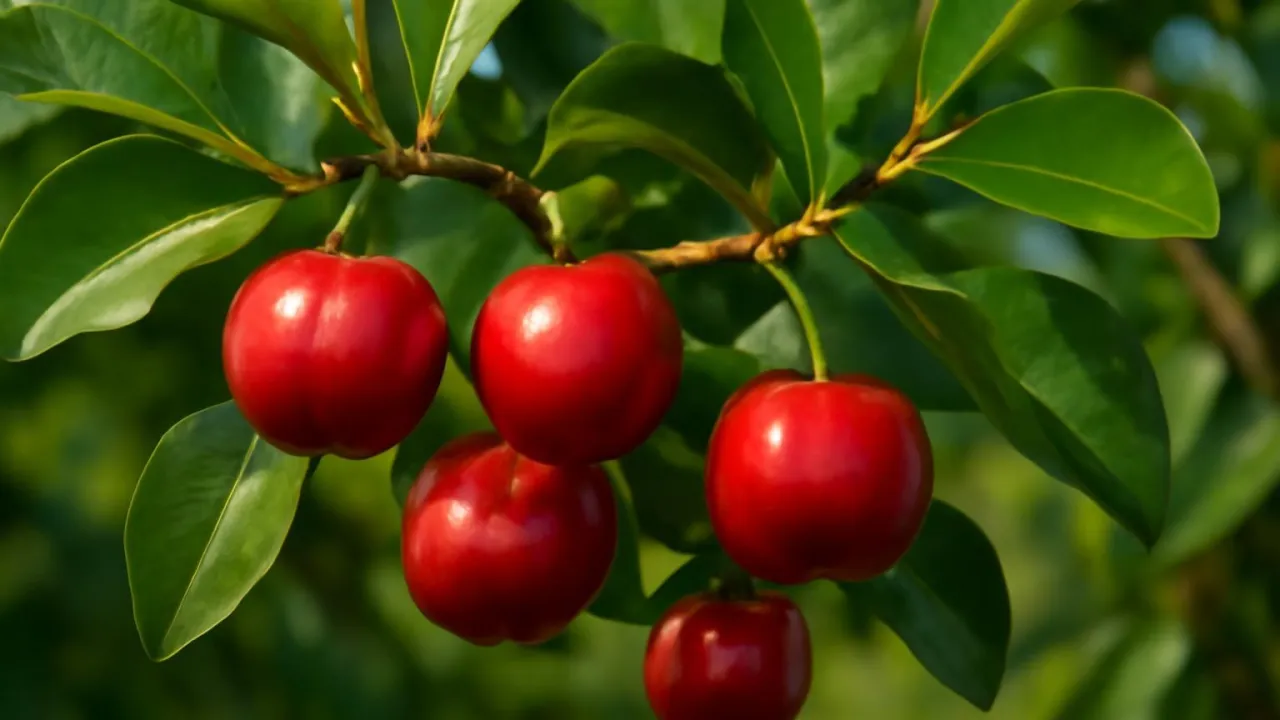
Acerola cherries have up to 30 times more vitamin C than oranges!
✨ Word Sparks (Grade 2 Glossary)
Tap 🔊 to hear
ripe
Ready to eat or pick from the tree
tropical
Warm places near the equator
nutrient
Something healthy in food that helps you grow
🪝
Have you ever tasted a fruit with more vitamin C than an orange?
1
A Bright Red Fruit
Acerola cherries are small fruits that grow on green leafy trees. They have a bright red color and are juicy. Birds and animals often eat these tasty cherries in forests.
2
Growing in Warm Places
These cherries grow best in warm, sunny places with plenty of water. Farmers pick the fruit when it is and bright red. The trees need good sunlight to produce many cherries.
3
A Healthy Vitamin Boost
Acerola cherries contain very high amounts of vitamin C, which helps keep people healthy. People eat the fruit fresh or drink it as juice. It is a sweet and healthy treat.
Acerola cherries can contain up to 1,677 mg of vitamin C per 100 grams!
✨ Word Sparks (Grade 3 Glossary)
Tap 🔊 to hear
immune system
Body’s way to fight sickness and germs
pollinate
Help flowers make fruit by moving pollen
seed dispersal
Spreading seeds to grow new plants
🪝
Did you know acerola cherries have a natural superpower to fight sickness?
1
Small Fruit with Big Power
Acerola cherries are small, bright red fruits that grow on tropical trees. Their vibrant color helps attract animals for . The fruit’s juicy flesh contains many nutrients, especially vitamin C, which supports the .
2
How They Grow and Adapt
These cherries thrive in warm climates with plenty of sunlight and water. Their thin skin protects the fruit but is soft enough for animals to eat easily. This adaptation helps spread seeds and grow new trees in the forest.
3
Role in Nature and People
Acerola cherries provide food for birds and insects, which help the flowers. Humans harvest the fruit for its health benefits, especially vitamin C content. This fruit plays an important role in tropical food webs and human diets.
4
Amazing Vitamin C Levels
Acerola cherries contain much more vitamin C than many other fruits. This vitamin helps protect cells from damage and supports healing. Eating acerola cherries can help people stay healthy and fight off colds.
Acerola cherries can have 20 to 30 times more vitamin C than common oranges.
✨ Word Sparks (Grade 4 Glossary)
Tap 🔊 to hear
antioxidant
A substance that protects cells from damage
biodiversity
Variety of living plants and animals in an area
deforestation
Cutting down trees that harms habitats
🪝
How does the acerola cherry’s vitamin C help both nature and people?
1
Tropical Growth and Adaptations
Acerola cherry trees thrive in tropical regions where warm temperatures and abundant sunlight cause rapid fruit growth. Their thin, bright red skin attracts birds and animals, which eat the fruit and disperse its seeds, aiding forest regeneration. This mutual relationship benefits both the plants and wildlife in the ecosystem. The fruit’s juicy texture also helps animals digest and spread seeds efficiently.
2
Vitamin C’s Role in Health
The acerola cherry contains extraordinarily high vitamin C levels, which act as to protect cells from damage caused by free radicals. This nutrient supports the immune system and helps the body repair tissues. People consume acerola cherries fresh or as supplements to boost their health naturally. Its vitamin C content is much higher than many other fruits, making it a powerful health food.
3
Ecosystem Importance and Human Impact
By providing food for birds and insects, acerola cherries support pollination and seed dispersal, which maintain tropical . However, and farming practices threaten natural habitats, making sustainable cultivation essential for preserving this fruit and its ecological roles. Conservation efforts help protect wild acerola trees and their surrounding ecosystems.
4
Geographic Distribution and Cultivation
Native to tropical America and the Caribbean, acerola cherries are now cultivated in many warm regions worldwide. Farmers carefully manage water and sunlight to maximize fruit production. This widespread cultivation increases availability but requires balancing human needs with environmental care. Growing acerola cherries sustainably helps protect both the fruit and the environment.
1. Why do animals eat acerola cherries in the wild?
2. What threatens the natural habitats of acerola cherries?
🤯 Mind-Blowing Fact • Grade 5
Acerola cherries can contain nearly 1,700 mg of vitamin C per 100 grams, far exceeding most fruits.
✨ Word Sparks (Grade 5 Glossary)
Tap 🔊 to hear
metabolic pathway
Body’s process to make chemicals like vitamin C
anthocyanins
Pigments that give red and purple colors
mutualistic
A helpful relationship between two living things
🪝
What makes the acerola cherry one of the richest natural sources of vitamin C on Earth?
1
Scientific Classification and Origins
The acerola cherry, scientifically known as Malpighia emarginata, belongs to the Malpighiaceae family. It is native to tropical regions of the Americas and the Caribbean, where it has been cultivated for centuries due to its nutritional and medicinal properties. This small fruit is classified botanically as a drupe and is highly valued worldwide.
2
Physiological Traits and Vitamin C Synthesis
Acerola cherries produce vitamin C through specialized in their fruit tissues, resulting in concentrations up to 1,677 milligrams per 100 grams. The fruit’s thin skin and juicy pulp facilitate rapid nutrient absorption by consumers, aiding seed dispersal. Its bright red pigmentation is due to carotenoids and , which also provide antioxidant benefits.
3
Conservation and Agricultural Practices
Sustainable cultivation of acerola cherries requires careful water management and protection from pests to maintain high vitamin C yields. Deforestation and habitat loss threaten wild populations, making conservation efforts important. Agricultural research focuses on breeding disease-resistant varieties and optimizing growing conditions to support global demand.
4
Ecological Role and Food Web Connections
In tropical ecosystems, acerola cherries serve as a vital food source for birds, insects, and mammals, facilitating seed dispersal and pollination. This relationship supports biodiversity and forest regeneration. Human harvesting impacts these ecological interactions, so balancing cultivation with ecosystem health is critical.
5
Quantitative Comparisons and Nutritional Impact
Compared to common fruits like oranges, acerola cherries contain 20 to 30 times more vitamin C per 100 grams. While oranges provide about 53 milligrams, acerola cherries offer up to 1,677 milligrams, making them one of the richest natural sources. This high vitamin C content supports immune health, collagen production, and antioxidant defense in humans.