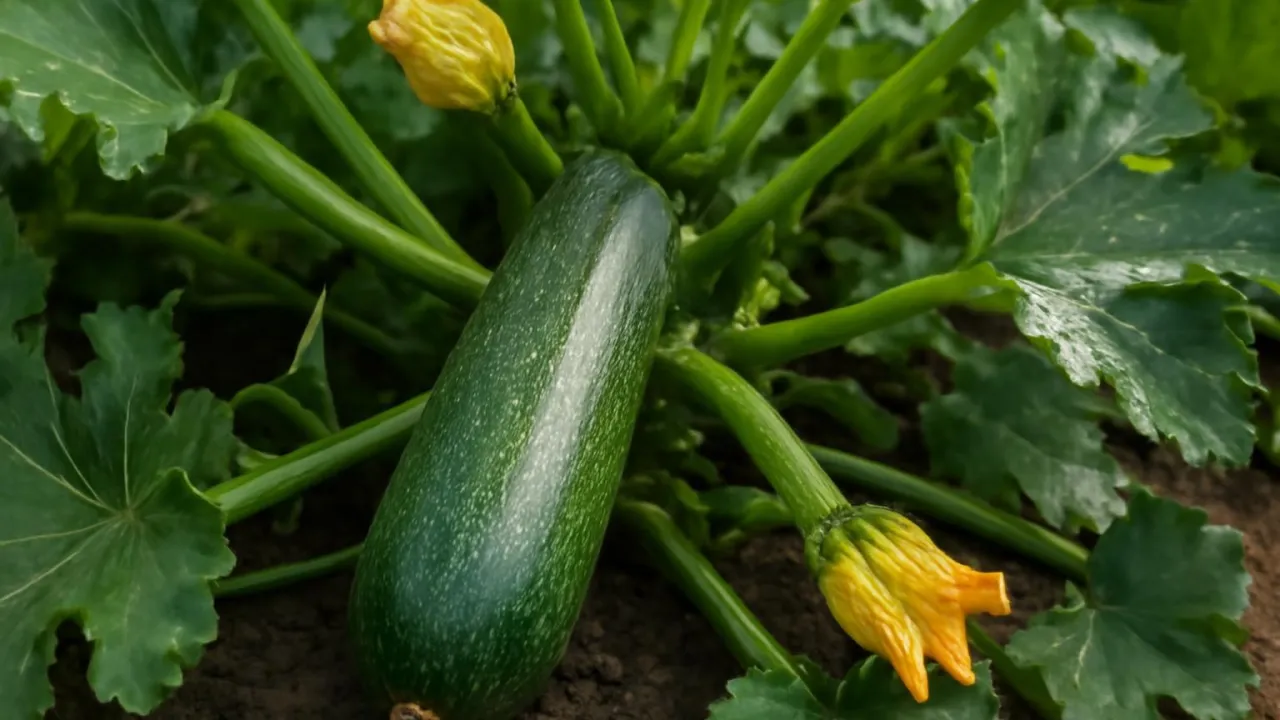
Zucchini fruits can grow up to 10 inches long in just a few weeks!
✨ Word Sparks (Grade 2 Glossary)
Tap 🔊 to hear
sunlight
Light from the sun that helps plants grow
flower
The colorful part of a plant that makes seeds
vitamins
Good things in food that keep us healthy
🪝
Have you ever seen a long green vegetable growing outside?
1
Zucchini’s Home
Zucchini plants grow best in warm places with plenty of sun. They need regular watering to stay healthy and strong. These plants spread wide and have large leaves that shade the ground.
2
How Zucchini Grows
Zucchini starts as a small that turns into a fruit. It grows quickly and can be picked when it is still young and tender. If left longer, it becomes bigger but still tasty.
3
What Makes Zucchini Special
Zucchini has a smooth green skin that shines in the . It is a vegetable that people eat cooked or raw in many dishes. It is healthy and full of .
Zucchini is botanically a fruit because it grows from a flower and has seeds inside!
✨ Word Sparks (Grade 3 Glossary)
Tap 🔊 to hear
pollination
When bees help flowers make seeds
camouflage
When something blends into its surroundings
nutrients
Good stuff plants and animals need to live
🪝
Did you know zucchinis are fruits even though we call them vegetables?
1
Zucchini’s Growing Place
Zucchini plants thrive in temperate climates where sunlight is abundant. Their large leaves provide shade to the soil, helping retain moisture. These plants spread across the ground and need nutrient-rich soil to grow well. Farmers often plant zucchinis in rows for easy harvesting.
2
From Flower to Fruit
Zucchini begins its life as a bright yellow flower that attracts pollinators like bees. allows the flower to develop into a fruit containing seeds. This process is vital for zucchini reproduction and growth. The fruit grows rapidly, often doubling in size within days.
3
Zucchini’s Special Features
The smooth green skin of zucchini helps protect it from pests and diseases. Its shape and color allow it to blend into leafy garden surroundings, a form of . This adaptation helps reduce damage from hungry animals and insects. The flesh inside is soft and full of water, keeping it fresh.
4
Why Zucchini Matters
Zucchini provides important like vitamin C and potassium to people’s diets. It also plays a role in food webs by feeding insects and small animals. Gardeners enjoy growing zucchini because it grows fast and yields many fruits. Understanding its life cycle helps farmers produce better crops.
Zucchini’s large leaves help keep soil moist by shading and reducing evaporation.
✨ Word Sparks (Grade 4 Glossary)
Tap 🔊 to hear
photosynthesize
How plants use sunlight to make food
pollinators
Animals like bees that help plants make seeds
ecosystem
A community of plants and animals living together
🪝
How does zucchini survive and help its garden home?
1
Zucchini’s Growing Conditions
Zucchini plants require warm temperatures and full sun to effectively, which allows them to produce energy. Their large leaves create shade that reduces water evaporation from the soil, helping conserve moisture during dry spells. This adaptation is crucial in temperate regions where water may be limited. Farmers must water zucchini regularly to maintain healthy growth and fruit production.
2
Role in the Ecosystem
Zucchini plants contribute to their by providing food to various insects, including like bees and butterflies. These pollinators assist in fertilizing flowers, enabling fruit development and seed production. Additionally, zucchini fruits serve as a food source for small mammals and birds, supporting local food webs. Gardeners benefit from zucchini’s fast growth and abundant harvests, which can improve soil health when plant matter decomposes.
3
Cause and Effect in Growth
When zucchini plants receive adequate sunlight and water, they grow rapidly and produce more fruits. If conditions are poor, plants may become weak and vulnerable to pests or diseases, reducing yield. Overwatering can cause root rot, while too little water causes wilting and poor fruit development. Understanding these cause-and-effect relationships helps gardeners manage zucchini crops more successfully.
4
Where Zucchini Grows Worldwide
Originally from Central America, zucchini is now cultivated worldwide in temperate climates. It thrives in home gardens and commercial farms across North America, Europe, and parts of Asia. The plant adapts well to different soils but prefers well-drained, fertile ground. Its global spread shows how humans have valued this vegetable for food and agriculture.
Zucchini can grow from seed to harvest in just 35 days under ideal conditions.
✨ Word Sparks (Grade 5 Glossary)
Tap 🔊 to hear
botanical
Relating to plants and how they grow
photosynthesis
How plants change sunlight into food
crop rotation
Growing different plants in the same soil over time
🪝
What scientific secrets make zucchini a fascinating fruit-vegetable hybrid?
1
Scientific Classification and Origins
Zucchini, scientifically named Cucurbita pepo, belongs to the Cucurbitaceae family, which includes pumpkins and cucumbers. It originated in Central America and was cultivated by indigenous peoples thousands of years ago. Today, it is widely grown worldwide in temperate climates due to its adaptability and high yield. Its classification as a fruit is based on criteria, as it develops from the ovary of a flower and contains seeds.
2
Physiological Growth and Adaptations
Zucchini plants use to convert sunlight into energy, supporting rapid fruit development that can reach up to 10 inches in length within weeks. Their large, lobed leaves reduce soil evaporation by shading and help protect against herbivores through physical and chemical defenses. The plant’s fast growth cycle, typically 35 to 55 days from planting to harvest, allows multiple crops per season. This efficiency benefits both home gardeners and commercial farmers.
3
Conservation and Agricultural History
While zucchini is not endangered, sustainable farming practices are important to maintain soil health and reduce pesticide use. and organic methods help prevent diseases like powdery mildew and root rot. Historically, zucchini became popular in Europe during the 19th century and has since become a staple in Mediterranean and American cuisines. Its cultivation reflects human agricultural innovation and cultural exchange.
4
Quantitative Comparisons and Uses
Zucchini fruits typically weigh between 6 and 16 ounces (170 to 450 grams) and grow best in temperatures ranging from 65 to 75 degrees Fahrenheit (18 to 24 degrees Celsius). They can grow up to 10 inches (25 centimeters) long but are often harvested smaller for better flavor. Nutritionally, zucchinis are low in calories but rich in vitamin C, potassium, and fiber, making them a healthy dietary choice worldwide.
5
Zucchini in Global Agriculture and Cuisine
Globally, zucchini is cultivated on millions of acres, contributing significantly to vegetable production. It is used in diverse culinary traditions, from Italian ratatouille to American grilled dishes. Its versatility allows it to be eaten raw, steamed, baked, or fried. Understanding zucchini’s biology and cultivation helps improve crop yields and supports food security in many regions.