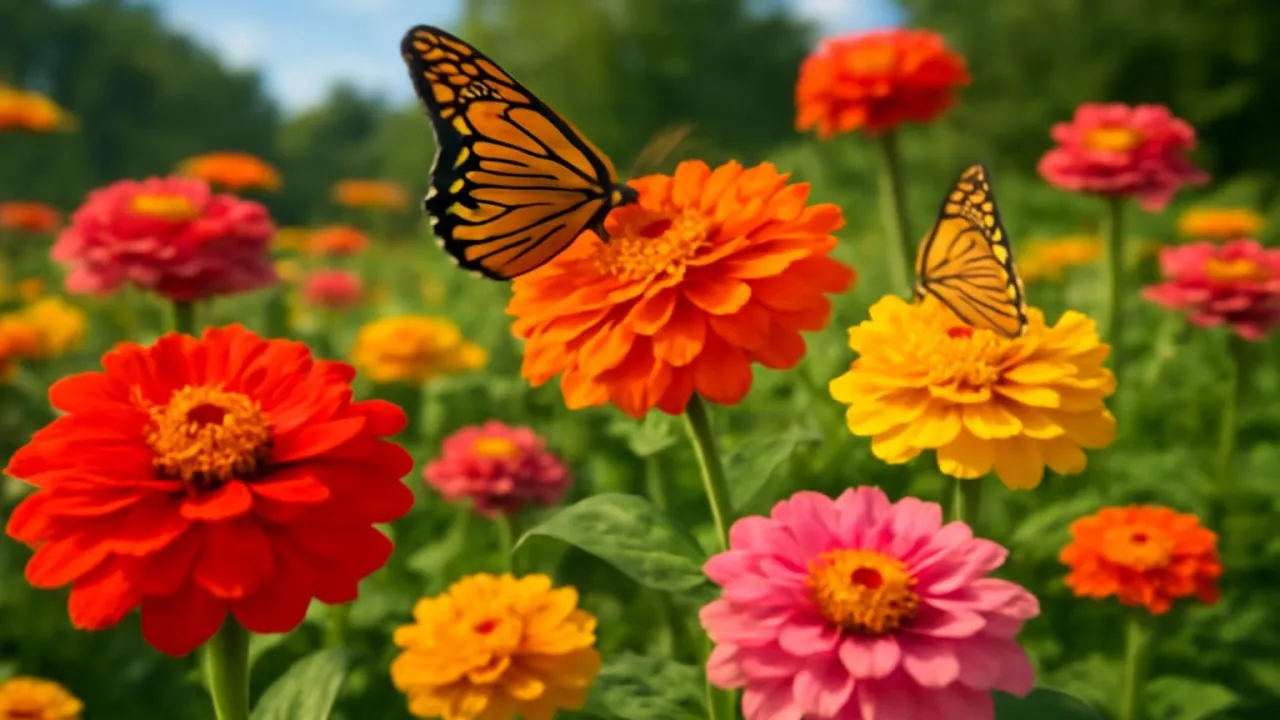
Zinnias can bloom nonstop from early summer until the first frost!
✨ Word Sparks (Grade 2 Glossary)
Tap 🔊 to hear
pollinators
Animals that help flowers make seeds
nectar
Sweet juice inside flowers that insects drink
petals
The colorful parts of a flower
🪝
Have you ever seen a flower that looks like a colorful sun?
1
Zinnia Colors and Shapes
Zinnias have many bright colors like red, pink, orange, and yellow. Their look like small stars or suns. Bees and butterflies often visit these flowers to drink .
2
Where Zinnias Grow
Zinnias grow best in warm places with lots of sunlight. They need soil that is moist but not too wet. Gardeners plant them in sunny gardens and watch them bloom all summer long.
3
A Special Flower Feature
One cool thing about zinnias is their can be smooth or ruffled. This helps attract different kinds of like butterflies and bees to help the flowers make seeds.
2. What do pollinators like bees and butterflies do?
🤯 Mind-Blowing Fact • Grade 3
Some zinnia varieties can grow up to four feet tall, towering over other garden flowers!
✨ Word Sparks (Grade 3 Glossary)
Tap 🔊 to hear
camouflage
Colors that help hide plants or animals
pollination
When pollen moves to make new seeds
nutrients
Food plants get from soil and water
🪝
Did you know zinnias use bright colors to hide from hungry bugs?
1
Zinnia Colors and Camouflage
Zinnia flowers have bright petals that attract pollinators like bees and butterflies. Their colors can also help them among other garden plants. This adaptation helps protect them from some predators.
2
How Zinnias Grow
Zinnias start as tiny seeds planted in warm soil. As they grow, they need sunlight and water to get . Their stems hold the flowers up high to reach sunlight and attract pollinators.
3
Pollination and Survival
Pollinators visit zinnia flowers to drink nectar, and in return, they carry pollen to other flowers. This helps zinnias produce seeds for new plants. It is a key part of their life cycle and survival.
4
Zinnia’s Role in Nature
Zinnias provide food for many insects, making them important in the garden food web. Their bright flowers support biodiversity by attracting many types of pollinators. This helps keep ecosystems healthy and balanced.
Zinnias can bloom continuously from early summer until the first frost, providing months of color and food for pollinators.
✨ Word Sparks (Grade 4 Glossary)
Tap 🔊 to hear
pollinators
Animals that carry pollen to help plants grow seeds
ecosystem
A community of plants and animals living together
biodiversity
Many different kinds of living things in one place
🪝
How do zinnias help gardens stay full of buzzing bees and fluttering butterflies?
1
Zinnia’s Bright Colors and Adaptations
Zinnias have evolved bright, colorful petals that attract many , including bees and butterflies, which are essential for pollination. Their petals sometimes have ruffled edges, increasing their surface area to better catch the attention of insects. This adaptation directly affects their ability to reproduce and spread seeds.
2
Growing Conditions and Geographic Range
Native to Mexico and the southwestern United States, zinnias thrive in warm, sunny climates with well-drained soil. They require moderate watering but do not tolerate waterlogged conditions well. Gardeners around the world cultivate zinnias because they are easy to grow and bloom profusely throughout summer.
3
Role in Ecosystems and Food Webs
Zinnias play an important role in garden by providing nectar and pollen to a variety of . These insects, in turn, support food webs by feeding birds and other animals. Zinnias also help maintain by attracting different pollinator species, which supports healthy plant reproduction.
4
Human Impact and Uses
Humans value zinnias for their bright beauty and ability to attract beneficial insects, which helps with natural pest control in gardens. They are often planted in flower beds and used in floral arrangements. However, overuse of pesticides can harm that rely on zinnias, showing the need for careful garden care.
Zinnias’ composite flowers are made of many tiny florets, each capable of producing seeds after pollination.
✨ Word Sparks (Grade 5 Glossary)
Tap 🔊 to hear
composite
A flower made of many small flowers together
cross-pollination
Pollen moving between flowers to make new seeds
cultivar
A plant variety made by people breeding plants
🪝
What makes the zinnia a fascinating example of floral adaptation and ecological interaction?
1
Scientific Classification and Origin
Zinnia elegans belongs to the Asteraceae family, which includes daisies and sunflowers. This genus is native to Mexico and the southwestern United States, where it evolved to thrive in warm, sunny environments with well-drained soils. The species was first described scientifically in the 18th century and has since been widely cultivated worldwide.
2
Physiological Features and Adaptations
Zinnias have flower heads made of many small florets, which maximize pollinator visits by offering abundant nectar and pollen. Their bright, ruffled petals increase visibility to insects, while their sturdy stems support flowers up to four feet tall, helping them compete for sunlight and attract pollinators efficiently.
3
Ecological Role and Pollination Mechanics
Zinnias play a crucial role in supporting pollinator populations by providing nectar sources for butterflies, bees, and hummingbirds. Pollinators transfer pollen between florets, facilitating that promotes genetic diversity and seed production. This interaction sustains local ecosystems and contributes to agricultural pollination services.
4
Conservation and Botanical History
While zinnias are not currently endangered, habitat loss and pesticide use threaten pollinator species that rely on them. Botanical gardens and conservationists promote zinnia cultivation to support pollinator health. Historically, zinnias have been bred into numerous with varied colors and forms, enhancing their popularity in horticulture.
5
Quantitative Comparisons and Growth
Zinnias can grow from 6 inches to 48 inches tall, with flower heads measuring 2 to 4 inches across. They thrive in temperatures between 65 and 85 degrees Fahrenheit and require moderate watering to avoid root rot. Their bloom period can last over 100 days, outlasting many other annual flowers in temperate gardens.