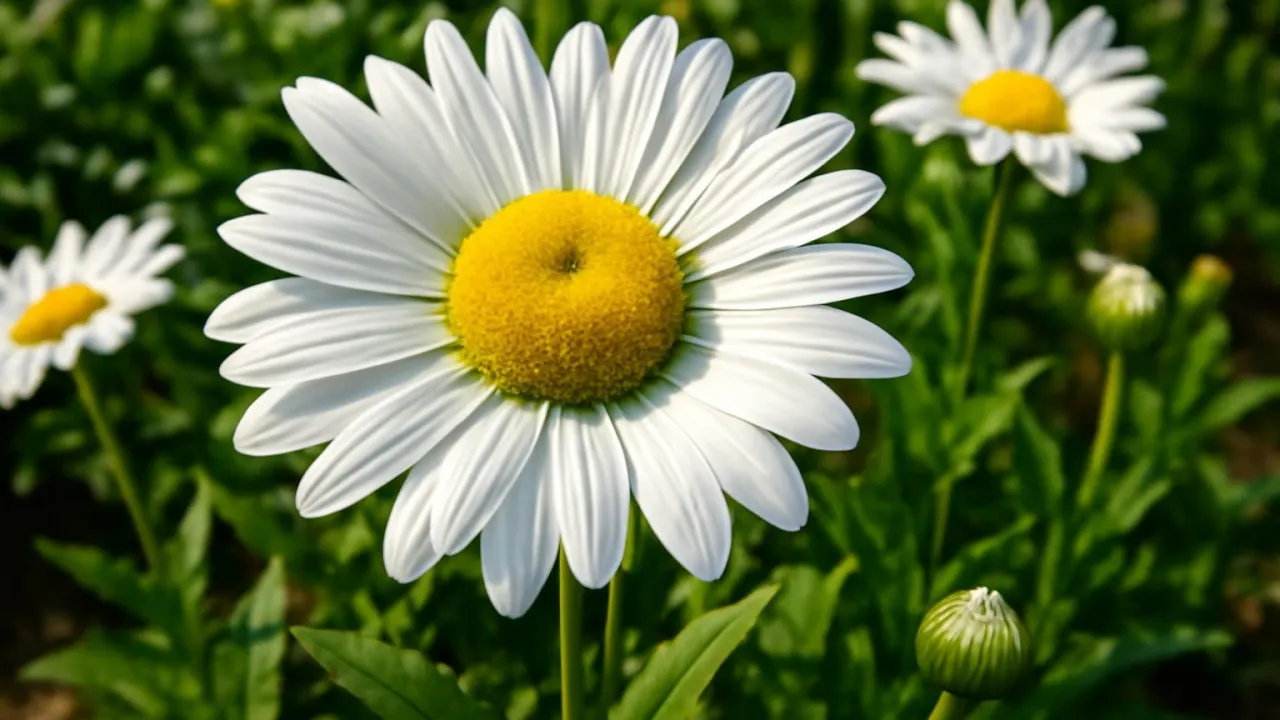
Shasta daisies were created by gardeners to be bigger and bloom longer than wild daisies!
✨ Word Sparks (Grade 2 Glossary)
Tap 🔊 to hear
petals
Soft parts of a flower that attract insects
pollinators
Animals like bees that help flowers grow seeds
nectar
Sweet juice inside flowers that bees like
🪝
Have you ever seen a flower that looks like a tiny sun?
1
Shasta Daisy’s Bright Look
Shasta daisies have bright white that spread out like rays of sunshine. Their centers are round and yellow, attracting many bees and butterflies. These flowers bloom in summer and bring color to gardens everywhere.
2
Where They Grow
Shasta daisies grow best in sunny places where they get plenty of light and water. They are originally from Europe but are now popular in gardens all around the world. They can grow up to three feet tall and stand strong in the wind.
3
Special Flower Features
The of a Shasta daisy are soft and thin, helping the flower stay cool in hot weather. Their yellow centers hold many tiny flowers that provide for . This helps the flower make seeds and grow new plants.
Shasta daisies are hybrids created by crossing different daisy species to improve their bloom time and size.
✨ Word Sparks (Grade 3 Glossary)
Tap 🔊 to hear
adaptation
A change that helps a plant survive better
pollination
When pollen moves to help flowers make seeds
ecosystem
A community of plants and animals living together
🪝
Did you know Shasta daisies use their petals to stay cool in hot weather?
1
Petals and Adaptation
The white petals of Shasta daisies reflect sunlight, which helps keep the flower cool. This protects the delicate parts from heat damage during summer. The petals also help attract pollinators by their bright color and shape.
2
Pollination and Survival
The yellow center of the Shasta daisy is actually made up of many tiny flowers. These produce nectar that attracts pollinators like bees and butterflies. helps the plant reproduce by spreading pollen to other flowers.
3
Habitat and Growth
Shasta daisies thrive in temperate climates with full sun and well-drained soil. They grow up to three feet tall and need regular watering to provide nutrients. Their strong stems help them stand upright even in windy conditions.
4
Role in Ecosystems
These flowers provide food for pollinators and shelter for small insects. They are part of the garden food web, supporting many creatures. Shasta daisies also add beauty, which encourages people to care for natural spaces.
2. What do pollinators get from the yellow center?
🤯 Mind-Blowing Fact • Grade 4
Shasta daisies were bred by a famous horticulturist named Luther Burbank in the early 1900s to create bigger, longer-lasting flowers.
✨ Word Sparks (Grade 4 Glossary)
Tap 🔊 to hear
symbiosis
A helpful relationship between two living things
pollinators
Animals that carry pollen to help plants grow seeds
horticulturist
A person who grows and breeds plants
🪝
How do Shasta daisies help gardens stay lively and full of life?
1
Adaptations for Sun and Heat
Shasta daisies have bright white petals that reflect sunlight, reducing heat absorption and preventing damage to their reproductive parts. This adaptation allows them to bloom longer during hot summer months, which increases their chances of pollination and seed production. Their thin petals also help cool the flower by allowing air to flow easily around them.
2
Ecosystem Roles and Food Webs
These flowers serve as important food sources for like bees, butterflies, and beetles, which rely on their nectar for energy. In turn, pollinators help Shasta daisies reproduce by transferring pollen, creating a mutually beneficial relationship known as within garden ecosystems. This relationship supports many other plants and animals in the food web.
3
Geographic Distribution and Growth
Originally native to Europe, Shasta daisies have been cultivated worldwide because of their hardiness and beauty. They grow best in temperate zones with full sun and well-drained soil, reaching heights between one and three feet depending on conditions and care. Their strong stems help them resist damage from wind and rain in many climates.
4
Human Impact and Garden Use
Gardeners often plant Shasta daisies to add bright color and attract , supporting biodiversity in urban areas. However, overuse of chemicals like pesticides can harm these helpful insects, which negatively affects pollination and garden health. Choosing organic gardening methods helps protect these important flowers and their pollinators.
What scientific secrets make Shasta daisies thrive and brighten gardens worldwide?
1
Taxonomy and Botanical Origins
Shasta daisies, scientifically named Leucanthemum × superbum, belong to the Asteraceae family, which includes sunflowers and chrysanthemums. This species was developed by Luther Burbank in 1890 by crossing several daisy species to enhance bloom size and longevity. Their hybrid nature combines traits from multiple plants to create a stronger flower.
2
Physiological Mechanics of Flowering
The flower’s white ray florets reflect sunlight, reducing , while the yellow disc florets produce nectar to attract a variety of pollinators. Their efficiently transport water and nutrients, supporting sustained blooming through summer months. This system helps the plant survive droughts and heat waves.
3
Conservation and Botanical History
Although widely cultivated, Shasta daisies contribute to garden biodiversity by supporting pollinator populations. Their breeding history reflects early efforts in plant hybridization, which improved ornamental qualities without compromising ecological roles. These flowers help maintain healthy ecosystems by attracting beneficial insects.
4
Ecological and Geographic Distribution
Native to Europe, Shasta daisies now grow in temperate regions worldwide, thriving in USDA zones 4 to 9. They prefer full sun exposure and well-drained soils, often found in garden beds, meadows, and parks where they support diverse insect communities. Their adaptability allows them to flourish in many different environments.
5
Quantitative Comparisons and Growth
Shasta daisies typically reach heights between 12 and 36 inches (30 to 90 cm) and bloom continuously for 6 to 8 weeks. Their flowers measure about 2 to 4 inches (5 to 10 cm) across, making them larger than many wild daisy species, which usually bloom for shorter periods. This extended bloom time benefits pollinators and gardeners alike.