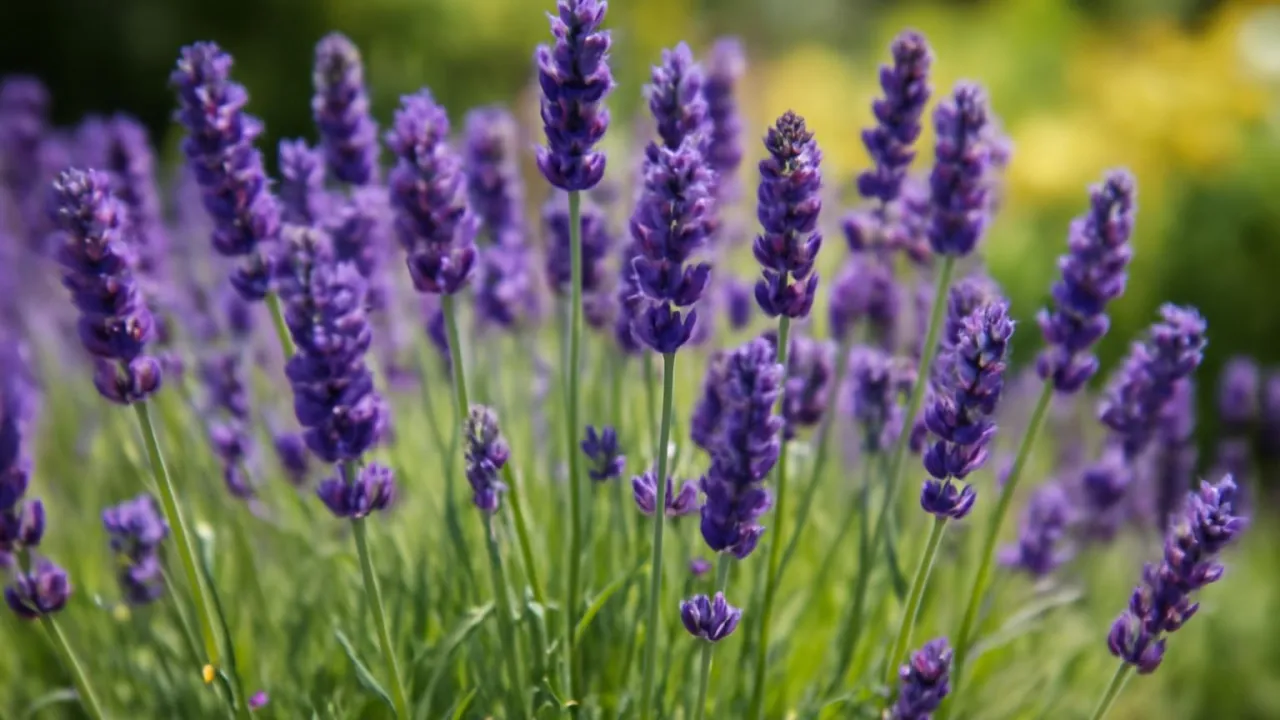
Lavender’s scent can help bugs stay away while making people feel peaceful.
✨ Word Sparks (Grade 2 Glossary)
Tap 🔊 to hear
pollination
When bees help flowers make seeds
habitat
The place where a plant or animal lives
scent
A smell that comes from flowers or plants
🪝
Have you ever smelled a flower that helps you feel calm?
1
Lovely Purple Flowers
English lavender has many small purple flowers that bloom in summer. Bees and butterflies visit these flowers often. The flowers grow on tall, thin green stems.
2
Where It Grows
This plant likes warm, sunny places with dry soil. It grows well in gardens and fields in Europe. People also plant it near their homes to enjoy its .
3
A Special Smell
Lavender’s sweet smell helps people feel calm and relaxed. It is used in soaps and oils. The also keeps bugs away from plants and people.
Lavender’s scent is a natural insect repellent and a calming agent for humans.
✨ Word Sparks (Grade 3 Glossary)
Tap 🔊 to hear
pollinator
An animal that helps flowers make seeds
adaptation
A change that helps plants or animals survive
ecosystem
All plants and animals living together in one place
🪝
Did you know English lavender uses its scent to protect itself?
1
Beautiful Purple Blooms
English lavender produces many small purple flowers that attract like bees. These flowers grow on slender green stems that rise above the leaves. Pollination helps the plant make seeds to grow new lavender plants.
2
Adapted to Sunny Habitats
Lavender thrives in warm, dry habitats where sunlight is strong. Its narrow leaves reduce water loss, an to dry soil conditions. This helps the plant survive in places where other plants might not grow well.
3
Scent as a Superpower
The strong, sweet scent of lavender repels many insect predators and pests. This natural defense helps protect the plant from harm. People also use lavender’s scent in oils and soaps to calm their minds.
4
Role in Nature
Lavender supports many insects by providing nectar for food. It plays a key role in the local ’s food web. By attracting , lavender helps other plants reproduce too.
1. How does lavender’s leaf shape help it survive?
2. What role does lavender play in its ecosystem?
🤯 Mind-Blowing Fact • Grade 4
English lavender’s essential oils both protect the plant and soothe human minds worldwide.
✨ Word Sparks (Grade 4 Glossary)
Tap 🔊 to hear
essential oils
Natural plant liquids that give strong smells
symbiotic
A helpful relationship between two living things
biodiversity
Many different plants and animals living together
🪝
How does English lavender’s scent affect both insects and people?
1
Physical Traits and Habitat
English lavender grows best in sunny, dry environments with well-drained soil, mostly in the Mediterranean region and parts of Europe. Its narrow, gray-green leaves help reduce water loss through evaporation, an important adaptation for dry climates. The plant reaches up to three feet tall and produces dense spikes of fragrant purple flowers during summer.
2
Cause and Effect of Its Scent
Lavender produces that give off a strong, pleasant scent which repels many insect pests, protecting the plant from damage. This scent also attracts pollinators such as bees and butterflies, which are vital for the plant’s reproduction. Additionally, humans harvest lavender for its calming fragrance used in aromatherapy and personal care products.
3
Role in Ecosystems and Agriculture
By attracting pollinators, English lavender supports and helps maintain healthy ecosystems. It also has a relationship with certain insects that depend on its nectar for food. In agriculture, lavender is grown commercially for and dried flowers, contributing to local economies while promoting sustainable farming practices.
4
Geographic Distribution and Impact
Native to the Mediterranean, English lavender has been widely cultivated worldwide in temperate climates. Its ability to thrive in poor soils and dry conditions makes it valuable for erosion control and land restoration. However, in some areas, careful management is needed to prevent it from outcompeting native plants.
English lavender’s essential oils contain compounds that both repel insects and soothe human nerves.
✨ Word Sparks (Grade 5 Glossary)
Tap 🔊 to hear
Lamiaceae
The plant family of many herbs like mint and lavender
trichomes
Tiny hair-like parts on plants that hold oils
aromatherapy
Using plant smells to help people feel better
🪝
What makes English lavender a valuable plant for ecology, medicine, and culture?
1
Scientific Classification and Origin
English lavender, scientifically named Lavandula angustifolia, belongs to the family, which includes many aromatic herbs. It is native to the Mediterranean basin, particularly southern Europe, where it has been cultivated for centuries for its fragrance and medicinal properties. This long history shows its importance to human culture and natural ecosystems.
2
Physiological Adaptations and Essential Oils
The plant’s narrow leaves have a waxy coating that reduces water loss, enabling survival in dry, sunny habitats. Lavender produces essential oils stored in tiny glandular on its flowers and leaves. These oils contain compounds like linalool and linalyl acetate, which repel herbivorous insects and have calming effects on humans. These adaptations make lavender resilient and useful.
3
Cultural and Conservation Importance
Historically, English lavender has been used in traditional medicine, , and perfumery. Its cultivation supports rural economies and promotes biodiversity through pollinator attraction. Conservation efforts focus on sustainable harvesting and protecting wild populations from habitat loss and climate change impacts. These efforts help preserve this valuable plant for future generations.
4
Ecological Role and Agricultural Impact
English lavender plays an important role in ecosystems by supporting pollinators such as bees and butterflies, which contribute to plant reproduction and food webs. Commercially, lavender farming provides essential oils used worldwide, but requires careful land management to avoid soil depletion and invasive spread. Sustainable farming practices help balance economic and environmental needs.
5
Quantitative Comparisons and Growth Conditions
English lavender typically grows between 1 and 3 feet tall, thriving in temperatures from 60 to 80 degrees Fahrenheit (15 to 27 degrees Celsius). Its essential oil yield averages about 1.5% of fresh flower weight, and it can withstand drought conditions better than many other flowering plants, making it a resilient species for dry climates. These traits make it valuable for various uses.