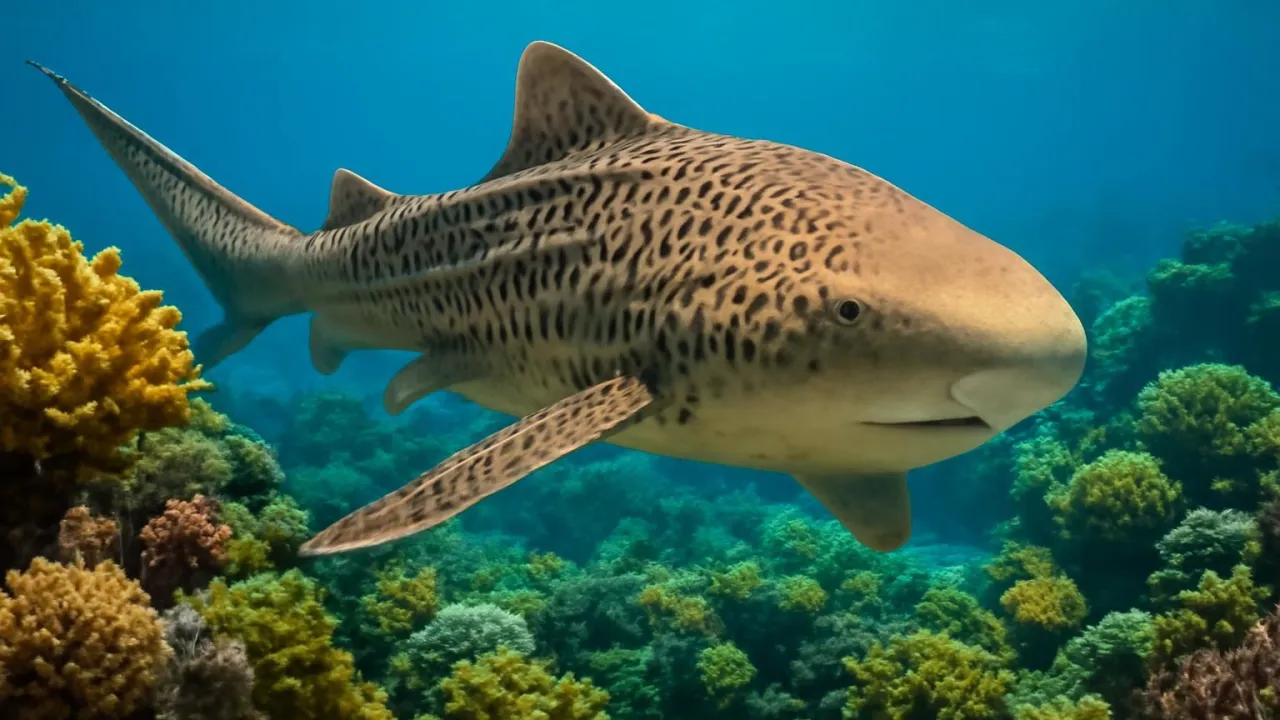
Zebra sharks can grow up to 7.5 feet long and live near coral reefs!
✨ Word Sparks (Grade 2 Glossary)
Tap 🔊 to hear
predator
An animal that hunts other animals
coral reef
A home for many sea animals
mollusk
Animals with soft bodies and shells
🪝
Have you ever seen a shark that changes from stripes to spots?
1
Stripes to Spots
Zebra sharks have stripes when they are young, but as they grow older, their stripes turn into spots. This change helps them blend in with the better. It is a cool way to hide from and sneak up on prey.
2
Where They Live
These sharks live in warm oceans near in the Indo-Pacific region. They like shallow waters where they can find food easily. The coral reef gives them shelter and many places to hide.
3
What They Eat
Zebra sharks eat small animals like crabs, , and fish. They use their strong jaws to crush shells. They mostly hunt at night when it is easier to find food.
1. Why do zebra sharks change from stripes to spots?
2. What do zebra sharks use to crush shells?
🤯 Mind-Blowing Fact • Grade 3
Zebra sharks’ skin pattern changes from stripes to spots as they grow older to help camouflage.
✨ Word Sparks (Grade 3 Glossary)
Tap 🔊 to hear
camouflage
Colors or patterns that help hide animals
nocturnal
Active during the night time
adaptation
A change that helps animals survive
🪝
How does a zebra shark’s changing skin help it survive underwater?
1
Color Change and Camouflage
Zebra sharks begin life with bold black and white stripes that help them hide among coral branches. As they mature, their stripes fade into small spots, providing better on sandy ocean floors. This helps protect them from predators and allows them to sneak up on prey more easily.
2
Habitat and Behavior
These sharks live mainly in shallow coral reefs and sandy seabeds across the Indo-Pacific region. They are hunters, searching for food at night when their prey is less active. During the day, they rest in caves or under ledges to avoid danger.
3
Diet and Feeding
Zebra sharks feed on mollusks, crustaceans, and small fish. Their strong jaws and sharp teeth allow them to crush hard shells to reach soft bodies inside. This feeding strategy helps them get nutrients from tough prey that other predators might avoid.
4
Adaptations for Survival
Their long, flexible bodies and strong tails help zebra sharks swim slowly but steadily across the ocean floor. Their spotted skin acts as , blending with the sandy and rocky environment. These reduce the risk of being seen by predators and increase hunting success.
1. What is one reason zebra sharks change their skin pattern?
2. When do zebra sharks usually hunt for food?
🤯 Mind-Blowing Fact • Grade 4
Zebra sharks help keep coral reef ecosystems balanced by eating many small animals.
✨ Word Sparks (Grade 4 Glossary)
Tap 🔊 to hear
ecosystem
A community of plants and animals living together
nocturnal
Active at night instead of during the day
conservation
Protecting animals and nature from harm
🪝
Why does the zebra shark’s changing pattern matter in its coral reef ecosystem?
1
Skin Pattern and Survival
The zebra shark’s transformation from stripes to spots helps it blend into different environments as it grows older, reducing the chance of being spotted by predators. This camouflage is crucial for its survival in the diverse coral reef , where many animals compete for food and safety. Its ability to hide well allows it to avoid larger predators and catch prey more easily.
2
Role in the Food Web
As a predator, the zebra shark plays an important role by controlling populations of mollusks, crustaceans, and small fish. This balance helps maintain healthy coral reefs by preventing any one species from becoming too numerous and damaging the habitat. By eating these animals, zebra sharks support the growth of corals and other reef life.
3
Habitat and Geographic Range
Zebra sharks are found in the warm, shallow waters of the Indo-Pacific, including areas around Australia, Indonesia, and the Philippines. They prefer coral reefs and sandy seabeds where they can find shelter and abundant food sources. Their wide range allows them to adapt to various reef environments.
4
Human Impact and Conservation
While zebra sharks are not currently endangered, habitat destruction and fishing pressures threaten their populations. Protecting coral reefs and regulating fishing can help ensure these unique sharks continue to thrive in their natural habitats. efforts also include educating people about the importance of sharks in ocean .
Zebra sharks can live up to 25 years and change their skin pattern to better hide from predators.
✨ Word Sparks (Grade 5 Glossary)
Tap 🔊 to hear
ontogenetic
Changes an animal makes as it grows up
benthic
Living on the ocean floor or seabed
bycatch
Animals caught accidentally in fishing nets
🪝
How do zebra sharks’ unique traits and behaviors support their survival in Indo-Pacific coral reefs?
1
Scientific Classification and Physical Traits
The zebra shark, Stegostoma fasciatum, belongs to the family Stegostomatidae and is known for its distinctive juvenile stripes that transform into adult spots. Adults can reach lengths of up to 7.5 feet (2.3 meters) and weigh around 40 to 50 kilograms. Their elongated bodies and broad heads assist in maneuvering through coral crevices.
2
Physiological Adaptations and Feeding Mechanics
Zebra sharks possess strong jaws with multiple rows of small, pointed teeth designed to crush hard-shelled prey such as mollusks and crustaceans. Their flexible bodies and muscular tails enable slow, deliberate swimming along the ocean floor, which aids in stealthy nocturnal hunting. Their skin texture reduces drag and provides camouflage against sandy and rocky substrates.
3
Ecological Role and Behavior Patterns
As nocturnal predators, zebra sharks regulate populations of invertebrates and small fish, maintaining coral reef health. Their transition from striped juveniles to spotted adults reflects an shift that enhances camouflage effectiveness in different habitats. They often rest in caves or under ledges during daylight hours to avoid predators.
4
Conservation Status and Human Impact
Currently listed as Near Threatened by the IUCN, zebra sharks face risks from habitat degradation, coral reef destruction, and in fisheries. Conservation efforts focus on protecting reef habitats and implementing fishing regulations to reduce population decline. Public education about their ecological importance supports ongoing preservation initiatives.
5
Quantitative Comparisons and Environmental Preferences
Zebra sharks typically inhabit shallow waters ranging from 1 to 40 meters deep, preferring temperatures between 22 and 28 degrees Celsius. Compared to other reef sharks, they swim relatively slowly at about 1 to 2 kilometers per hour, emphasizing stealth over speed. Their lifespan can reach up to 25 years in the wild.