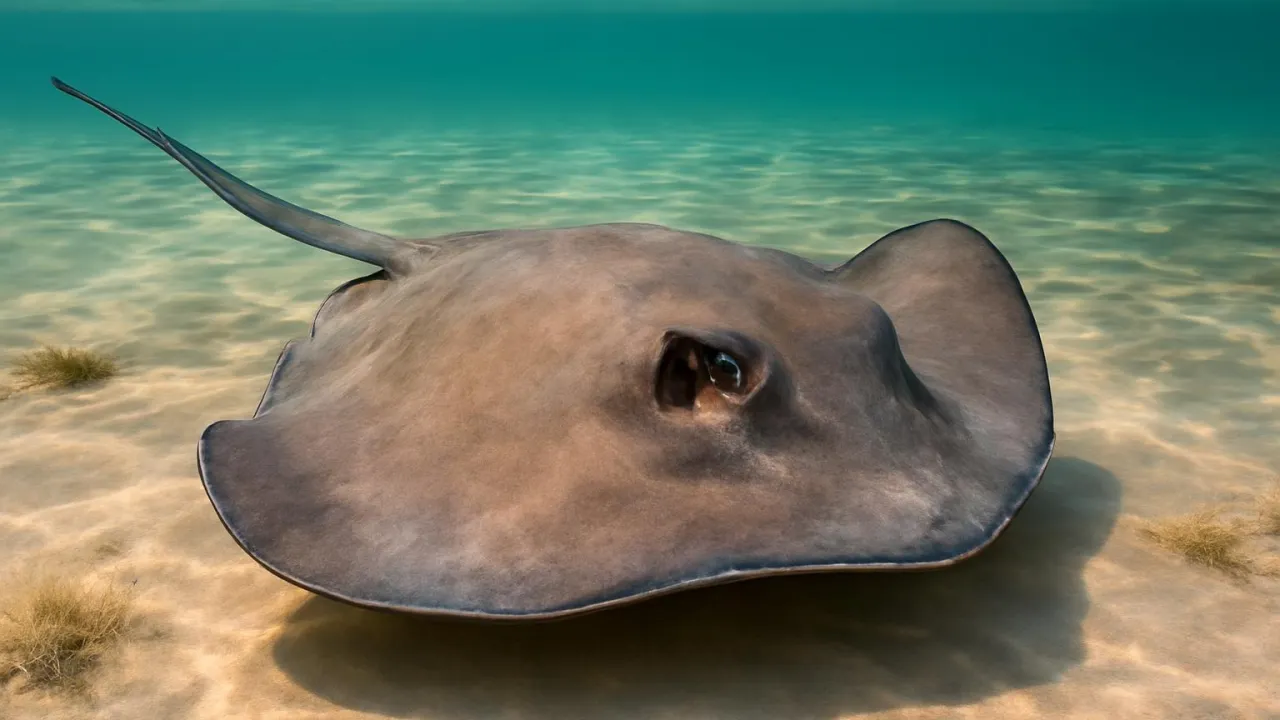
Southern stingrays can sense tiny prey hiding under the sand using special sensors!
✨ Word Sparks (Grade 2 Glossary)
Tap 🔊 to hear
predator
An animal that hunts other animals for food.
glide
To move smoothly and quietly through the air or water.
mollusk
A soft animal like clams or snails that live in water.
🪝
Have you ever seen a fish that looks like a flying carpet?
1
Flat and Wide Body
The southern stingray has a flat, wide body that helps it through water. It moves by flapping its large fins like wings. Its smooth skin helps it swim quietly near the ocean floor.
2
Warm Shallow Waters
This stingray lives in warm, shallow waters near coasts. It often hides under sand to stay safe from . The sandy ocean floor is its favorite place to rest and hunt.
3
Hunting and Defense
The stingray eats small fish, crabs, and it finds in the sand. It uses a sharp spine on its tail to defend itself from danger. It can sense tiny animals hiding beneath the sand.
Southern stingrays use electroreceptors to detect tiny electrical signals from hidden prey beneath the sand.
✨ Word Sparks (Grade 3 Glossary)
Tap 🔊 to hear
camouflage
Colors or shapes that help animals hide in their home.
electroreceptor
A special sense that detects tiny electric signals in water.
predator
An animal that hunts other animals for food.
🪝
Did you know the southern stingray can sense prey hidden beneath the sand?
1
Body and Movement
The southern stingray has a flat, diamond-shaped body that helps it on the ocean floor. It moves by flapping its pectoral fins like wings, allowing it to glide smoothly through the water. This adaptation helps it catch prey and avoid .
2
Habitat and Behavior
It lives in shallow coastal waters of the Western Atlantic Ocean, often burying itself in sand for . This behavior helps the stingray hide from and surprise its prey. The sandy ocean floor provides nutrients and shelter.
3
Diet and Hunting
Southern stingrays feed on small fish, crustaceans, and mollusks found in the sand or on the ocean floor. They use on their snouts to detect electrical signals from hidden prey. This special sense helps them find food even when it is buried.
4
Defense and Adaptations
The stingray’s tail has a sharp, venomous spine used to defend against . Its flat body and color help it blend into the sandy bottom, providing . These adaptations increase its chances of survival in a dangerous environment.
1. How does the stingray find prey hidden in the sand?
2. Why does the stingray bury itself in sand?
🤯 Mind-Blowing Fact • Grade 4
Southern stingrays help keep coastal ecosystems balanced by controlling crab and mollusk populations.
✨ Word Sparks (Grade 4 Glossary)
Tap 🔊 to hear
symbiosis
A close relationship where animals help each other live.
venomous
Having poison that can hurt other animals.
ecosystem
A community of living things and their environment.
🪝
How does the southern stingray’s unique body help it survive in coastal ecosystems?
1
Physical Adaptations and Movement
The southern stingray’s flat, diamond-shaped body allows it to glide effortlessly over sandy ocean floors, which helps avoid predators. Its large pectoral fins flap like wings, enabling smooth, silent movement that aids in hunting. This body shape also supports camouflage by blending with the sandy environment.
2
Ecosystem Role and Habitat
Living in warm, shallow coastal waters of the Western Atlantic, the stingray plays an important role in the food web by controlling populations of crustaceans and mollusks. It often buries itself in sand to hide from predators and ambush prey, showing a symbiotic relationship with its environment. Human activities like fishing can impact its populations.
3
Diet and Hunting Techniques
Southern stingrays feed on small fish, crabs, and mollusks by detecting electrical signals with specialized electroreceptors on their snouts. This sensory ability allows them to find prey hidden beneath the sand, solving the problem of hunting in murky waters. Their strong jaws crush shells to access soft bodies inside.
4
Defense Mechanisms and Survival
The stingray’s tail has a spine used to defend against predators, causing pain and deterring attacks. Its ability to camouflage and bury itself reduces the chance of being seen. These adaptations increase survival rates in a competitive coastal where many predators exist.
1. What helps the stingray find prey hidden in sand?
2. Why is the stingray’s tail important?
🤯 Mind-Blowing Fact • Grade 5
Southern stingrays use electroreceptors to detect electrical signals, allowing them to find prey hidden under sand.
✨ Word Sparks (Grade 5 Glossary)
Tap 🔊 to hear
ampullae of Lorenzini
Special sensors that detect tiny electric signals in water.
benthic
Living on or near the bottom of a body of water.
cartilage
Flexible tissue that makes up the stingray’s skeleton instead of bone.
🪝
What fascinating adaptations allow the southern stingray to thrive in its coastal habitat?
1
Taxonomy and Scientific Classification
The southern stingray, scientifically named Hypanus americanus, belongs to the family Dasyatidae within the class Chondrichthyes. This group includes cartilaginous fishes like sharks and rays, characterized by flexible skeletons made of instead of bone. Understanding its taxonomy helps scientists study its evolutionary relationships and ecological role.
2
Physiological Mechanics and Sensory Adaptations
Southern stingrays possess specialized electroreceptors called , enabling them to detect electrical fields produced by prey buried in sediment. Their flattened bodies and large pectoral fins allow efficient gliding over the ocean floor, conserving energy during slow, stealthy movements essential for ambush hunting.
3
Ecological Role and Human Impact
As predators, southern stingrays regulate populations of benthic invertebrates such as crustaceans and mollusks, maintaining ecosystem balance in coastal habitats. However, human activities like overfishing and habitat degradation threaten their populations, making conservation efforts critical for sustaining healthy marine environments.
4
Conservation and Botanical History
Southern stingrays have been studied for decades due to their unique adaptations and ecological importance. Conservation programs focus on protecting coastal habitats and regulating fishing practices to prevent population declines. Public education about their role in marine ecosystems helps reduce fear and promote coexistence.
5
Quantitative Comparisons and Physical Characteristics
Southern stingrays can reach widths up to 5 feet (1.5 meters) and weigh approximately 66 pounds (30 kilograms). They inhabit waters ranging from shallow depths of 3 feet (1 meter) to about 66 feet (20 meters), preferring temperatures between 68 and 86 degrees Fahrenheit (20 to 30 degrees Celsius). Their tail spines can grow up to 10 inches (25 centimeters) long, delivering venomous stings for defense.