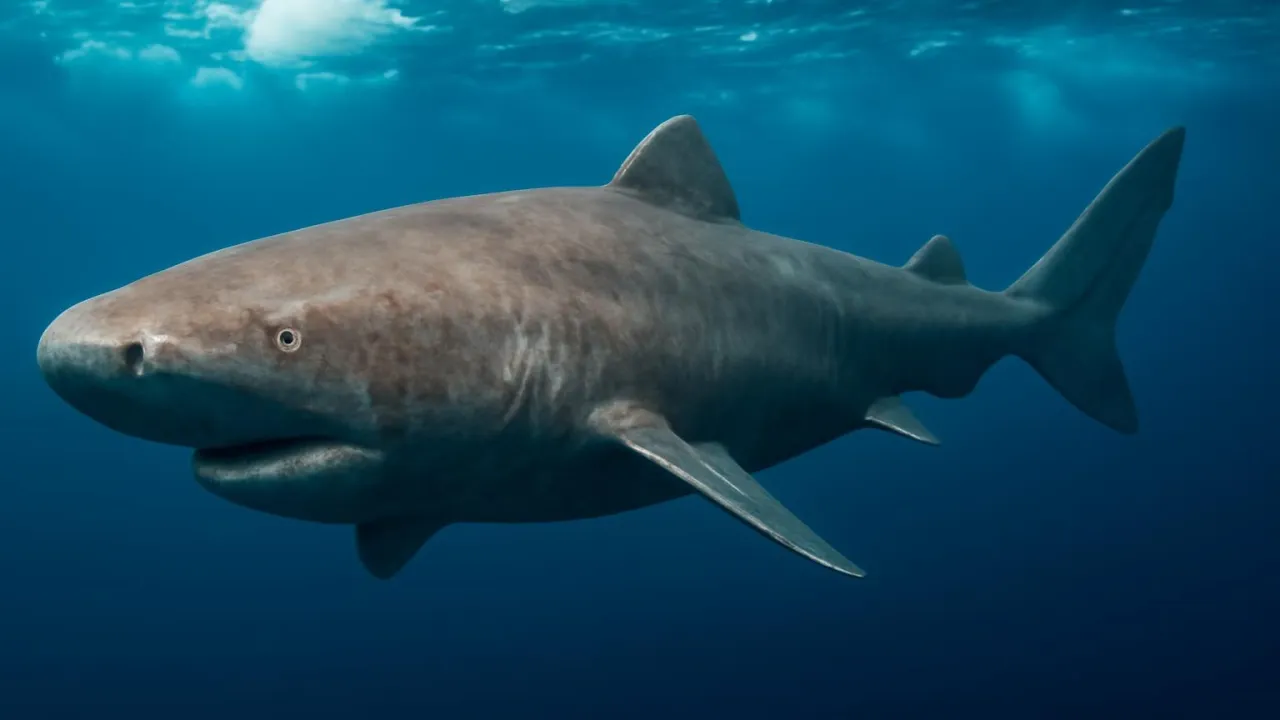
Greenland sharks can live up to 400 years, making them the longest-living vertebrates on Earth.
✨ Word Sparks (Grade 2 Glossary)
Tap 🔊 to hear
vertebrate
An animal with a backbone
scavenge
To eat dead plants or animals
prey
An animal that is hunted for food
🪝
Have you heard about a shark that lives hundreds of years?
1
A Giant of Cold Waters
The Greenland shark grows very large and lives in icy cold seas. It swims slowly near the ocean floor. It has rough gray skin with dark spots. This shark lives in the Arctic and North Atlantic oceans.
2
Living Deep Underwater
It spends most of its life in deep, dark waters where sunlight barely reaches. The cold water helps it survive for many years. It hides near rocky ocean floors and sometimes near ice. The shark moves slowly to save energy.
3
Eating Habits and Teeth
Greenland sharks eat fish, seals, and even dead animals on the ocean floor. Their sharp teeth help catch slippery . Sometimes they on animals that have died. This slow swimmer uses its strong jaws to hold food.
2. What does the Greenland shark sometimes eat besides live animals?
🤯 Mind-Blowing Fact • Grade 3
Greenland sharks have the longest lifespan of any vertebrate, living up to 400 years or more.
✨ Word Sparks (Grade 3 Glossary)
Tap 🔊 to hear
metabolism
How an animal uses energy to live
camouflage
Colors or shapes that hide an animal
scavenger
An animal that eats dead things
🪝
How can a shark live for hundreds of years in icy oceans?
1
Adaptations for Cold Survival
The Greenland shark lives in the Arctic’s cold, dark waters where few animals survive. Its slow helps it conserve energy in freezing temperatures. The shark’s thick skin and special proteins protect it from icy water. These adaptations help it live for centuries.
2
Camouflage and Hunting
Its gray, spotted skin blends with the ocean floor, providing from predators and prey. The shark uses sharp teeth to catch fish and seals, its main prey. It also scavenges dead animals, which gives it nutrients when food is scarce. This helps it survive in the deep sea.
3
Life Cycle and Growth
Greenland sharks grow very slowly and reach maturity at about 150 years old. They can live over 400 years, making them the longest-living vertebrate species. Their slow growth is an adaptation to their cold environment. This long life cycle helps maintain their population.
4
Ecosystem Role
As a top predator and , the Greenland shark plays a key role in Arctic food webs. It helps control fish and seal populations, keeping the ecosystem balanced. Its scavenging cleans up dead animals, preventing disease spread. This shark’s presence supports ocean health.
1. What helps the Greenland shark survive cold water?
2. Why is the Greenland shark important in its ecosystem?
🤯 Mind-Blowing Fact • Grade 4
Greenland sharks live so long that some were born before the United States existed!
✨ Word Sparks (Grade 4 Glossary)
Tap 🔊 to hear
ecosystem
A community of living things and their home
nutrients
Food parts that help animals grow
conservation
Protecting animals and nature
🪝
What makes the Greenland shark a unique giant of the icy deep oceans?
1
Cold Water Adaptations and Longevity
The Greenland shark thrives in Arctic and North Atlantic waters where temperatures are near freezing. Its slow metabolism and thick skin allow it to survive harsh conditions for centuries. This shark’s ability to live over 400 years is linked to its cold habitat and slow growth rate. These adaptations enable it to endure extreme environments.
2
Role in the Arctic Food Web
As both a predator and scavenger, the Greenland shark plays a vital role in Arctic marine . It controls populations of fish and seals, preventing overpopulation. By scavenging dead animals, it helps recycle and maintain ocean health. Its presence supports a balanced and diverse food web.
3
Geographic Range and Habitat
This shark inhabits deep waters of the Arctic Ocean and North Atlantic, often near the ocean floor. It prefers cold, dark environments where few predators exist. Its slow swimming speed conserves energy in these nutrient-poor waters. Human fishing activities sometimes threaten its habitat.
4
Human Impact and Conservation
Although not targeted commercially, Greenland sharks can be caught accidentally by fisheries. Their slow growth and late maturity make population recovery difficult. efforts focus on monitoring populations and protecting Arctic habitats. Understanding this shark helps us protect fragile ocean .
1. Why does the Greenland shark have a slow growth rate?
2. How do Greenland sharks help keep the ocean healthy?
🤯 Mind-Blowing Fact • Grade 5
Greenland sharks live so long that some individuals were alive before the invention of the telescope in the early 1600s.
✨ Word Sparks (Grade 5 Glossary)
Tap 🔊 to hear
apex predator
Top animal that hunts others in food chains
radiocarbon dating
A way to find how old things are
bycatch
Animals caught by mistake in fishing nets
🪝
How does the Greenland shark’s biology allow it to live over 400 years in icy oceans?
1
Taxonomy and Scientific Classification
The Greenland shark, Somniosus microcephalus, belongs to the family Somniosidae within the order Squaliformes. It is one of the slowest-growing shark species and is adapted to life in Arctic and North Atlantic cold waters. Its scientific classification helps researchers understand its evolutionary history and ecological role. This classification also guides conservation efforts worldwide.
2
Physiological Adaptations for Extreme Cold
This shark has a slow metabolism and produces antifreeze proteins to prevent ice crystal formation in its blood. Its thick, rough skin provides insulation against freezing temperatures. The shark’s slow swimming speed conserves energy in nutrient-poor environments. These physiological traits enable survival in deep, near-freezing waters where few other predators thrive.
3
Longevity and Growth Patterns
Greenland sharks grow approximately one centimeter per year and reach sexual maturity around 150 years old. of eye lens proteins shows some individuals live over 400 years, making them the longest-living vertebrates known. Their slow growth and late maturity are adaptations to their cold, stable environment. These traits allow them to maintain populations despite harsh conditions.
4
Ecological Role and Conservation Challenges
As and scavengers, Greenland sharks regulate populations of seals and fish, maintaining Arctic marine ecosystem balance. By consuming carrion, they recycle nutrients critical for ocean health. However, accidental and climate change threaten their populations, and conservation efforts focus on habitat protection and population monitoring. Protecting these sharks helps preserve fragile Arctic ecosystems.
5
Quantitative Comparisons and Human Context
Greenland sharks can grow up to 21 feet (6.4 meters) and weigh over 2,200 pounds (1,000 kilograms). They swim slowly at speeds around 1.6 miles per hour (2.5 kilometers per hour). Their lifespan exceeds that of any other vertebrate, including humans. Understanding this shark’s biology provides insights into longevity and deep-sea adaptation. Their ancient existence connects us to Earth’s distant past.