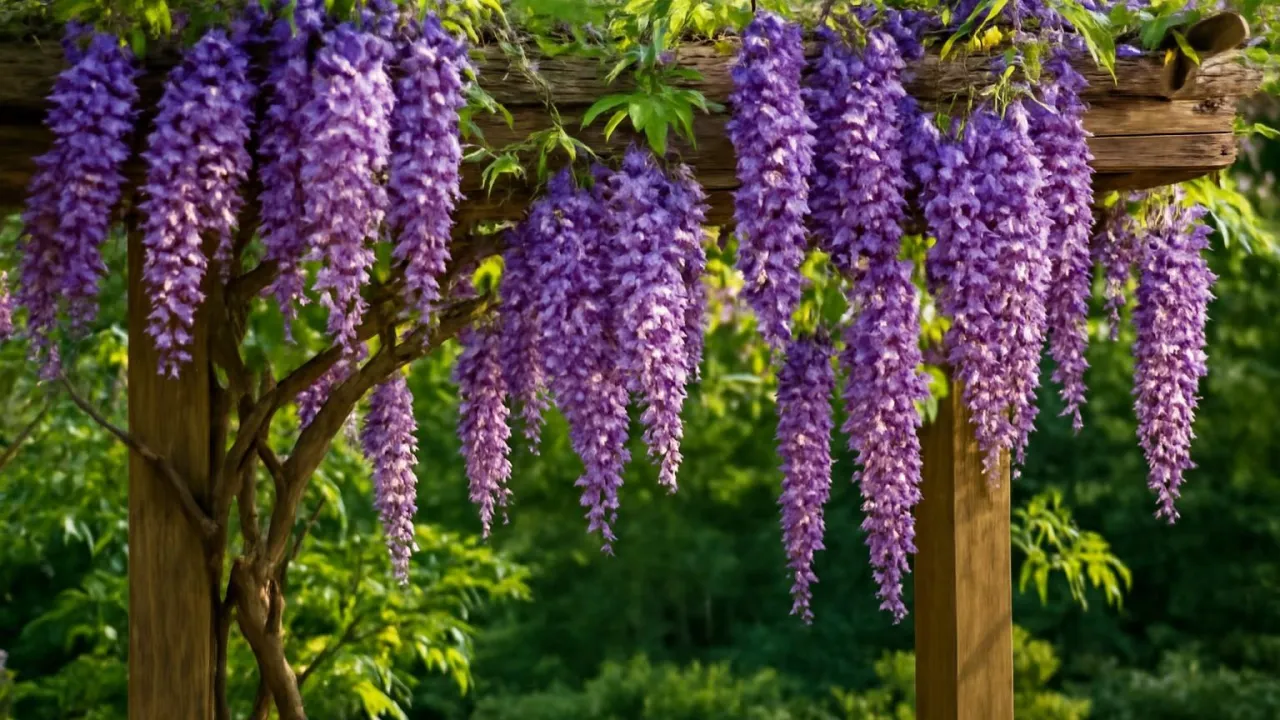
Wisteria vines can grow over 30 feet long in just a few years!
✨ Word Sparks (Grade 2 Glossary)
Tap 🔊 to hear
vine
A plant that climbs by twisting around things
pollination
When bees help flowers make seeds
habitat
The place where a plant or animal lives
🪝
Have you ever seen flowers that climb and smell sweet?
1
Beautiful Purple Flowers
Wisteria grows hanging flowers that look like grapes. These flowers smell very sweet and attract bees and butterflies. The bright colors and scent help the plant get pollinated by insects.
2
Climbing Vine Plant
The wisteria twists tightly around trees or walls to climb higher. It can grow very tall and spread wide in sunny gardens. This climbing helps it reach sunlight to grow strong and healthy.
3
Where It Grows
Wisteria grows best in places with full sun and well-watered soil. People plant it in parks and yards to enjoy its beauty and sweet smell. It thrives in temperate climates where winters are mild.
Wisteria vines can grow over 30 feet long and twist tightly around supports to climb!
✨ Word Sparks (Grade 3 Glossary)
Tap 🔊 to hear
pollination
When insects help flowers make seeds
adaptation
A special trait that helps plants survive
ecosystem
A place where plants and animals live together
🪝
Did you know wisteria uses twisting vines to climb and bloom beautifully?
1
Wisteria’s Colorful Flowers
Wisteria produces long clusters of purple or white flowers that hang down like grapes. These flowers attract pollinators such as bees and butterflies. The sweet scent helps in by drawing insects closer. Pollination is important for the plant to make seeds and grow new vines.
2
How Wisteria Climbs
Wisteria uses its strong twisting vines to climb trees or walls. This climbing helps it reach sunlight needed for photosynthesis. The vine’s twisting is an that gives it a strong hold on surfaces. This way, wisteria can grow high and spread wide to get more nutrients.
3
Where Wisteria Lives
Wisteria grows in temperate climates in eastern Asia and North America. It prefers habitats with full sun and well-drained soil. These conditions help the plant grow healthy flowers and strong vines. Wisteria is often found in gardens where people plant it for decoration.
4
Wisteria’s Role in Nature
Wisteria provides nectar for many pollinators like bees and butterflies. It also offers shelter for small animals in its dense vines. However, wisteria can sometimes crowd other plants by growing too much. This shows how plants compete for space and sunlight in an .
Wisteria’s twisting vines can grow over 30 feet long and support heavy flower clusters in spring!
✨ Word Sparks (Grade 4 Glossary)
Tap 🔊 to hear
photosynthesis
How plants use sunlight to make food
symbiotic
A helpful relationship between two living things
invasive
A plant that grows too much and harms others
🪝
How does wisteria’s twisting vine help it survive and affect its ecosystem?
1
Wisteria’s Climbing Strategy
Wisteria’s vines twist tightly around trees or structures, allowing it to climb toward sunlight. This climbing adaptation helps the plant reach better light for , which is vital for its growth and flower production. Without this ability, wisteria might stay low and miss sunlight. Its strong twisting stems provide a firm grip to support heavy flower clusters.
2
Wisteria’s Role in Food Webs
The flowers of wisteria produce nectar that attracts pollinators such as bees and butterflies, which help pollinate the plant. These pollinators gain food while helping the plant reproduce, showing a relationship. Additionally, the dense vines provide shelter for small animals and insects, contributing to local biodiversity. However, wisteria can sometimes outcompete native plants by shading them out.
3
Where Wisteria Grows
Wisteria is native to eastern Asia and parts of North America, thriving in temperate climates with full sun and well-drained soil. It is commonly planted in gardens and parks worldwide because of its beautiful hanging flowers. The plant’s growth can be vigorous, sometimes requiring pruning to prevent it from overwhelming other plants. Its adaptability allows it to survive in various environments.
4
Human Impact and Care
People cultivate wisteria for its stunning flowers and fragrant scent, often training the vines on pergolas and trellises. Proper care includes providing enough sunlight and moderate watering to encourage healthy growth. However, if left unchecked, wisteria can become , crowding out native species. Gardeners must manage its growth to balance beauty and ecosystem health.
1. Why does wisteria twist its vines around trees?
2. What can happen if wisteria grows too much?
🤯 Mind-Blowing Fact • Grade 5
Wisteria vines can grow over 30 feet long and produce flower clusters up to 12 inches long in spring!
✨ Word Sparks (Grade 5 Glossary)
Tap 🔊 to hear
twining
When a vine wraps tightly around a support
raceme
A flower cluster with many blooms on a stem
invasive
A plant that spreads fast and harms native plants
🪝
What makes wisteria a fascinating climbing flower with important ecological roles?
1
Scientific Classification and Origin
Wisteria belongs to the Fabaceae family and is scientifically known as Wisteria sinensis or Wisteria floribunda. Native to eastern Asia and parts of North America, these woody climbing vines have been cultivated worldwide for their ornamental beauty. The genus name honors Caspar Wistar, an American physician and anatomist. Wisteria’s ability to climb and bloom profusely has made it a popular plant in temperate gardens.
2
Physiological Mechanics of Climbing
Wisteria climbs by its flexible stems tightly around supports, a process called twining climbing. This mechanical adaptation enables the vine to reach sunlight above other plants, maximizing photosynthesis. The plant’s compound leaves and large of flowers develop after the vine secures itself. The twisting stems provide both strength and flexibility, allowing the vine to support heavy flower clusters.
3
Ecological Role and Conservation
Wisteria produces nectar-rich flowers that attract pollinators such as bees, butterflies, and hummingbirds, playing a critical role in local ecosystems. Its dense foliage offers shelter for small animals and insects, enhancing biodiversity. However, some wisteria species can become outside their native range, threatening native plant communities. Conservation efforts focus on controlling invasive growth while promoting native species.
4
Botanical History and Human Use
Historically, wisteria has been admired in Asian cultures, especially in Japan and China, where it symbolizes longevity and love. It is widely used in landscaping for its cascading flowers and fragrant scent. Gardeners often train wisteria on pergolas and trellises to create living floral canopies. The plant’s vigorous growth requires regular pruning to maintain shape and prevent damage to structures.
5
Quantitative Comparisons and Growth
Wisteria vines can grow over 30 feet (9 meters) in length within a few years, twisting tightly around supports. The flowers bloom in spring, forming up to 12 inches (30 centimeters) long. The plant thrives in temperatures ranging from 40°F to 85°F (4°C to 29°C) and requires full sun with moderate watering. Compared to other climbing plants, wisteria’s rapid growth and heavy flower clusters make it both beautiful and challenging to manage.