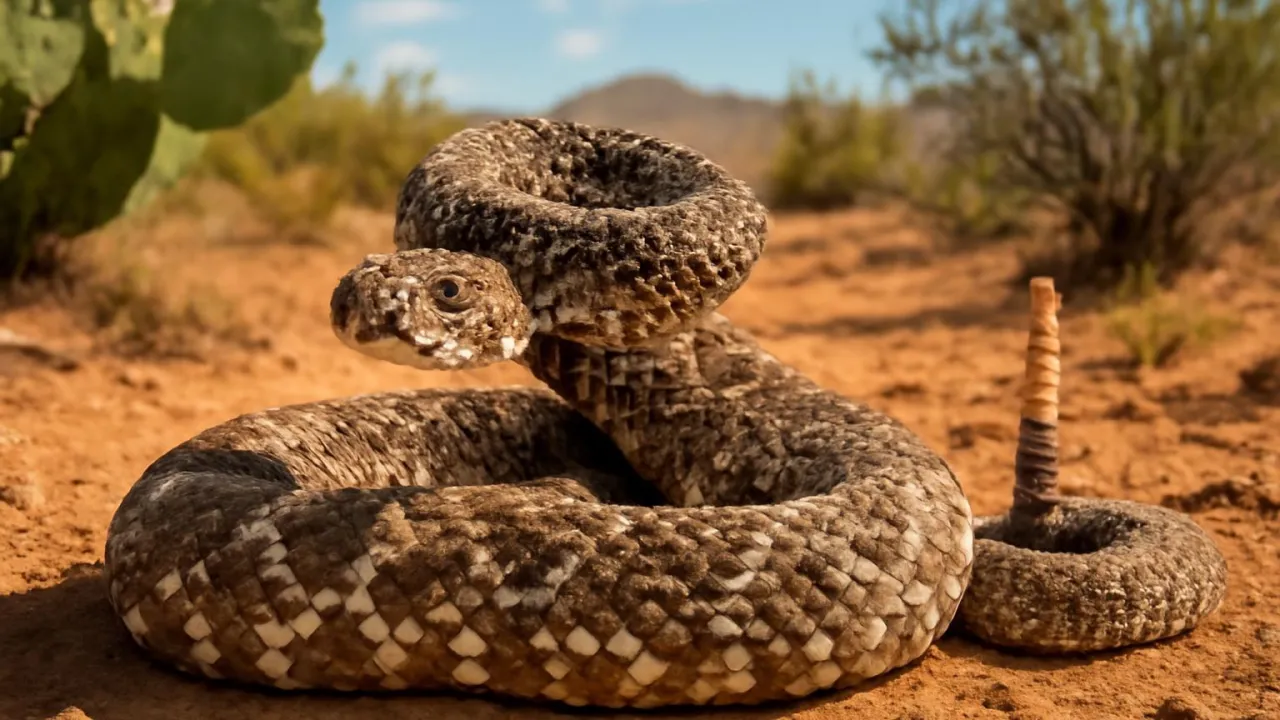
The rattlesnake’s rattle is made of hollow segments that snap together.
✨ Word Sparks (Grade 2 Glossary)
Tap 🔊 to hear
rattle
A noise made by shaking parts quickly
desert
A dry place with little rain or plants
camouflage
Colors or patterns that help hide an animal
🪝
Have you ever heard a snake’s tail make a buzzing sound?
1
The Rattling Tail
The Western Diamondback rattlesnake shakes its tail to make a buzzing sound. This sound warns animals to stay away. It can shake the tail very fast to make noise.
2
Where It Lives
This snake lives in and dry grasslands. It hides under rocks or in bushes during hot days. It comes out mostly at night to hunt.
3
Its Cool Look
The snake has diamond-shaped spots on its back. These spots help it blend into the ground. Its scales are rough and help protect it.
The Western Diamondback’s rattle can produce a warning sound heard from 30 feet away.
✨ Word Sparks (Grade 3 Glossary)
Tap 🔊 to hear
venom
Poison some animals use to catch prey
camouflage
Colors or shapes that hide animals in nature
predator
An animal that hunts other animals for food
🪝
Did you know the Western Diamondback uses its rattle to warn predators?
1
Rattling Warning System
The Western Diamondback rattlesnake shakes its tail to warn nearby. This rattling sound helps avoid fights and danger. The rattle is made of hollow segments that knock together. It can shake its tail up to fifty times each second.
2
Desert Home and Camouflage
This snake lives in deserts and grasslands where it blends well. Its diamond-shaped spots act as against dry soil and rocks. Camouflage helps protect it from and helps it sneak up on prey. It hides under bushes or rocks during the hot daytime.
3
Hunting and Diet
The rattlesnake is a carnivore that eats rodents, birds, and lizards. It uses to quickly immobilize its prey before eating. Its heat-sensing pits help find warm-blooded animals even in the dark. It waits patiently and strikes fast to catch food.
4
Body Adaptations
Its rough scales protect it from rough desert terrain and help it move silently. The snake’s forked tongue collects scent particles to help it track prey. Its triangular head holds glands and sharp fangs. These adaptations help it survive in tough desert conditions.
1. How does the rattlesnake warn others with its tail?
2. What helps the snake find warm animals in the dark?
🤯 Mind-Blowing Fact • Grade 4
A rattlesnake’s rattle is made from keratin, the same material as human fingernails.
✨ Word Sparks (Grade 4 Glossary)
Tap 🔊 to hear
keratin
A hard material that makes nails and hair
ecosystem
A community of living things and their home
venom
A poison used by some animals to catch food
🪝
How does the Western Diamondback’s rattle help it survive in deserts?
1
Rattle as a Defense Tool
The Western Diamondback rattlesnake uses its rattle as a warning signal to scare away predators and avoid conflict. When threatened, it shakes its tail rapidly, producing a loud buzzing sound that can be heard from several meters away. This defense mechanism helps the snake survive by preventing attacks and conserving energy. The rattle is made of segments that snap together as it vibrates.
2
Ecosystem Role and Food Web
As a predator, the rattlesnake controls populations of rodents and small animals, which helps maintain balance in desert . It also serves as prey for larger animals like hawks and coyotes, creating important food web connections. Its allows it to catch prey efficiently, impacting the survival of other species. Human activities, such as habitat destruction, can threaten its populations.
3
Habitat and Geographic Range
This snake primarily inhabits deserts and arid grasslands in the southwestern United States and northern Mexico. It prefers rocky areas and scrublands where it can find shelter and hunt effectively. Seasonal temperature changes influence its activity, as it becomes less active during cold months. Its camouflage coloring helps it blend into the dry, rocky terrain.
4
Physical Adaptations for Survival
The Western Diamondback’s rough, keeled scales protect it from rough desert surfaces and reduce water loss. Its triangular head houses glands and heat-sensitive pits that detect warm-blooded prey even in darkness. The snake’s forked tongue collects scent particles, aiding in tracking prey and sensing danger. These adaptations make it a highly efficient desert predator.
2. What role does the rattlesnake play in its ecosystem?
🤯 Mind-Blowing Fact • Grade 5
The rattlesnake’s rattle can shake up to 50 times per second, making one of nature’s fastest warning sounds.
✨ Word Sparks (Grade 5 Glossary)
Tap 🔊 to hear
hemotoxins
Poisons that harm blood and tissues in animals
brumation
A cold-weather rest like hibernation for reptiles
keel
A raised ridge on snake scales for protection
🪝
What makes the Western Diamondback rattlesnake a master of desert survival?
1
Scientific Classification and Range
The Western Diamondback rattlesnake, scientifically named Crotalus atrox, belongs to the family Viperidae. It inhabits deserts and semi-arid regions across the southwestern United States and northern Mexico, including states like Texas and Arizona. This species is one of the largest rattlesnakes, reaching lengths up to five feet. Its broad geographic range reflects its adaptability to various desert environments.
2
Physiological Mechanics of Rattling and Venom
The rattlesnake’s rattle consists of interlocking keratin segments that vibrate rapidly to produce a distinctive buzzing warning. This rattling can reach frequencies up to 50 shakes per second, creating a sound audible from about 30 feet away. Its venom contains that immobilize prey by destroying blood cells and tissues. Specialized muscles control venom injection through hollow fangs during a rapid strike.
3
Ecological Importance and Conservation
As a keystone predator, the Western Diamondback regulates populations of rodents and other small animals, maintaining desert ecosystem balance. However, habitat loss and human persecution have led to population declines in some areas. Conservation efforts focus on habitat protection and educating people about the snake’s ecological role. Understanding its behavior helps reduce unnecessary killings.
4
Adaptations for Desert Life
This rattlesnake’s keeled scales reduce water loss and protect against abrasive desert surfaces. Its heat-sensing pits detect infrared radiation, allowing it to locate warm prey even in complete darkness. Behavioral adaptations include nocturnal hunting to avoid daytime heat and seasonal during colder months. These features collectively enhance its survival in harsh desert climates.
5
Quantitative Comparisons and Records
The Western Diamondback can reach lengths of up to five feet and weigh around 4.5 pounds. Its rattle can vibrate at speeds up to 50 times per second, producing a warning sound audible from 30 feet away. Venom injection occurs within milliseconds during a strike, enabling swift prey capture. Compared to other rattlesnake species, it is among the largest and most widely distributed in North America.