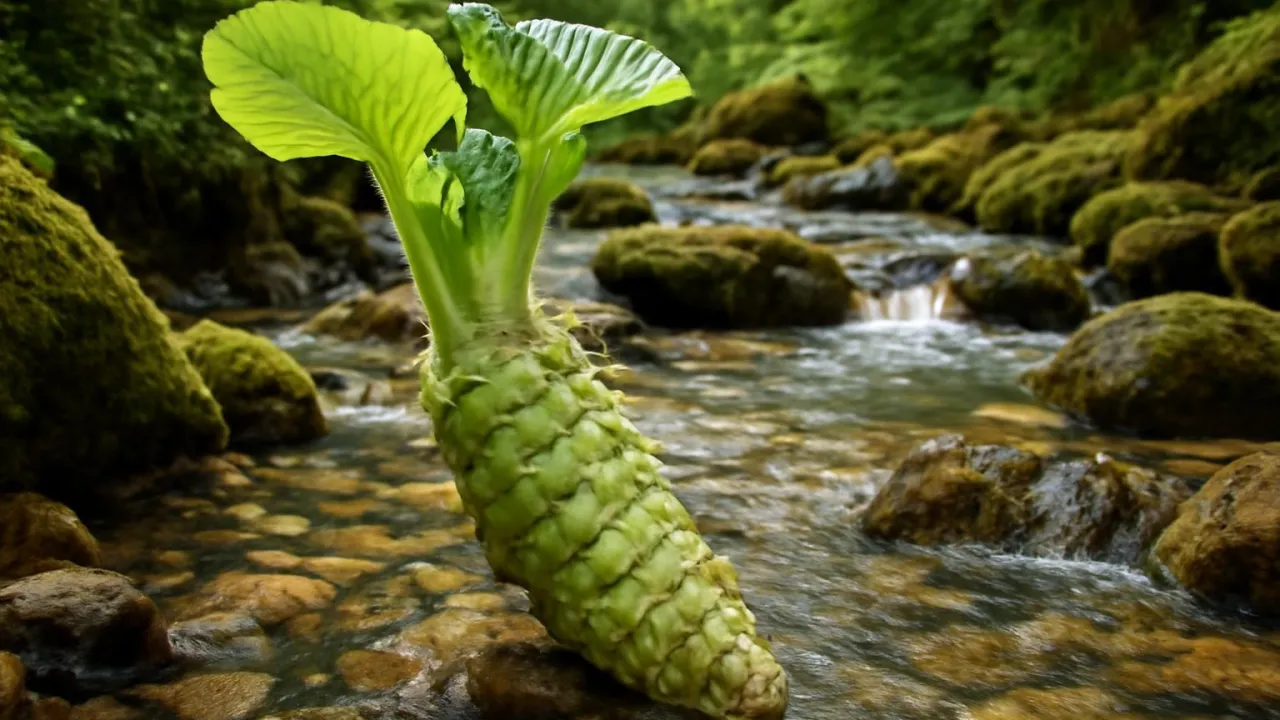
The spicy heat of wasabi comes from a chemical called allyl isothiocyanate inside the root!
✨ Word Sparks (Grade 2 Glossary)
Tap 🔊 to hear
rhizome
A root that grows sideways under the ground
moist
A little wet or damp
spicy
A strong taste that feels hot or sharp
🪝
Have you ever smelled something spicy that made your nose feel funny?
1
What Wasabi Is
Wasabi is a green root that grows under the ground in cool places. It is used to add a sharp, flavor to food. The root looks like a thick stick with ridges.
2
Where Wasabi Grows
Wasabi grows best near cold mountain streams where the soil is and shady. It needs clean water and shade to stay healthy. People often grow it in special gardens that copy these conditions.
3
Why Wasabi Is Special
Wasabi has a oil inside its root that makes your nose tingle. This spicy flavor is different from chili peppers because it does not burn your tongue. It is often eaten with sushi and other Japanese foods.
Wasabi’s spicy chemical not only protects the plant but also clears your sinuses quickly!
✨ Word Sparks (Grade 3 Glossary)
Tap 🔊 to hear
rhizome
A thick root that grows sideways underground
predator
An animal that hunts other animals for food
nutrients
Substances plants need to grow strong and healthy
🪝
Did you know wasabi’s spicy power helps protect it from hungry animals?
1
Wasabi’s Unique Root
The wasabi grows underground and looks like a thick, green stick. This rhizome stores that help the plant survive cold, shady environments. Its ridged surface increases its surface area for absorbing water and nutrients.
2
Ideal Habitat for Growth
Wasabi thrives in cool, moist places near mountain streams where water flows constantly. The plant needs shade because too much sunlight can damage its leaves and slow its growth. This environment provides the perfect balance of water and temperature.
3
Spicy Defense Mechanism
Wasabi produces a chemical called allyl isothiocyanate that creates its sharp, spicy flavor. This chemical acts as a natural defense by deterring like insects and animals from eating it. The spicy sensation also clears the nose, which is why it feels different from chili peppers.
4
How People Use Wasabi
Humans grate the fresh wasabi to add flavor to sushi and other dishes. Unlike powdered wasabi, fresh wasabi has a milder, more complex taste. It is considered a delicacy and is often grown carefully to preserve its unique qualities.
2. What kind of place does wasabi need to grow well?
🤯 Mind-Blowing Fact • Grade 4
Wasabi’s spicy compound acts like a natural pesticide, protecting the plant and nearby species.
✨ Word Sparks (Grade 4 Glossary)
Tap 🔊 to hear
ecosystem
A community of plants, animals, and environment
symbiotic
A helpful relationship between two living things
cultivation
Growing plants carefully for food or use
🪝
How does wasabi’s spicy power help it survive in mountain stream ecosystems?
1
Growing in Mountain Streams
Wasabi rhizomes grow in cool, shaded areas near mountain streams where water constantly flows. This flowing water keeps the soil moist and supplies the plant with essential nutrients. If the water stops flowing, the plant can quickly become stressed and may die. The plant’s survival depends on this delicate balance of moisture and temperature.
2
Role in the Ecosystem
Wasabi plays a vital role in its by providing food and habitat for certain insects and microorganisms. Its spicy chemical acts as a natural pesticide, reducing damage from herbivores and protecting nearby plants. This relationship helps maintain balance in the mountain stream food web and supports biodiversity.
3
Human Impact and Cultivation
Humans cultivate wasabi carefully because it requires very specific growing conditions that are hard to replicate. Overharvesting wild wasabi has threatened natural populations, so farming helps protect the species. Sustainable supports local economies and preserves biodiversity by reducing pressure on wild plants.
4
Geographic Distribution
Wasabi naturally grows in Japan and parts of East Asia, especially in mountainous regions with clean, cold water. Attempts to grow wasabi outside this range often fail due to unsuitable climate or water quality. Its limited distribution makes conservation efforts important to protect this unique plant.
A chemical causing wasabi’s spicy, nose-clearing effect
hydroponic
Growing plants in water without soil
🪝
What makes Wasabia japonica’s rhizome a unique botanical marvel in plant science?
1
Taxonomy and Botanical Context
Wasabia japonica belongs to the Brassicaceae family, closely related to mustard and horseradish plants. Unlike many vegetables, its edible part is a , a horizontal underground stem storing nutrients. Botanically, wasabi is a perennial plant native to Japan’s mountainous freshwater streams. This unique classification helps explain its specialized growth needs and flavor profile.
2
Physiological Mechanics of Spiciness
The produces , a volatile compound released when cells are crushed. This chemical irritates nasal passages rather than the tongue, causing a sharp, transient heat sensation. This mechanism differs significantly from capsaicin in chili peppers, which stimulates tongue heat receptors. This difference makes wasabi’s spiciness feel more like a quick nose-clearing blast.
3
Conservation and Cultivation Challenges
Wild wasabi populations have declined due to habitat loss and overharvesting, prompting conservation efforts in Japan. Cultivation requires replicating cold, shaded, and flowing water conditions, making large-scale farming difficult. Modern and greenhouse techniques aim to increase yield while preserving genetic diversity. These innovations help meet demand while protecting wild ecosystems.
4
Quantitative Comparisons and Growth
Wasabi typically grow between 6 to 12 inches long and weigh about 150 to 300 grams. Optimal water temperatures range from 46 to 57 degrees Fahrenheit (8 to 14 degrees Celsius). The plant’s growth rate is slow, often taking 18 months to reach harvest size under ideal conditions. This slow growth contributes to its rarity and high market value.
5
Cultural and Culinary Significance
Wasabi has been a prized condiment in Japanese cuisine for centuries, valued for its unique flavor and antimicrobial properties. Its complex flavor profile includes sweet, spicy, and herbal notes, making it distinct from horseradish-based substitutes. Authentic wasabi remains rare and expensive due to its cultivation difficulty. It continues to be celebrated as a symbol of Japanese culinary tradition.