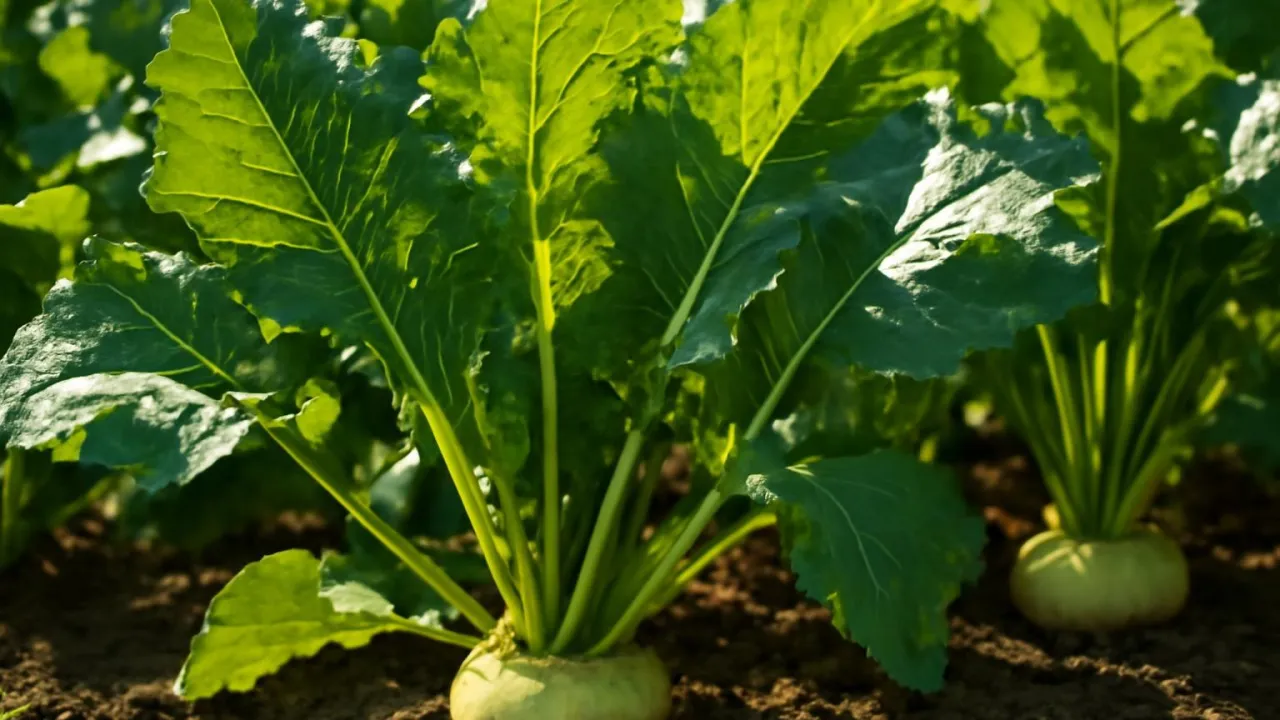
Turnip greens are full of vitamins that help keep your eyes and bones strong!
✨ Word Sparks (Grade 2 Glossary)
Tap 🔊 to hear
spicy
A little hot or strong in flavor
antioxidant
A thing that helps protect your body
temperate
A place that is not too hot or cold
🪝
Have you ever tasted leaves that are both crunchy and healthy?
1
What Are Turnip Greens?
Turnip greens are the leafy parts of the turnip plant, which grows in gardens and farms. They are bright green and have a slightly taste when eaten raw or cooked. People enjoy them for their fresh, crunchy texture and health benefits.
2
Where Do They Grow?
Turnip greens grow best in places with full sun and moderate water. They are common in regions like Europe and Asia. Farmers plant them in soil that is rich and moist to help the leaves grow big and healthy.
3
Why Are They Good for You?
These greens are packed with vitamins like A, C, and K, which help your body stay strong and healthy. They also have that protect cells from damage. Eating turnip greens can help you grow and keep your body working well.
Turnip greens help plants make food and keep people healthy with vitamins!
✨ Word Sparks (Grade 3 Glossary)
Tap 🔊 to hear
photosynthesis
How plants use sunlight to make food
antioxidant
A natural protector for cells in plants
adaptation
A special trait that helps plants survive
🪝
Did you know turnip greens help plants survive and people stay healthy?
1
What Are Turnip Greens?
Turnip greens are the leafy parts of the Brassica rapa plant, which grows in temperate climates. These greens have a slightly spicy flavor and a crunchy texture that many people enjoy eating cooked or raw. Their bright green color helps them absorb sunlight for .
2
How Do They Grow?
Turnip greens grow above ground while the turnip root grows underground. They need full sun and moist soil to absorb nutrients and water for healthy growth. These leaves help the plant gather energy to produce food through .
3
Why Are They Important?
Turnip greens provide essential vitamins like A, C, and K, which support vision, blood clotting, and immune health. They also contain that protect cells from damage caused by predators or harsh sunlight. Eating these greens helps humans get important nutrients.
4
How Do They Help Plants Survive?
The large surface area of turnip greens helps the plant capture sunlight efficiently for energy. Their slightly waxy coating reduces water loss, an to prevent drying out. These features allow the plant to survive in different environments and grow strong.
1. What part of the turnip plant are turnip greens?
2. What helps turnip greens keep water inside?
🤯 Mind-Blowing Fact • Grade 4
Turnip greens help stop soil erosion while feeding many animals and people!
✨ Word Sparks (Grade 4 Glossary)
Tap 🔊 to hear
ecosystem
All living things and their home together
biodiversity
Many kinds of plants and animals living together
symbiotic
Living together to help each other survive
🪝
How do turnip greens play a role in nature and help people’s health?
1
Turnip Greens and Their Habitat
Turnip greens thrive in temperate climates where they receive full sun and moderate rainfall, which supports their growth and nutrient absorption. They are commonly grown in Europe, Asia, and North America, where farmers cultivate them for food and agricultural use. The plant’s ability to grow in various soils shows its adaptation to different environments.
2
Role in Ecosystems
In , turnip greens provide food for insects and animals, acting as a part of the food web that supports . Their leaves also help prevent soil erosion by covering the ground and keeping moisture in the soil. This relationship benefits both the plant and the surrounding environment.
3
Nutritional Benefits for Humans
Turnip greens are rich in vitamins A, C, and K, which contribute to healthy vision, immune function, and blood clotting in humans. Their antioxidants help protect cells from damage caused by free radicals, supporting overall health. Including turnip greens in diets can reduce the risk of chronic diseases.
4
Agricultural and Human Impact
Farmers grow turnip greens as a nutritious crop that supports food security and sustainable agriculture. However, overuse of pesticides can harm beneficial insects that rely on these plants. Understanding how to cultivate turnip greens responsibly helps maintain balance and promotes healthy food production.
1. What do turnip greens help prevent in the soil?
2. Why should farmers be careful when growing turnip greens?
🤯 Mind-Blowing Fact • Grade 5
Turnip greens have more vitamin K than spinach, aiding bone health and blood clotting!
✨ Word Sparks (Grade 5 Glossary)
Tap 🔊 to hear
Brassicaceae
The plant family with cabbage and mustard
oxidative stress
Damage to cells from harmful molecules
crop rotation
Growing different plants to keep soil healthy
🪝
What makes turnip greens a vital leafy vegetable in agriculture and nutrition worldwide?
1
Scientific Classification and Origin
Turnip greens belong to the species Brassica rapa subsp. rapa, part of the family, which includes cabbage and mustard plants. Native to temperate regions of Europe and Asia, these greens have been cultivated for thousands of years for their edible leaves and roots. Their taxonomic classification helps scientists understand their relationships with other cruciferous vegetables.
2
Physiological Features and Growth
The leaves of turnip greens grow up to 12 inches long and have a broad, lobed shape that maximizes sunlight absorption for photosynthesis. Their slightly waxy surface reduces water loss, an adaptation to temperate climates with variable moisture. These plants require full sun exposure and moderate watering to maintain optimal nutrient uptake and leaf development.
3
Nutritional and Health Importance
Turnip greens are exceptionally rich in vitamins A, C, and K, providing significant antioxidant properties that protect human cells from . They also contain minerals such as calcium and iron, which contribute to bone health and blood function. Regular consumption supports immune health and reduces the risk of chronic diseases like heart disease and cancer.
4
Conservation and Agricultural History
Historically, turnip greens have been a staple food crop in many cultures due to their ease of cultivation and nutritional value. Sustainable farming practices now focus on minimizing pesticide use to protect beneficial insects and soil health. Conservation efforts encourage and organic farming to maintain soil fertility and promote biodiversity.
5
Quantitative Comparisons and Facts
Turnip greens grow best at temperatures between 55 and 75 degrees Fahrenheit (13 to 24 degrees Celsius) and can reach leaf lengths of up to 30 centimeters. They contain about 30 calories per 100 grams, making them a low-calorie, nutrient-dense food. Compared to spinach, turnip greens have higher vitamin K content, supporting better blood clotting and bone strength.