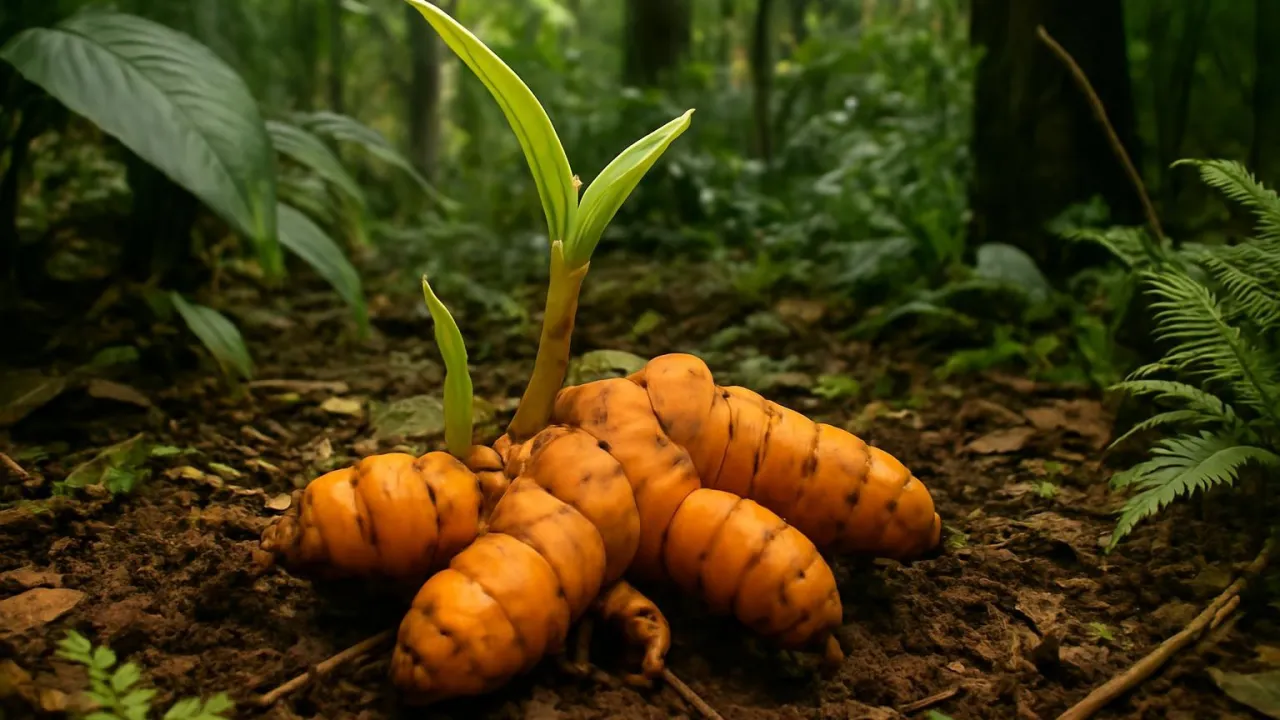
Turmeric’s bright yellow color comes from a special natural pigment called curcumin!
✨ Word Sparks (Grade 2 Glossary)
Tap 🔊 to hear
nutrients
Food plants need to grow strong and healthy
pigment
A natural color inside plants or animals
swelling
When a part of your body gets bigger and puffy
🪝
Have you ever seen a root that is bright yellow and smells spicy?
1
Bright and Spicy Root
Turmeric root is bright yellow inside and smells spicy and warm. People use it to add flavor to food. It looks like small orange sticks with rough skin.
2
Warm Places to Grow
Turmeric grows in warm, wet places like South Asia. It needs soft soil and plenty of water to grow well. The root grows underground where it stores .
3
Uses and Benefits
People use turmeric for cooking and medicine. It can help heal cuts and reduce . Its bright color also makes food look pretty and tasty.
Turmeric’s curcumin pigment not only colors food but also acts as a natural medicine!
✨ Word Sparks (Grade 3 Glossary)
Tap 🔊 to hear
rhizome
A thick root that grows underground and stores food
inflammation
When part of the body becomes red, hot, and swollen
camouflage
Colors or shapes that help hide plants or animals
🪝
Did you know turmeric root has a natural pigment that can heal and color food?
1
Turmeric’s Bright Color and Smell
Turmeric root has a bright orange-yellow pigment called curcumin that colors food. It also has a spicy aroma that adds flavor. This pigment helps protect the plant from sunlight damage. The strong smell attracts pollinators nearby.
2
Growing in Tropical Forests
Turmeric grows best in warm tropical forests with soft, moist soil. It is a that grows underground, storing nutrients for the plant. The root’s thick skin protects it from predators and drying out. It needs regular water to stay healthy and grow.
3
How Turmeric Helps People
People use turmeric as a spice and natural medicine because it reduces . It can help heal cuts and fight germs. Turmeric is also part of many traditional dishes around the world. Its bright color makes food look more appealing.
4
Plant Adaptations for Survival
Turmeric’s structure allows it to survive dry seasons underground. Its thick skin prevents water loss and insect attacks. The plant’s bright pigment acts as among fallen leaves. These adaptations help turmeric thrive in its environment.
Turmeric’s underground rhizomes let it survive dry seasons and regrow year after year!
✨ Word Sparks (Grade 4 Glossary)
Tap 🔊 to hear
rhizomes
Underground stems that store food and help plants grow
sustainable
Using resources without harming the environment
ecosystem
A community of plants, animals, and their environment
🪝
How does turmeric root’s bright color and underground growth help it survive and help people?
1
Turmeric’s Role in Ecosystems
Turmeric grows in tropical forests where its bright pigment protects it from harmful sunlight and attracts helpful insects. Its underground store nutrients, allowing the plant to survive dry seasons and regrow each year. This cycle supports soil health and nearby plants by adding organic matter. Turmeric also provides food and medicine for many animals and humans.
2
Cause and Effect of Growth Conditions
Because turmeric needs warm, moist soil, it thrives in South Asia’s tropical climate. If the soil is too dry or cold, the plant grows slowly or stops growing. Regular watering and soft soil cause the to expand and store more nutrients. This growth helps farmers harvest larger roots for cooking and medicine.
3
Human Uses and Agricultural Impact
Humans cultivate turmeric widely because of its culinary and medicinal value. Its bright yellow pigment is used in cooking, dyeing fabrics, and traditional medicine. Farming turmeric helps local economies but can affect soil quality if not managed well. farming practices protect the environment and keep turmeric growing strong.
4
Geographic Distribution and Adaptations
Native to South Asia, turmeric has spread to many tropical regions worldwide. Its ability to grow underground helps it survive different climates and seasons. The plant’s thick skin and pigment protect it from pests and sun damage. These adaptations allow turmeric to thrive in diverse environments.
1. Why does turmeric grow best in warm, moist soil?
2. How can farming turmeric affect the environment?
🤯 Mind-Blowing Fact • Grade 5
Turmeric’s curcumin is studied worldwide for its powerful anti-inflammatory and antioxidant effects!
✨ Word Sparks (Grade 5 Glossary)
Tap 🔊 to hear
bioactive
A natural substance that affects living things
perennial
A plant that lives for many years
antimicrobial
Stops germs like bacteria and fungi from growing
🪝
What makes turmeric root a valuable plant scientifically, medically, and culturally around the world?
1
Scientific Classification and Botanical Features
Turmeric, scientifically known as Curcuma longa, belongs to the ginger family Zingiberaceae. It is a herbaceous plant that grows up to three feet tall with large green leaves. The edible part is a rhizome, an underground stem that stores nutrients and allows vegetative reproduction. Its bright orange-yellow color comes from curcumin, a compound with antioxidant properties.
2
Physiological Mechanics and Adaptations
Turmeric’s rhizomes grow horizontally underground, allowing the plant to spread and survive dry seasons by storing water and nutrients. The thick skin protects the rhizomes from pests and dehydration. Curcumin not only gives turmeric its color but also helps protect the plant from fungal infections and ultraviolet radiation damage. These adaptations enable turmeric to thrive in tropical climates with variable rainfall.
3
Cultural History and Medicinal Uses
Turmeric has been cultivated in South Asia for over 4,000 years and holds cultural significance in religious rituals and traditional medicine. Its anti-inflammatory and properties make it valuable for treating wounds, digestive issues, and skin conditions. Modern science continues to study curcumin’s potential in preventing chronic diseases like arthritis and cancer. Turmeric’s use spans culinary, medicinal, and cosmetic applications worldwide.
4
Ecological Role and Geographic Spread
Native to tropical South Asia, turmeric has spread to tropical regions in Africa, the Caribbean, and South America. It plays a role in local ecosystems by enriching soil with organic matter through decaying rhizomes. Turmeric cultivation supports biodiversity by providing habitat for insects and microorganisms. Its adaptability to various tropical soils and climates makes it a globally important crop.
5
Quantitative Comparisons and Economic Importance
Turmeric plants typically reach heights of about three feet (0.9 meters) and produce rhizomes weighing up to two pounds (0.9 kilograms) per harvest. Curcumin content varies between 2 and 5 percent depending on soil and climate conditions. Global turmeric production exceeds 1.5 million metric tons annually, with India as the leading producer. Its economic value supports millions of farmers and industries worldwide.