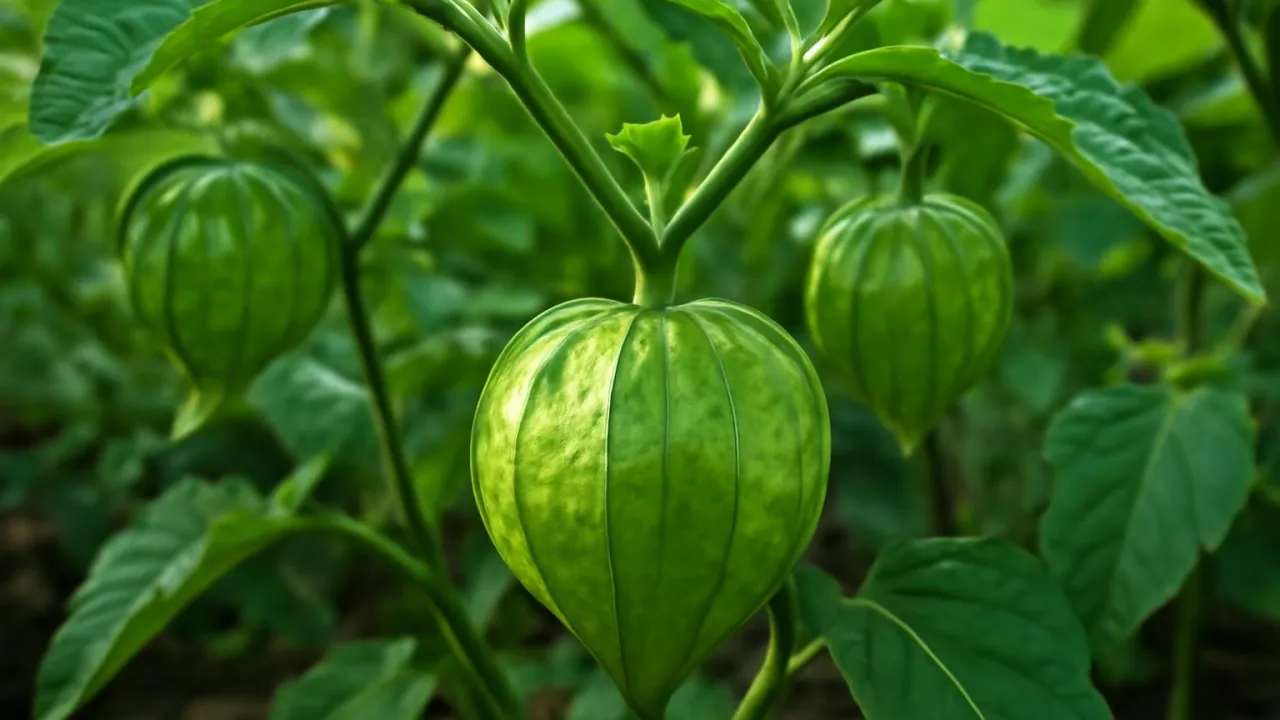
Tomatillos wear a papery husk that splits open as the fruit grows bigger!
✨ Word Sparks (Grade 2 Glossary)
Tap 🔊 to hear
husk
A dry cover that wraps around some fruits
sunlight
Light from the sun that helps plants grow
tangy
A sharp, sour taste that wakes up your mouth
🪝
Have you ever seen a fruit wrapped in a dry, paper-like husk?
1
Tomatillo’s Special Covering
Tomatillos have a dry, papery that wraps around the green fruit tightly. This husk helps protect the fruit from bugs and sun damage. When the fruit grows, the husk splits open to show the bright green inside.
2
Where Tomatillos Grow Best
Tomatillos grow best in warm places with lots of and soft soil. Farmers plant them in gardens and fields during spring and summer. These plants need moderate water to grow healthy and strong.
3
A Tangy Taste for Cooking
The tomatillo fruit tastes sour and fresh, making it perfect for sauces and salsas. People often cook with tomatillos to add a bright, flavor to meals. They are popular in Mexican dishes.
Tomatillo husks camouflage the fruit and protect it from insects and sun damage!
✨ Word Sparks (Grade 3 Glossary)
Tap 🔊 to hear
camouflage
A way to hide by blending in with surroundings
pollination
When bees help flowers make seeds and fruit
nutrients
Food that plants need to grow healthy and strong
🪝
Did you know tomatillos wear a papery husk to hide from predators?
1
The Protective Husk
Tomatillos are small green fruits covered by a papery husk. This husk acts as to help hide the fruit from predators. It also protects the fruit from sun damage and insects. When ripe, the husk splits open to reveal the fruit inside.
2
Growing in Warm Habitats
Tomatillos grow in warm regions like Central Mexico and the southwestern United States. They thrive in full sunlight and well-drained soil. These plants need and water to grow strong and produce fruit. Their growth cycle lasts about 75 to 100 days.
3
A Sour and Tangy Flavor
The tomatillo fruit has a sour, tangy taste that adds zest to many dishes. It is often used in salsas and sauces to enhance flavor through cooking. This unique taste comes from natural acids inside the fruit. People enjoy tomatillos for their fresh, bright flavor.
4
How Tomatillos Help Ecosystems
Tomatillo plants provide food for insects and animals in their habitat. Pollinators like bees visit the flowers to help with . This process helps the plant make fruit and seeds. Tomatillos also support farmers by being an important crop in many regions.
Tomatillo husks split open to help animals find the fruit and spread its seeds!
✨ Word Sparks (Grade 4 Glossary)
Tap 🔊 to hear
ecosystem
A community of plants, animals, and their environment
symbiotic
A helpful relationship between two living things
cultivate
To grow plants carefully for food or use
🪝
Why does the tomatillo’s papery husk split open as the fruit ripens?
1
Protective Husk and Ripening
The tomatillo’s papery husk protects the green fruit from insects and harsh sunlight while it grows. As the fruit ripens, the husk dries and splits open, allowing animals to see and eat the fruit. This helps spread the seeds for new plants to grow. Without this husk, the fruit would be more vulnerable to damage and pests.
2
Growing Regions and Conditions
Tomatillos thrive in warm climates such as Central Mexico and parts of the southwestern United States. They require full sun, well-drained soil, and moderate watering to grow successfully. Farmers tomatillos as a valuable crop for fresh markets and cooking. These plants can tolerate some drought but grow best with steady moisture.
3
Role in Food Webs and Farming
Tomatillos support by providing food for pollinators like bees and animals such as birds. Pollination by bees ensures fruit production, which in turn feeds other animals. Humans harvest tomatillos for cooking, creating a relationship between plants and people. This connection helps maintain biodiversity and local food traditions.
4
Human Uses and Agricultural Impact
Tomatillos are widely used in Mexican cuisine, especially in green sauces and salsas. Their cultivation impacts local agriculture by supporting farmers and markets. Sustainable farming practices help maintain soil health and reduce pesticide use to protect . Crop rotation and organic methods are often used to keep the soil fertile.
1. What happens when the tomatillo husk splits open?
2. How do tomatillos help farmers?
🤯 Mind-Blowing Fact • Grade 5
Tomatillos belong to the nightshade family and have a unique husk that protects and camouflages their fruit!
✨ Word Sparks (Grade 5 Glossary)
Tap 🔊 to hear
calyx
The green leaf-like part that covers a flower or fruit
pollination
The process where pollen moves to make seeds grow
herbivore
An animal that eats only plants
🪝
How does the tomatillo’s unique husk protect and help spread its fruit in nature?
1
Scientific Classification and Origins
The tomatillo, scientifically named Physalis philadelphica, belongs to the nightshade family Solanaceae. Native to Central Mexico, it has been cultivated for thousands of years by indigenous peoples. Its botanical classification places it among plants producing enclosed fruits called 'berries' within a papery husk. This unique trait distinguishes tomatillos from many other fruits.
2
Physiological Adaptations and Husk Function
The papery husk of the tomatillo acts as a protective barrier against ultraviolet radiation and insect predation. This structure expands as the fruit develops, eventually drying and splitting to reveal the mature berry. The husk’s texture and color also provide camouflage, reducing damage. These adaptations improve the fruit’s chances of survival in the wild.
3
Ecological Role and Pollination Mechanics
Tomatillo plants rely on pollinators such as bees to transfer pollen between flowers, ensuring successful fertilization and fruit set. The flowers produce nectar to attract pollinators, which in turn support local biodiversity. The fruit serves as a food source for various animals, aiding seed dispersal through consumption. This interaction creates a balanced ecosystem.
4
Conservation, Agricultural History, and Human Use
Historically, tomatillos have been integral to Mexican cuisine and agriculture, valued for their unique flavor and versatility. Conservation efforts focus on preserving heirloom varieties and promoting sustainable farming practices to maintain genetic diversity. Their cultivation supports rural economies and cultural traditions. Modern agriculture balances productivity with environmental care.
5
Quantitative Comparisons and Growth Metrics
Tomatillo plants typically reach heights between 3 and 5 feet (1 to 1.5 meters) and produce fruits about 1.5 inches (4 centimeters) in diameter. They require temperatures between 70 and 85 degrees Fahrenheit (21 to 29 degrees Celsius) for optimal growth. The fruit’s husk dries and splits approximately 80 to 100 days after planting. These measurements help farmers plan their harvests efficiently.