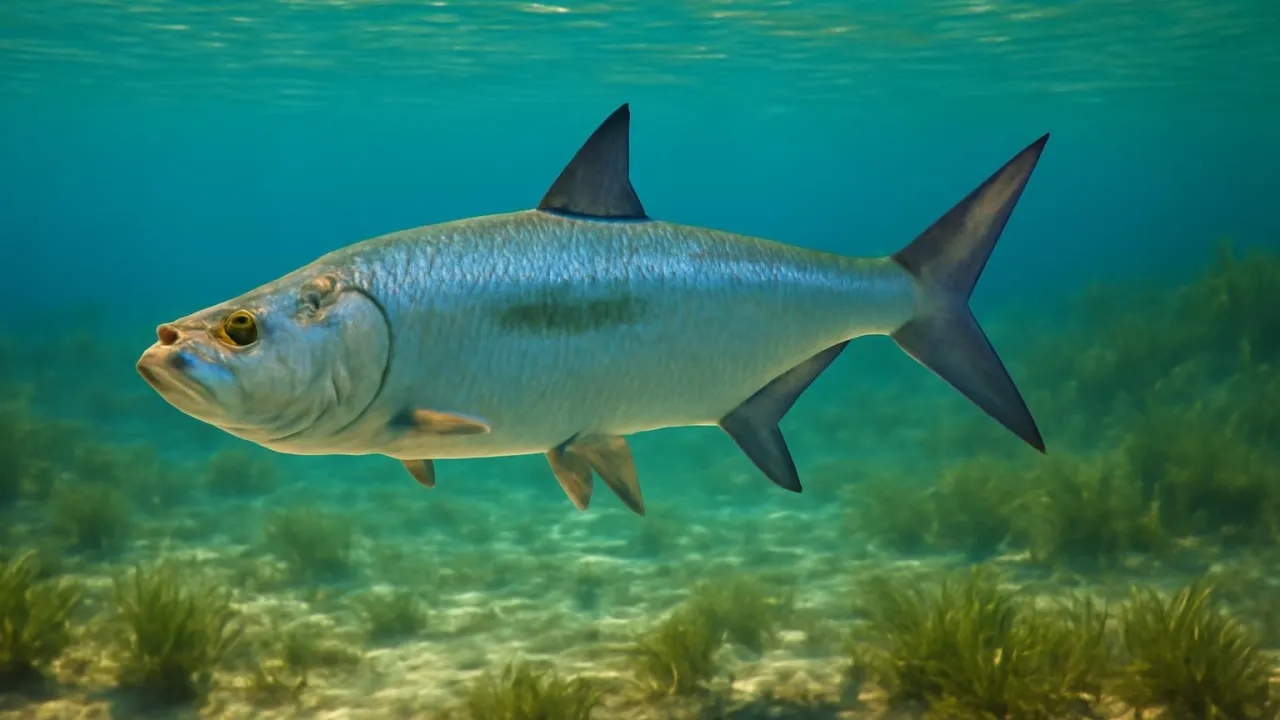
Tarpons can leap up to 10 feet high to escape predators or catch food.
✨ Word Sparks (Grade 2 Glossary)
Tap 🔊 to hear
scales
Small flat pieces that cover a fish’s body.
estuaries
Where rivers meet the sea with mixed water.
predator
An animal that hunts other animals for food.
🪝
Have you ever seen a fish jump high above the water?
1
Tarpon's Shiny Body
Tarpons have large, shiny silver that reflect sunlight underwater. Their big eyes help them see well in murky water. They can grow very large, up to eight feet long.
2
Where Tarpons Live
Tarpons live in warm coastal waters and where the water is shallow. They often swim near mangroves and sea grasses that protect them from . These areas also provide many small fish for food.
3
What Tarpons Eat and Do
Tarpons eat smaller fish and shrimp to get energy. They use their strong jaws to catch their food easily. When threatened, tarpons can leap high out of the water to escape danger.
Tarpons can leap over 10 feet high, making them one of the best jumping fish.
✨ Word Sparks (Grade 3 Glossary)
Tap 🔊 to hear
camouflage
Colors or shapes that help hide animals.
crustaceans
Animals with hard shells like shrimp and crabs.
adaptation
A special trait that helps animals survive.
🪝
Did you know tarpons use their shiny scales as camouflage underwater?
1
Shiny Scales and Big Eyes
Tarpons have large, reflective scales that help them blend into the water. Their big eyes improve vision in cloudy or dark water conditions. This helps tarpons avoid predators and sneak up on prey.
2
Habitat and Behavior
Tarpons live in warm coastal waters, estuaries, and lagoons where they find food and shelter. They often swim near mangrove roots and sea grasses, which provide protection from predators. Tarpons are strong swimmers and can leap high to escape threats.
3
Diet and Feeding
Tarpons are carnivores that eat smaller fish and like shrimp and crabs. They use their large mouths and sharp teeth to catch prey quickly. This diet gives them the nutrients needed for growth and energy.
4
Survival and Adaptations
Tarpons use their shiny scales as , reflecting light to confuse predators. Their jumping ability helps them avoid danger and sometimes catch flying insects. These increase their chances of survival in the wild.
Tarpons can leap over 10 feet high, helping them escape predators and catch food.
✨ Word Sparks (Grade 4 Glossary)
Tap 🔊 to hear
ecosystem
A community of plants and animals living together.
nursery
A safe place where baby animals grow up.
conservation
Protecting nature and animals from harm.
🪝
How does the tarpon’s shiny body help it survive in its watery world?
1
Reflective Scales and Camouflage
The tarpon’s large, reflective scales scatter sunlight underwater, creating camouflage that confuses predators and prey alike. This adaptation allows tarpons to blend into their environment, making it easier to hunt and harder to be caught. Their big eyes also help them detect movement in murky coastal waters where they live.
2
Habitat and Ecosystem Role
Tarpons inhabit warm coastal waters, estuaries, and lagoons along the Atlantic and Gulf coasts. These areas provide shelter among mangroves and sea grasses, which are critical habitats for many fish species. Tarpons play an important role as mid-level predators, controlling populations of smaller fish and crustaceans.
3
Feeding Habits and Survival
Tarpons feed mainly on smaller fish and crustaceans, using their large mouths and sharp teeth to catch prey efficiently. Their ability to leap high out of the water helps them escape predators like sharks and humans. This jumping behavior also sometimes aids in catching flying insects near the water’s surface.
4
Human Impact and Conservation
Tarpon populations face threats from fishing and habitat loss due to coastal development. efforts focus on protecting habitats and regulating fishing to ensure tarpons remain abundant. Healthy tarpon populations support local and recreational fishing industries.
Tarpons can leap over 10 feet high and weigh as much as 280 pounds, making them powerful swimmers.
✨ Word Sparks (Grade 5 Glossary)
Tap 🔊 to hear
cycloid scales
Smooth fish scales that reflect light brightly.
apex predator
Top animal that hunts others but is not hunted.
estuaries
Where fresh and saltwater mix in coastal areas.
🪝
What makes the tarpon one of the most fascinating fish in coastal ecosystems?
1
Scientific Classification and Range
The tarpon, scientifically named Megalops atlanticus, belongs to the family Megalopidae. It is native to subtropical and tropical waters of the western Atlantic Ocean, including the Gulf of Mexico and Caribbean Sea. Tarpons thrive in , lagoons, and shallow coastal habitats where salinity varies widely. Their broad geographic range makes them important ecological players.
2
Physiological Adaptations and Mechanics
Tarpons possess large, that reflect light, providing effective camouflage in sunlit waters. Their swim bladder functions as a lung, allowing them to gulp air and survive in oxygen-poor environments. Powerful muscles and a streamlined body enable tarpons to leap up to 10 feet above the water surface, escaping predators and catching prey.
3
Ecological Role and Conservation History
As in coastal food webs, tarpons regulate populations of smaller fish and crustaceans, maintaining ecosystem balance. Overfishing and habitat destruction have historically reduced tarpon numbers, prompting conservation measures such as catch-and-release fishing regulations and habitat protection. These efforts aim to sustain tarpon populations and preserve biodiversity.
4
Quantitative Comparisons and Behavior
Adult tarpons can reach lengths of 8 feet and weigh up to 280 pounds, making them among the largest coastal fishes. Their leaping speed can exceed 20 miles per hour, helping them evade sharks and other predators. Tarpons often migrate seasonally, traveling hundreds of miles to spawn in specific .
5
Human Interactions and Future Outlook
Tarpons are prized by recreational anglers for their fighting ability and spectacular jumps, contributing to local economies. Scientific monitoring of tarpon populations helps track health and inform management policies. Continued conservation efforts and habitat restoration are crucial to ensure tarpons remain a thriving species in changing coastal environments.