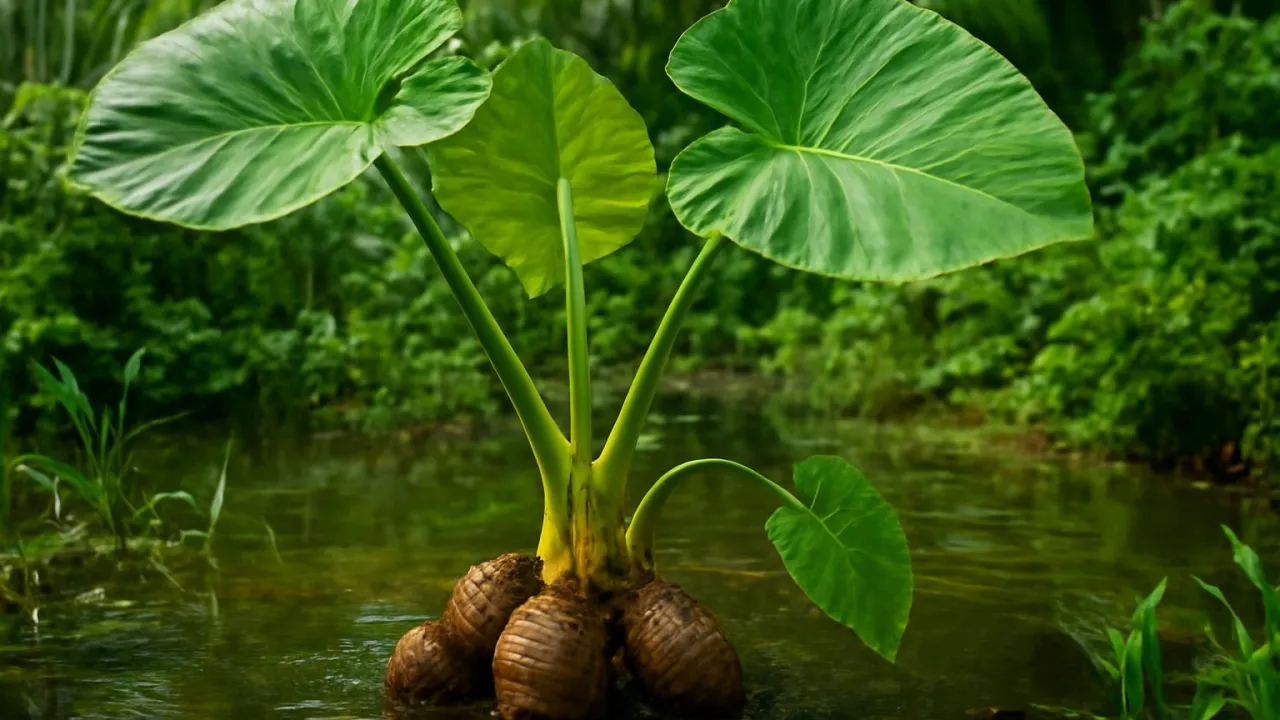
Taro is one of the oldest plants people have farmed for food!
✨ Word Sparks (Grade 2 Glossary)
Tap 🔊 to hear
corm
A small root that grows into a new plant
starchy
Having lots of energy from plant food
habitat
The natural home where a plant lives
🪝
Have you ever seen a plant with giant heart-shaped leaves?
1
Big Leaves and Wet Homes
Taro plants have big, heart-shaped leaves that grow tall. They live in wet places like ponds and rivers. The wet soil helps them grow strong and healthy.
2
Growing Roots and Life Cycle
Taro grows from small roots called that grow underground. Farmers plant these corms in wet soil. The plant grows leaves above and roots below.
3
A Special Root to Eat
The taro root is and brown outside. When cooked, it becomes soft and tasty. Many people around the world eat taro as a food.
Taro’s starchy root is a key food source for millions in tropical regions.
✨ Word Sparks (Grade 3 Glossary)
Tap 🔊 to hear
photosynthesis
How plants use sunlight to make food
corm
A thick underground root storing food
erosion
Soil washing away by water or wind
🪝
Did you know taro plants use their big leaves to catch sunlight?
1
Taro’s Leaf Adaptation
Taro plants have large, heart-shaped leaves that help capture sunlight. This process is called . The leaves grow tall to reach sunlight above other plants. This adaptation helps taro survive in wet habitats.
2
Growing Underground Roots
Taro grows underground roots called that store nutrients. These corms help the plant survive dry periods. Farmers harvest these starchy roots for food. The roots also help the plant anchor in soft, wet soil.
3
Taro’s Role in Ecosystems
Taro plants grow in wetlands where water is plentiful. They provide food for animals and humans. The plants help keep the soil healthy by preventing . Taro’s thick roots hold the soil in place during floods.
4
How People Use Taro
People cook taro roots to make them soft and safe to eat. Raw taro contains toxins that can irritate the mouth. Cooking removes these toxins. Taro is a staple food in many cultures around the world.
Taro helps prevent soil erosion and supports many wetland animals and people.
✨ Word Sparks (Grade 4 Glossary)
Tap 🔊 to hear
photosynthesis
Plant process that uses sunlight for energy
erosion
Soil wearing away by water or wind
biodiversity
Many different plants and animals living together
🪝
How does taro survive and help others in watery habitats?
1
Taro’s Leaf Shape and Sunlight Capture
Taro’s large, heart-shaped leaves grow tall above water to capture sunlight efficiently. This helps the plant perform , which creates energy for growth. The leaf shape also allows rainwater to run off quickly, preventing damage. These features help taro thrive in tropical wetlands.
2
Root Adaptations and Soil Stability
The taro plant grows thick underground corms that store nutrients and water, aiding survival during dry spells. These roots also anchor the plant firmly in soft, muddy soil, reducing . By holding soil in place, taro helps maintain wetland ecosystems and prevents loss of fertile land.
3
Taro’s Role in Food Webs and Human Use
Taro provides food for many animals and humans, making it an important part of wetland food webs. Humans cultivate taro widely for its nutritious roots rich in carbohydrates. The plant’s presence supports by offering shelter and food to various species. Its farming has cultural significance in many tropical regions.
4
Geographic Distribution and Farming Impact
Taro is native to Southeast Asia but now grows across tropical and subtropical regions worldwide. Its ability to grow in wet, warm climates makes it valuable for agriculture in many countries. However, farming taro can impact wetlands if not managed carefully, so sustainable practices are important to protect habitats.
Taro has been a crucial food source for over 10,000 years and supports millions worldwide today.
✨ Word Sparks (Grade 5 Glossary)
Tap 🔊 to hear
aerenchyma
Plant tissue that moves air in wet roots
corm
Thick underground stem storing starch
genetic diversity
Many different genes in plant populations
🪝
What makes taro root a vital tropical crop with unique biology and history?
1
Scientific Classification and Botanical Traits
Taro, scientifically named Colocasia esculenta, belongs to the Araceae family. It is a perennial herbaceous plant with large peltate leaves and underground . The corms are swollen stem bases rich in starch, making taro a valuable root crop. Its leaves have a waxy surface to repel water in wet environments.
2
Physiological Adaptations for Wet Environments
Taro thrives in flooded or waterlogged soils due to tissue in its roots and stems, which transports oxygen efficiently. This adaptation allows survival in low-oxygen conditions common in wetlands. The stores carbohydrates that provide energy during growth and reproduction cycles. Taro’s rapid leaf growth maximizes photosynthesis in shaded habitats.
3
Agricultural History and Cultural Importance
Taro is one of the earliest cultivated root crops, with archaeological evidence dating back over 10,000 years in Asia and the Pacific. It holds cultural significance in Polynesian, Southeast Asian, and African societies as a staple food and ceremonial plant. Traditional farming methods include planting in flooded paddies or dry fields, depending on the region.
4
Ecological Role and Conservation Challenges
Taro plants contribute to wetland ecosystem stability by reducing soil erosion and supporting diverse aquatic and terrestrial species. However, habitat loss and invasive species threaten wild taro populations. Conservation efforts focus on preserving and promoting sustainable farming practices to balance human needs and ecosystem health.
5
Quantitative Comparisons and Global Impact
Taro can weigh up to 10 pounds (4.5 kilograms), providing substantial calories per harvest. The plant grows best in temperatures between 77°F and 95°F (25°C to 35°C) and requires abundant water. Globally, taro ranks among the top ten root crops by production volume, feeding millions daily in tropical regions.