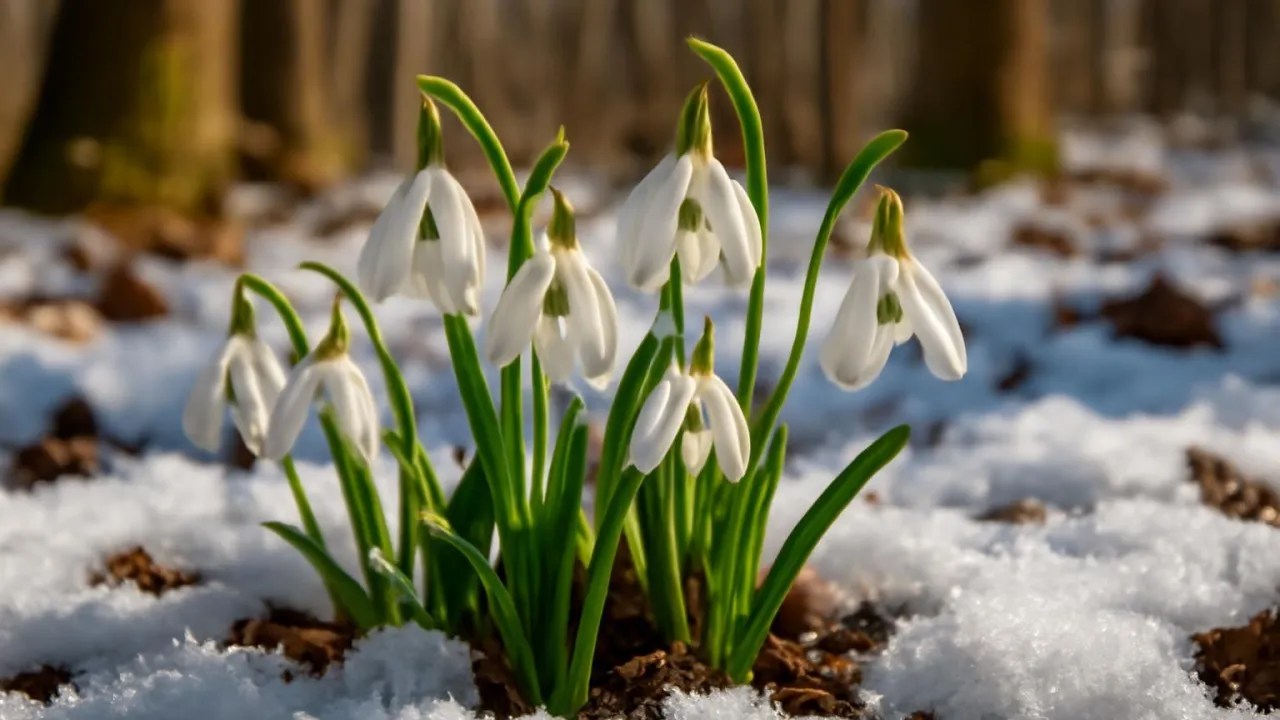
Snowdrops are one of the first flowers to bloom each year, even before spring!
✨ Word Sparks (Grade 2 Glossary)
Tap 🔊 to hear
petals
The colorful parts of a flower
moist
A little wet or damp
stem
The part that holds up the flower
🪝
Have you ever seen a flower grow through snow and ice?
1
Snowdrops in Winter
Snowdrops are small white flowers that bloom in late winter and early spring. They can grow even when snow covers the ground. These flowers are shaped like tiny bells hanging down from green .
2
Where Snowdrops Grow
Snowdrops grow in forests and meadows in Europe and parts of Asia. They like cool, soil and places with some sunlight. The plants need water to grow but can survive cold weather.
3
Special Flower Features
Snowdrops have white that help them stand out in the snow. Their green leaves are long and thin, helping them collect sunlight. These flowers are strong and can push through frozen ground.
Snowdrops use stored nutrients to bloom before most plants wake up in spring.
✨ Word Sparks (Grade 3 Glossary)
Tap 🔊 to hear
adaptation
A change that helps plants survive
pollinators
Animals that help flowers make seeds
camouflage
Colors or shapes that hide plants
🪝
How can snowdrop flowers bloom when the ground is still frozen?
1
Snowdrop’s Early Bloom
Snowdrops bloom very early in the year, often before other flowers appear. Their ability to bloom through snow is an important for survival. This early blooming helps them avoid competition for . Snowdrops use stored nutrients to grow when other plants are dormant.
2
Physical Features for Survival
Snowdrops have white, bell-shaped petals that reflect sunlight and attract early . Their green leaves are narrow and help absorb sunlight efficiently. The flowers grow on sturdy stems that push through frozen soil. This physical structure helps them survive cold temperatures.
3
Habitat and Ecosystem Role
Snowdrops grow in temperate forests and meadows across Europe and western Asia. They prefer moist soil rich in nutrients and partial shade under trees. These flowers provide early nectar for bees and other . Snowdrops play a role in the food web by supporting insects in late winter.
4
Camouflage and Protection
Snowdrops’ white color helps them blend with snow, protecting them from some predators. Their early growth reduces damage from herbivores that are less active in winter. This is a clever for survival. Snowdrops also produce chemicals that deter some insects.
Snowdrops are vital early nectar sources that help pollinators survive winter’s end.
✨ Word Sparks (Grade 4 Glossary)
Tap 🔊 to hear
ecosystem
A community of plants and animals living together
pollinators
Animals that move pollen between flowers
deforestation
Cutting down many trees in forests
🪝
What causes snowdrops to bloom through snow and cold winter weather?
1
Early Bloom and Adaptation
Snowdrops bloom in late winter because they have adapted to survive cold conditions and frozen ground. Their bulbs store nutrients that allow rapid growth when temperatures rise slightly. This early bloom gives them an advantage by avoiding competition for sunlight and . The ability to bloom through snow is a unique survival strategy.
2
Role in Ecosystems
Snowdrops provide one of the first sources of nectar for such as bees emerging from hibernation. By supporting these insects, snowdrops help maintain healthy and food webs. They also contribute to soil health by growing in moist, nutrient-rich forest floors. Human activities like can threaten their habitats.
3
Physical Features and Protection
The white petals of snowdrops reflect sunlight, which may help warm the flower and attract . Their narrow leaves efficiently capture sunlight under tree canopies. Snowdrops’ early blooming reduces herbivore damage because many animals are less active in winter. Their chemical defenses deter some insect pests, further protecting the plants.
4
Geographic Distribution
Snowdrops naturally grow in temperate regions of Europe and western Asia, especially in deciduous forests and meadows. They thrive in areas with cold winters and moist soils, which support their growth cycle. Gardeners worldwide cultivate snowdrops as ornamental plants because of their early bloom and delicate beauty. Climate change may affect their natural blooming patterns.
Snowdrops bloom at soil temperatures just above freezing, breaking through snow to feed early pollinators.
✨ Word Sparks (Grade 5 Glossary)
Tap 🔊 to hear
perennial
A plant that lives for many years
tepals
Flower parts that look like petals or leaves
carbohydrates
Plant energy stored in bulbs and leaves
🪝
How do snowdrops manage to bloom through snow and cold, and why are they important to ecosystems?
1
Scientific Classification and Origin
Snowdrops belong to the genus Galanthus within the Amaryllidaceae family, native to Europe and western Asia. Their species name, Galanthus nivalis, means 'milk flower of the snow,' reflecting their snowy white petals. These bulbs have evolved to survive cold temperate climates with harsh winters. Their geographic distribution includes deciduous forests and damp meadows where winters are cold and snowy.
2
Physiological Adaptations for Early Blooming
Snowdrops possess bulbs that store and nutrients, enabling rapid growth during late winter thaw periods. Their bell-shaped flowers have white that reflect sunlight, which may increase flower temperature and attract early pollinators. The plant’s narrow leaves maximize photosynthesis under low light conditions beneath tree canopies. These adaptations allow snowdrops to bloom before most other plants emerge, reducing competition.
3
Ecological Role and Conservation Status
As one of the earliest flowering plants, snowdrops provide crucial nectar for emerging pollinators like bees and butterflies, supporting food webs during scarce winter months. They contribute to soil health by stabilizing forest floor ecosystems and cycling nutrients. Though common in native ranges, snowdrops face habitat loss from deforestation and climate change, which may alter their blooming cycles and pollinator interactions. Conservation efforts include habitat protection and cultivation in botanical gardens.
4
Botanical History and Human Interaction
Snowdrops have been admired since ancient times for their delicate beauty and early bloom, symbolizing hope and renewal. They were introduced to gardens across Europe by the 16th century and are popular ornamental plants worldwide. Their bulbs have been studied for potential medicinal properties, including compounds with antiviral effects. Gardeners value snowdrops for their ability to brighten late winter landscapes and signal the coming spring.
5
Quantitative Comparisons and Growth Details
Snowdrops typically grow between 3 and 6 inches (7 to 15 centimeters) tall, with flowers measuring about 1 inch (2.5 centimeters) long. They can bloom when soil temperatures are just above freezing, around 32 to 40 degrees Fahrenheit (0 to 4 degrees Celsius). Their bulbs store enough energy to push shoots through frozen soil and snow layers up to several inches thick. Compared to many spring flowers, snowdrops bloom weeks earlier, giving them a unique ecological niche.