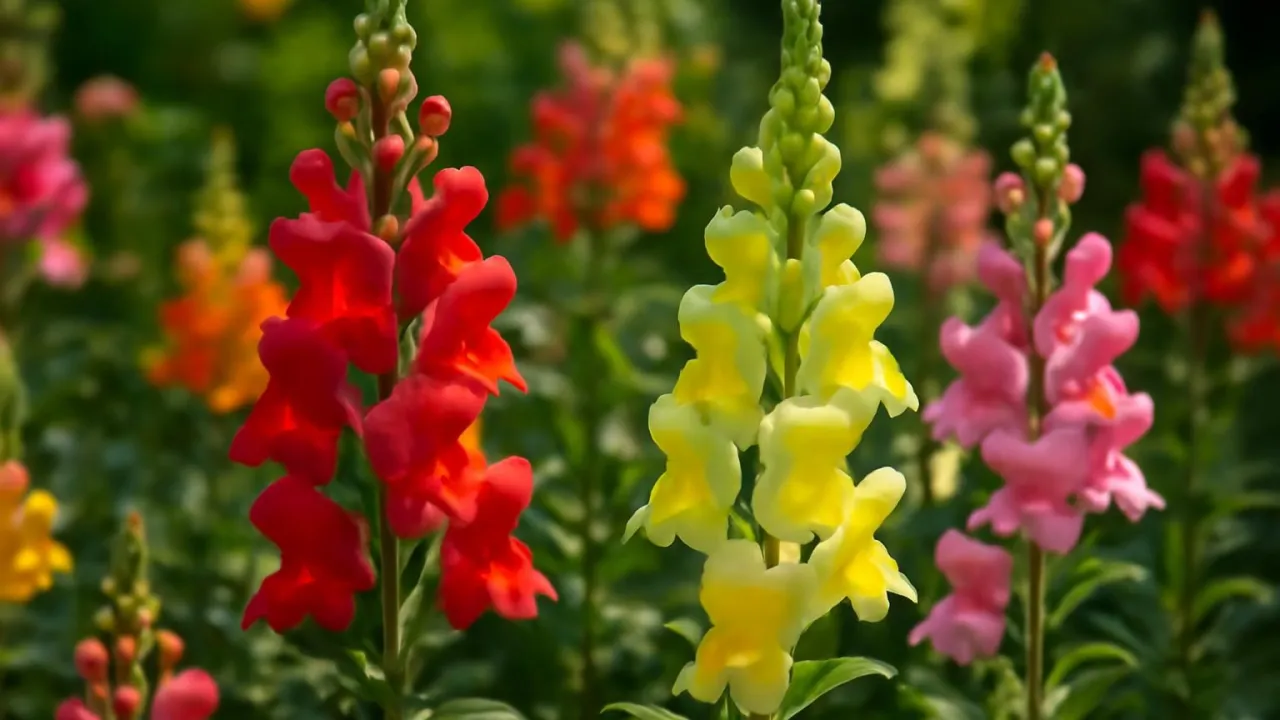
2. What happens when you press a snapdragon flower?
🤯 Mind-Blowing Fact • Grade 2
Snapdragon flowers snap shut to protect their nectar from some animals!
✨ Word Sparks (Grade 2 Glossary)
Tap 🔊 to hear
pollinate
Moving pollen to help flowers make seeds
nectar
Sweet juice inside flowers for bees
native
Where a plant grows naturally
🪝
Have you ever seen a flower that snaps like a dragon’s mouth?
1
Bright and Colorful Flowers
Snapdragons bloom in many colors like pink, yellow, and red. They have petals shaped like a dragon’s mouth. These flowers can snap shut when touched by hand.
2
Where They Grow
Snapdragons grow best in sunny places with well-drained soil. They need regular watering but not too much water. These flowers are to Mediterranean areas.
3
A Special Flower Trick
When you press the snapdragon flower, it snaps shut quickly. This helps protect the flower’s inside. Bees visit snapdragons to get nectar and help .
Snapdragons snap their flowers shut to let only helpful bees reach their nectar!
✨ Word Sparks (Grade 3 Glossary)
Tap 🔊 to hear
adaptation
A change that helps a plant survive better
pollination
When pollen moves to help flowers make seeds
nectar
Sweet juice inside flowers for pollinators
🪝
Did you know snapdragons use their flower shape as a clever survival adaptation?
1
The Dragon-Shaped Flower
Snapdragons have petals that look like a dragon’s mouth, which can snap shut quickly. This unique shape helps protect the inside from unwanted visitors. The flower’s shape also attracts pollinators like bees. This is an example of a plant for survival.
2
Growing in Mediterranean Climates
Snapdragons naturally grow in Mediterranean regions with warm, dry summers and mild winters. They thrive in full sunlight and well-drained soil. Their roots absorb nutrients and water efficiently to support growth. These environmental conditions help snapdragons flourish.
3
Pollination and Protection
Bees visit snapdragons to collect and pollen, helping with . When a bee lands, the flower snaps shut to ensure only strong pollinators can reach the nectar. This protects the flower from predators or nectar thieves. Pollination is vital for the plant’s reproduction.
4
How Snapdragons Survive
The snapdragon’s snapping flower is a clever defense against insects that do not help pollinate. Its bright colors attract helpful pollinators while warning others away. This balance helps the plant survive and reproduce in its ecosystem. like this increase the snapdragon’s chances of survival.
1. How does the snapdragon’s flower shape help it survive?
2. Why do bees visit snapdragons?
🤯 Mind-Blowing Fact • Grade 4
Snapdragons help pollinators and humans by supporting biodiversity in many environments!
✨ Word Sparks (Grade 4 Glossary)
Tap 🔊 to hear
ecosystem
All living and nonliving things in one place
pollinator
An animal that helps flowers make seeds
nectar
Sweet juice inside flowers for pollinators
🪝
How does the snapdragon’s unique flower shape affect its role in the ecosystem?
1
Flower Shape and Defense
The snapdragon’s flower resembles a dragon’s mouth and snaps shut when touched, which helps protect its from non-pollinating insects. This cause-and-effect relationship ensures that only strong like bees can access the flower’s nectar. By doing this, the snapdragon reduces nectar theft and increases pollination success. This defense mechanism is a key adaptation for survival.
2
Role in the Food Web
Snapdragons provide to like bees and butterflies, which in turn help the plant reproduce by spreading pollen. These pollinators are food for other animals, creating a web of life in the . Humans also cultivate snapdragons for gardens, which supports biodiversity in urban areas. Thus, snapdragons play an important role in their ecosystems and human environments.
3
Geographic Distribution
Originally native to Mediterranean climates, snapdragons have been introduced worldwide as ornamental plants. They now grow in gardens across North America, Europe, and Asia. Their ability to adapt to different climates allows them to thrive in many regions. This wide distribution helps maintain populations in various habitats.
4
Human Impact and Cultivation
Humans have bred snapdragons for a variety of colors and sizes, increasing their popularity in gardens. However, excessive use of pesticides can harm the that snapdragons rely on. Sustainable gardening practices help protect these important insects and the plants themselves. Understanding this balance is vital for conserving snapdragons and their .
Snapdragon flowers snap shut in less than a second using specialized petal hinges and cell pressure changes!
✨ Word Sparks (Grade 5 Glossary)
Tap 🔊 to hear
bilabiate
Flower with two-lobed petals shaped like lips
turgor pressure
Water pressure inside plant cells that causes movement
symbiotic
A helpful relationship between two living things
🪝
What makes the snapdragon’s flower structure a fascinating example of botanical adaptation and ecological interaction?
1
Taxonomy and Botanical Classification
Snapdragons belong to the family Plantaginaceae and the genus Antirrhinum, with the species name majus. They are dicotyledonous flowering plants native to the Mediterranean Basin. The genus name Antirrhinum means 'like a nose' in Greek, referring to the flower’s shape. This classification helps scientists understand their evolutionary relationships with other plants.
2
Physiological Mechanics of Snapping
The snapdragon’s flower has a corolla with two hinged lobes that snap shut when pressure is applied. This mechanical movement is caused by specialized petal structures and changes in cells. The snapping mechanism selectively allows strong pollinators, such as bumblebees, to access nectar while excluding less effective visitors. This specialized physiology enhances reproductive success.
3
Conservation and Botanical History
Snapdragons have been cultivated since the Renaissance for their ornamental value and unique flower shapes. While not endangered, their reliance on pollinators makes them vulnerable to declines in bee populations caused by habitat loss and pesticide use. Conservation efforts focus on sustainable gardening and protecting pollinator habitats to maintain snapdragon populations. Historical cultivation has also led to many colorful hybrids.
4
Quantitative Comparisons and Growth
Snapdragons typically grow between 30 and 90 centimeters tall and can produce flowers ranging from 2 to 5 centimeters in length. The snapping action occurs in less than a second, demonstrating rapid plant movement. They prefer temperatures between 60 and 75 degrees Fahrenheit for optimal growth. Compared to other garden flowers, snapdragons have a unique mechanical defense that few plants possess.
5
Ecological Role and Symbiotic Relationships
Snapdragons play an important ecological role by providing nectar to pollinators like bees and butterflies, which are essential for many ecosystems. Their snapping flowers encourage strong pollinators, promoting efficient pollen transfer and genetic diversity. This relationship benefits both the plant and pollinators, supporting ecosystem health. Understanding these interactions highlights the complexity of plant-animal coevolution.