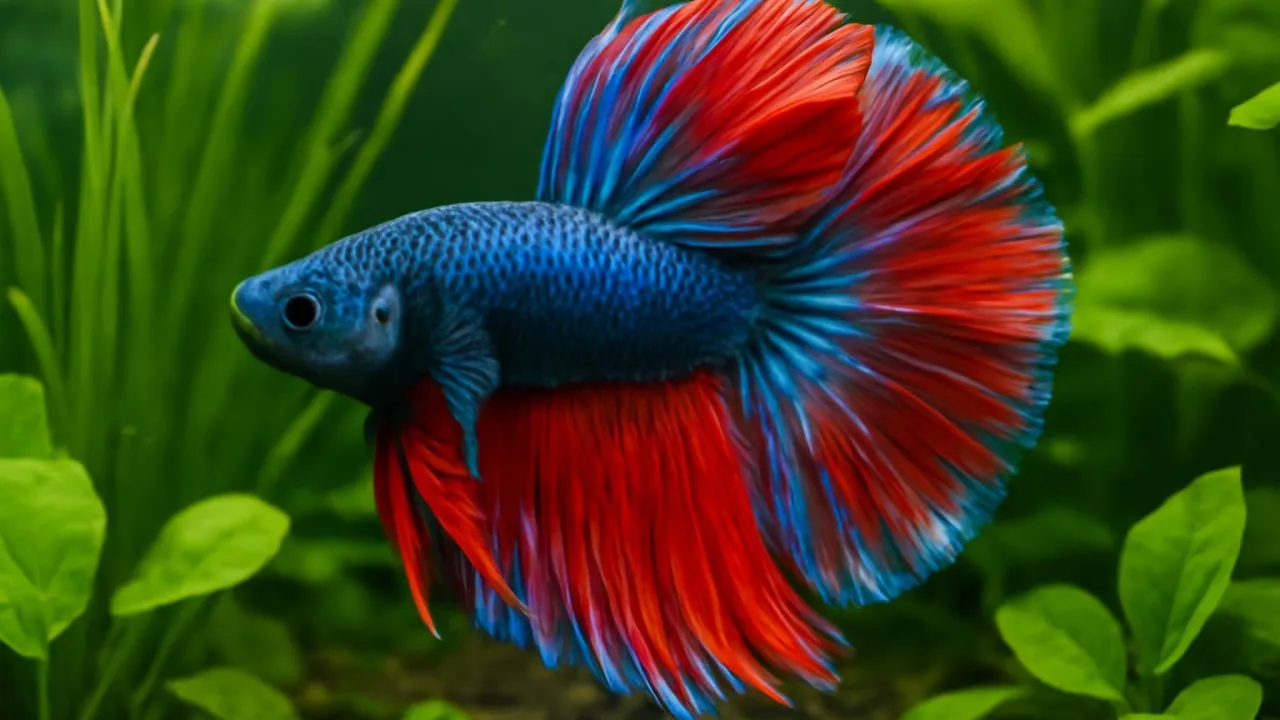
Male Siamese fighting fish build bubble nests to keep their eggs safe!
✨ Word Sparks (Grade 2 Glossary)
Tap 🔊 to hear
shallow
Not deep; close to the top
insects
Small animals with six legs
guard
To keep safe from danger
🪝
Did you know some fish can make bubble nests?
1
Bright and Beautiful
Siamese fighting fish have long, flowing fins and bright colors. They can be red, blue, green, or even purple. These fish are small, but their fins look big and fancy. They swim slowly and show off their colors.
2
Where They Live
These fish come from ponds and rice fields in Thailand. They like warm, calm water with lots of plants. In the wild, they eat and tiny water animals. They use plants to hide from bigger fish.
3
Bubble Builders
The male fish makes a nest of bubbles at the water’s top. He blows bubbles and sticks them together to hold eggs. The dad the nest until the baby fish hatch. Male fish do not like sharing space with other males.
Siamese fighting fish use a labyrinth organ to breathe air above water!
✨ Word Sparks (Grade 3 Glossary)
Tap 🔊 to hear
labyrinth
A special organ for breathing air
crustaceans
Small animals like shrimp or crabs
predators
Animals that hunt other animals
🪝
How can a fish breathe air just like you?
1
Dressed in Rainbow Fins
Siamese fighting fish are famous for their bright, flowing fins and shimmering colors. Males are especially colorful to attract attention and warn other fish. Their fins can look like tiny fans waving in the water. Each fish can have its own unique color pattern.
2
Life in Shallow Waters
These fish live in slow-moving streams, rice paddies, and ponds in Southeast Asia. Their natural homes often have warm, shallow water with lots of plants for hiding. Siamese fighting fish eat insects, mosquito larvae, and tiny . Their habitat helps them stay safe from bigger .
3
Bubble Nest Builders
Male Siamese fighting fish build bubble nests at the water’s surface to protect their eggs. They use their mouths to blow bubbles and stick them together in a cluster. After the female lays eggs, the male carefully places them in the nest. He guards the eggs until the baby fish hatch safely.
4
A Fish That Breathes Air
Unlike most fish, Siamese fighting fish can breathe air using a special organ called a . This adaptation lets them survive in water with very little oxygen. They swim up to the surface to take a gulp of air. This superpower helps them live in places where other fish cannot.
1. Why do male Siamese fighting fish build bubble nests?
2. What does the labyrinth organ help the fish do?
🤯 Mind-Blowing Fact • Grade 4
Siamese fighting fish help control mosquito populations by eating their larvae in the wild!
✨ Word Sparks (Grade 4 Glossary)
Tap 🔊 to hear
territorial
Protecting a space from others
larvae
Baby insects before they grow up
habitat
The place where an animal lives
🪝
What would you do if you could breathe in water and in air?
1
Brilliant Colors and Flowing Fins
Male Siamese fighting fish are known for their spectacular, flowing fins and shimmering colors, which can include deep reds, electric blues, and metallic greens. These vivid colors and unique fin shapes help males attract mates and warn away rivals. Females are usually smaller and less colorful, which helps them hide from predators. Each fish’s color pattern is unique, making them popular in aquariums around the world.
2
A Home in Southeast Asia
Siamese fighting fish are native to the warm, shallow waters of Thailand, Cambodia, and nearby countries. They thrive in rice paddies, slow-moving streams, and ponds filled with plants and muddy bottoms. These are often low in oxygen, which is why the fish’s ability to breathe air is so important. In the wild, they eat insects, mosquito , and tiny crustaceans, playing an important role in controlling insect populations.
3
Bubble Nests and Fierce Defenders
Male Siamese fighting fish are famous for building bubble nests at the water’s surface, using their mouths to blow and glue bubbles together. After the female lays her eggs, the male gathers them and places them in the nest, fiercely guarding the eggs from predators and even from the female. This behavior ensures more baby fish survive to grow up. Male fish are and will often fight other males to protect their space.
4
Adaptations for Survival
Siamese fighting fish have a labyrinth organ, which lets them breathe oxygen directly from the air, allowing them to survive in water with very little oxygen. This adaptation is a key reason they can live in where many other fish cannot. Their bright colors make them targets for predators, but their ability to hide in plants and quickly dart away helps keep them safe. Because they are so beautiful and hardy, people have bred many varieties for aquariums, but wild populations are threatened by habitat loss.
1. Why do male Siamese fighting fish guard the bubble nest?
2. How does the labyrinth organ help these fish survive?
🤯 Mind-Blowing Fact • Grade 5
Siamese fighting fish can survive in water with less than 5% the oxygen of most rivers!
✨ Word Sparks (Grade 5 Glossary)
Tap 🔊 to hear
labyrinth organ
A special body part for breathing air
sexual dimorphism
Males and females look very different
conservation
Protecting animals and their homes
🪝
How does a tiny fish become a champion air-breather and a fierce protector?
1
Taxonomy and Origins
The Siamese fighting fish, scientifically named Betta splendens, belongs to the family Osphronemidae and is native to Southeast Asia, particularly Thailand, Cambodia, Laos, and Vietnam. Historically, these fish were first domesticated in Thailand over 150 years ago, where they were bred for both their stunning colors and their aggressive behavior in staged competitions. In the wild, Betta splendens inhabit shallow, slow-moving waters such as rice paddies, marshes, and floodplains, which are often low in dissolved oxygen. Their ability to survive in these conditions makes them a fascinating subject for both scientists and aquarists.
2
Physiology and Superpowers
One of the most remarkable adaptations of the Siamese fighting fish is its , a specialized respiratory structure located above the gills. This organ enables the fish to extract oxygen directly from the air, allowing it to thrive in oxygen-poor environments where most other fish would struggle. Betta splendens typically grow up to 3 inches (7.5 centimeters) long and display , with males exhibiting larger, more colorful fins than females. Their vibrant hues are produced by layers of pigment cells that reflect light in different ways, creating iridescent effects.
3
Life Cycle and Parental Care
The reproductive behavior of Siamese fighting fish is unique among freshwater species. Males construct bubble nests at the water’s surface by blowing mucous-coated bubbles, which cluster together to form a floating platform. After a courtship dance, the female releases eggs, which the male fertilizes and carefully places into the nest. He then guards the nest, fanning the eggs to provide oxygen and protect them from predators, including the female. The eggs hatch in about 24 to 36 hours, and the fry remain in the nest for several days until they can swim independently.
4
Ecological Role and Human Impact
In their native habitats, Siamese fighting fish play a vital role in controlling insect populations, especially mosquitoes, by consuming their larvae. However, wild populations are increasingly threatened by habitat destruction, pollution, and the introduction of invasive species. The global pet trade has led to the development of hundreds of Betta varieties, but it has also contributed to the decline of wild genetic diversity. Responsible aquarium-keeping and habitat are essential to ensure the survival of Betta splendens in the wild.
5
Amazing Numbers and Conservation
A single male Betta can build a bubble nest with hundreds of bubbles in just a few hours, and the temperature of their water must stay between 76–82°F (24–28°C) for healthy growth. While domesticated Bettas can live up to 3–5 years in captivity, wild Bettas often live shorter lives due to predators and environmental challenges. The species is not currently endangered, but habitat loss and pollution are ongoing threats. efforts focus on protecting wetland habitats and educating people about the importance of preserving both wild and captive Betta populations.