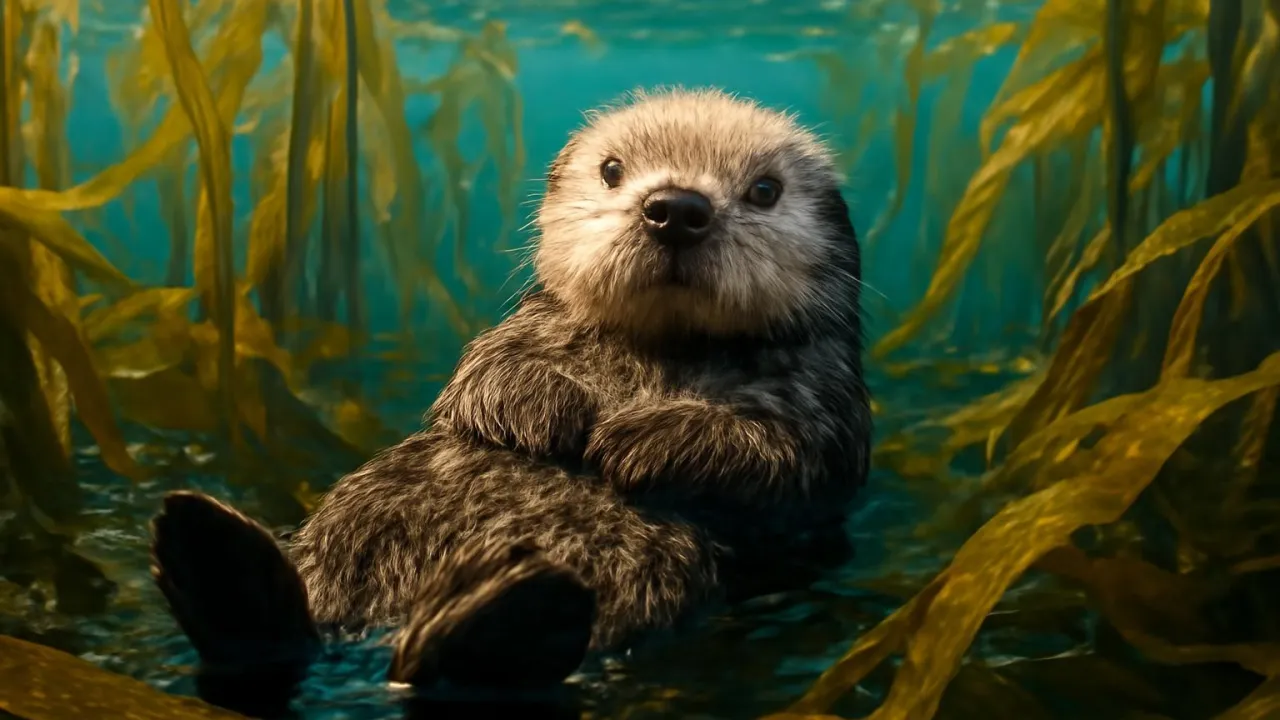
Sea otters can close their ears and noses underwater to keep water out!
✨ Word Sparks (Grade 2 Glossary)
Tap 🔊 to hear
kelp
Big seaweed that grows in the ocean
predator
An animal that hunts other animals for food
tool
An object used to help do a job
🪝
Have you ever wondered how sea otters stay warm in icy water?
1
Amazing Fur Coat
Sea otters have the thickest fur in the world, which keeps them warm. Their fur traps air bubbles to stay dry. This helps them swim in cold ocean water. Without their fur, they would get very cold quickly.
2
Floating and Feeding
Sea otters float on their backs while they eat their food. They use rocks as to crack open shells. Their diet includes crabs, sea urchins, and clams. They often wrap themselves in to stay in one place.
3
Where They Live
Sea otters live along the coasts of the North Pacific Ocean. They like shallow waters with lots of forests. These areas give them food and shelter from . Sea otters are important to keep the ocean healthy.
1. What do sea otters use to stay in one place in the water?
2. Which of these is NOT part of a sea otter’s diet?
🤯 Mind-Blowing Fact • Grade 3
Sea otters have a loose patch of skin under their forearms that acts as a pocket to store food or tools!
✨ Word Sparks (Grade 3 Glossary)
Tap 🔊 to hear
adaptation
A body change that helps animals survive
camouflage
Colors or shapes that help hide animals
ecosystem
A community of plants and animals living together
🪝
Did you know sea otters use tools to solve problems in the wild?
1
Dense Fur and Insulation
Sea otters have the densest fur of any animal, with up to one million hairs per square inch. This fur traps air and creates insulation to keep them warm in cold water. Unlike whales, they do not have a thick layer of blubber. Their fur is a key for survival in chilly ocean habitats.
2
Tool Use and Feeding
Sea otters use rocks as tools to crack open hard shells of prey like clams and sea urchins. This behavior is a rare example of tool use among marine mammals. Their strong paws and sharp teeth help them handle food efficiently. This allows them to access nutritious food that other animals cannot reach.
3
Habitat and Camouflage
Sea otters live in kelp forests along the North Pacific coast, where they find shelter and food. Their brown fur helps them blend in with the kelp and rocky ocean floor, providing from predators. Kelp also anchors them in place while they rest or eat. This habitat is essential for their survival and protection.
4
Ecosystem Role
Sea otters help maintain healthy kelp forests by eating sea urchins, which can destroy kelp if left unchecked. This predator-prey relationship is important for the balance of the marine . Without sea otters, kelp forests would decline, affecting many other ocean species. Their role as a keystone species highlights their ecological importance.
2. What happens to kelp forests if sea otters disappear?
🤯 Mind-Blowing Fact • Grade 4
Sea otters can close their ears and nostrils underwater, allowing them to dive safely for food!
✨ Word Sparks (Grade 4 Glossary)
Tap 🔊 to hear
thermoregulation
How animals keep their body temperature steady
symbiosis
A close relationship where both species benefit
biodiversity
Many different kinds of plants and animals living together
🪝
How do sea otters’ unique traits affect ocean ecosystems and human activities?
1
Fur and Thermoregulation
Sea otters possess the densest fur in the animal kingdom, which provides exceptional insulation against cold water temperatures. This thick fur traps air to maintain body heat, compensating for their lack of blubber. As a result, sea otters can thrive in chilly coastal environments where other mammals might struggle to survive. Their fur is vital for in cold ocean habitats.
2
Ecological Impact and Food Webs
By preying on sea urchins, sea otters prevent the overgrazing of kelp forests, which are vital habitats for many marine species. This predator-prey dynamic maintains and supports complex food webs in coastal ecosystems. The loss of sea otters can cause kelp forests to collapse, leading to declines in fish populations important for human fisheries. Their role supports both marine life and human economies.
3
Symbiosis and Human Influence
Sea otters form symbiotic relationships with kelp forests by stabilizing their environment through predation. Human activities such as oil spills, pollution, and fishing nets threaten sea otter populations, disrupting these relationships. Conservation efforts focus on protecting sea otters to preserve marine ecosystem health and benefit coastal communities. These efforts include habitat restoration and pollution control.
4
Geographic Range and Habitat
Sea otters inhabit coastal waters from Alaska down to central California, favoring shallow, rocky areas rich in kelp. Their distribution is limited by water temperature and food availability, which affects their population density. Seasonal migrations and habitat preferences influence their interactions with other marine animals. Protecting these habitats is crucial for their survival.
1. What role do sea otters play in kelp forest health?
2. How do human activities threaten sea otters?
🤯 Mind-Blowing Fact • Grade 5
Sea otters can consume up to 25% of their body weight in food daily to maintain body heat!
✨ Word Sparks (Grade 5 Glossary)
Tap 🔊 to hear
keystone species
An animal that helps keep its whole ecosystem balanced
metabolic rate
How fast an animal uses energy to live
thermal insulation
How animals keep warm by trapping heat
🪝
What makes the sea otter a keystone species critical to marine ecosystem balance?
1
Scientific Classification and Evolution
The sea otter, Enhydra lutris, belongs to the Mustelidae family, which includes weasels and badgers. It evolved approximately 2 million years ago and is uniquely adapted for a fully aquatic lifestyle. Unlike other marine mammals, sea otters rely on dense fur rather than blubber for insulation. Their evolutionary path reflects specialized traits for cold coastal waters.
2
Physiological Adaptations for Survival
Sea otters possess the densest fur of any mammal, with up to one million hairs per square inch, providing critical . They have high to generate body heat and close their nostrils and ears underwater to prevent water entry. Their dexterous forepaws and sharp teeth enable effective tool use, such as using stones to crack open hard-shelled prey.
3
Conservation Status and Human Impact
Once hunted extensively for their fur, sea otters faced drastic population declines but have since been protected by international laws. Despite conservation efforts, threats like oil spills, habitat loss, and entanglement in fishing gear persist. Current population estimates range from 100,000 to 125,000 individuals, highlighting the need for ongoing protection.
4
Ecological Role and Keystone Species Importance
Sea otters regulate sea urchin populations, preventing overgrazing of kelp forests that support diverse marine life. This role maintains ecosystem structure and function, influencing biodiversity and fishery productivity. Their presence directly affects carbon sequestration by preserving kelp habitats, which absorb significant amounts of CO2.
5
Quantitative Comparisons and Behavior
Adult sea otters weigh between 50 and 100 pounds (23 to 45 kilograms) and measure up to 5 feet (1.5 meters) long. They can dive up to 330 feet (100 meters) deep and stay submerged for over 5 minutes while foraging. Their is roughly double that of terrestrial mammals their size, reflecting the energetic demands of thermoregulation and active hunting.