1. What kind of places does sea asparagus grow in?
2. What do people do with sea asparagus?
🤯 Mind-Blowing Fact • Grade 3
Sea asparagus uses salt glands to get rid of extra salt and stay healthy.
✨ Word Sparks (Grade 3 Glossary)
Tap 🔊 to hear
succulent
A plant with thick, juicy stems or leaves
adaptations
Special features that help plants survive
ecosystem
A community of plants and animals living together
🪝
Can you imagine a plant that drinks salty water and still grows strong?
1
Sea Asparagus Description
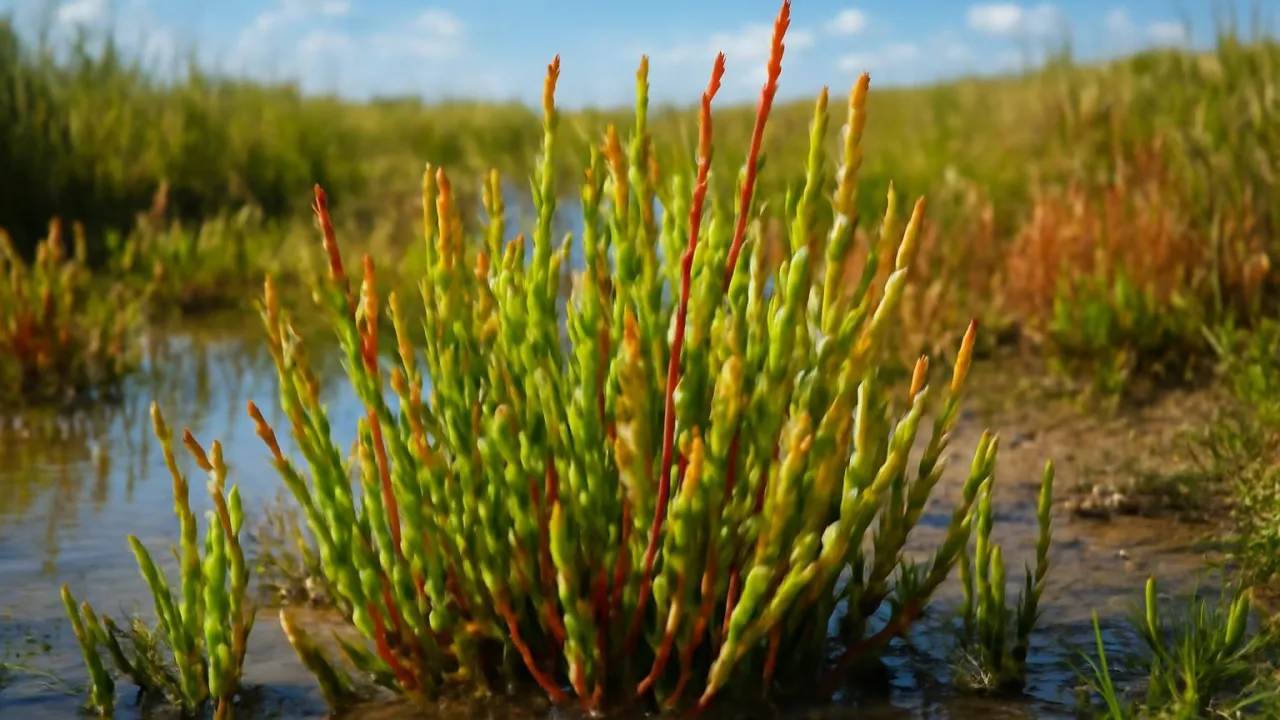
Bright green and crunchy, sea asparagus grows in thick clusters near salty water. Its jointed stems store water to keep the plant healthy. This plant tastes salty because it absorbs salt from its environment. It is a favorite food for some coastal animals.
2
Habitat and Growth
Sea asparagus lives in salt marshes where tides bring salty water daily. It has special salt glands that remove extra salt from its tissues. These help it survive in salty, wet places. The plant grows best in sunny spots with plenty of air and water.
3
Survival Adaptations
To avoid drying out, sea asparagus stores water in its thick stems. Its salt glands excrete salt to protect its cells from damage. These features allow it to live where most plants cannot survive. The plant’s shape and color also help it blend into its surroundings.
4
Role in the Ecosystem
Sea asparagus provides food and shelter for birds and small insects living nearby. It helps keep wetland soil in place and prevents erosion from wind and water. The plant also recycles nutrients in the coastal . People harvest it as a tasty vegetable from the sea.
1. How does sea asparagus protect itself from too much salt?
2. What does sea asparagus do in its ecosystem?
🤯 Mind-Blowing Fact • Grade 4
Sea asparagus helps prevent soil erosion in salty wetlands by stabilizing the ground with its roots.
✨ Word Sparks (Grade 4 Glossary)
Tap 🔊 to hear
photosynthesis
How plants use sunlight to make food
erosion
When soil is worn away by wind or water
biodiversity
Many different kinds of plants and animals
🪝
How does sea asparagus survive and help life in salty coastal wetlands?
1
Physical Features and Salt Management
Sea asparagus has fleshy, jointed stems that store water and manage salt through special glands. These salt glands excrete excess salt, preventing damage to the plant’s cells and allowing it to live in salty environments. Its bright green color helps it absorb sunlight for . The plant’s crunchy texture is due to its thick, water-filled tissues.
2
Ecosystem Role and Food Webs
In coastal wetlands, sea asparagus plays a vital role by providing food for birds, insects, and small mammals. It also offers shelter and nesting sites for many animals. By stabilizing the soil, it reduces caused by tides and wind. This plant is an important part of the wetland food web, supporting .
3
Geographic Distribution and Habitat
Sea asparagus is found in salt marshes and coastal wetlands across Europe, North America, and parts of Asia. It thrives in areas where salty seawater regularly floods the soil. The plant prefers sunny, open habitats with well-drained soils. Its ability to tolerate high salinity limits competition from other plants.
4
Human Use and Environmental Impact
Humans harvest sea asparagus as a nutritious vegetable rich in vitamins and minerals. It is used in salads, pickled dishes, and cooked meals. Sustainable harvesting helps maintain wetland health, but overharvesting could harm ecosystems. Protecting coastal wetlands ensures sea asparagus and its ecosystem continue to thrive.
2. How does sea asparagus help its wetland ecosystem?
🤯 Mind-Blowing Fact • Grade 5
Sea asparagus can excrete salt at rates higher than most halophytes, helping it thrive in extreme saline soils.
✨ Word Sparks (Grade 5 Glossary)
Tap 🔊 to hear
halophyte
A plant that grows in salty soil or water
salinity
How much salt is in water or soil
photosynthesis
How plants use sunlight to make food
🪝
What makes sea asparagus a unique halophyte that thrives in salty coastal ecosystems?
1
Taxonomy and Scientific Classification
Sea asparagus, scientifically known as Salicornia europaea, belongs to the Amaranthaceae family. It is classified as a , a plant adapted to grow in high- environments. Its genus Salicornia includes several species found worldwide in salt marshes. This classification highlights its evolutionary adaptations to saline habitats.
2
Physiological Adaptations and Salt Tolerance
Sea asparagus has specialized salt glands that actively excrete excess salt to maintain cellular balance. Its succulent, jointed stems store water to prevent dehydration in salty conditions. The plant performs efficiently despite salt stress, using chlorophyll in its green stems. These physiological mechanisms enable it to survive and grow where few plants can.
3
Ecological Role and Conservation Importance
As a pioneer species, sea asparagus stabilizes coastal soils and reduces erosion caused by tidal action. It supports diverse wildlife, including migratory birds and invertebrates, by providing food and habitat. Coastal wetland conservation efforts often focus on protecting sea asparagus populations to maintain ecosystem health. Overharvesting and habitat loss threaten its natural populations.
4
Human Uses and Agricultural Potential
Humans have harvested sea asparagus for centuries as a nutritious vegetable rich in vitamins A and C, fiber, and minerals. It is used fresh, pickled, or cooked in various cuisines worldwide. Recent research explores its potential for saline agriculture and as a sustainable food source in salt-affected soils. Cultivating sea asparagus could help address food security in coastal regions.
5
Quantitative Comparisons and Environmental Conditions
Sea asparagus typically grows between 10 and 30 centimeters tall and can tolerate soil levels up to 35 parts per thousand. It thrives in temperatures ranging from 5 to 30 degrees Celsius. The plant’s growth rate varies with sunlight and salinity but can reach maturity within two months. Compared to other , sea asparagus has one of the highest salt excretion rates.