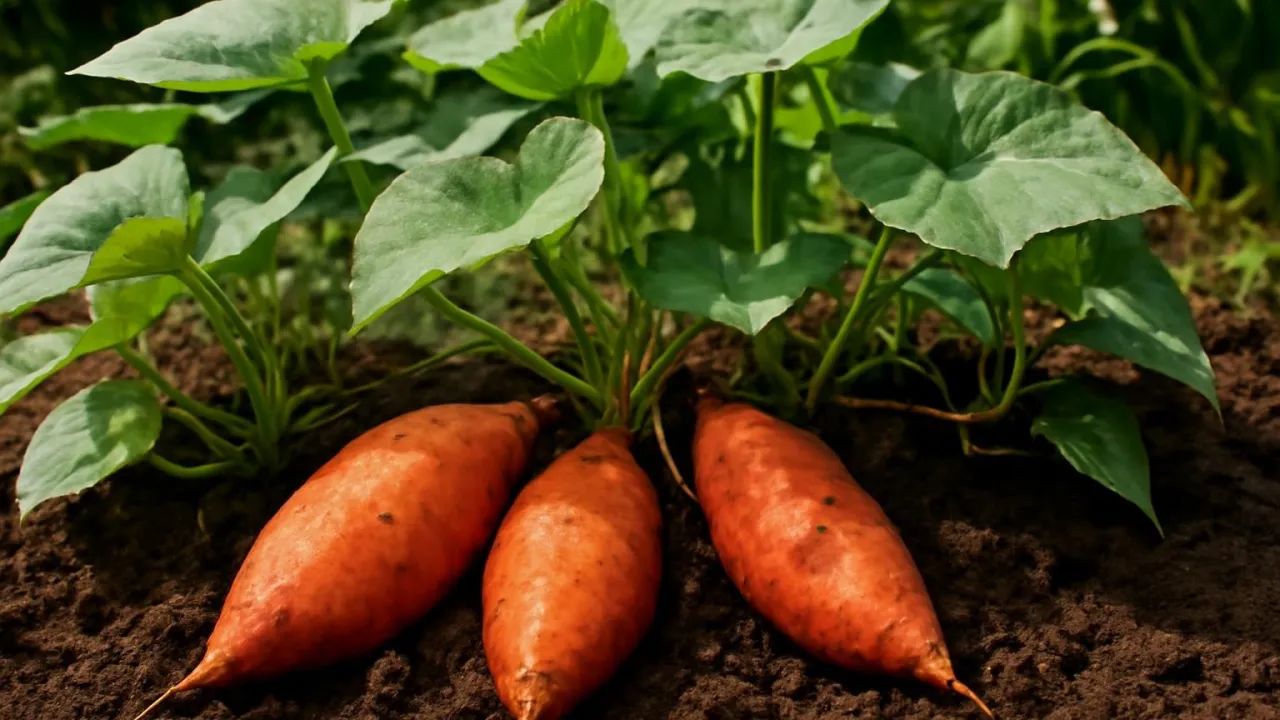
Sweet potatoes were first grown thousands of years ago in tropical America!
✨ Word Sparks (Grade 2 Glossary)
Tap 🔊 to hear
root
The part of a plant that grows underground and stores food
sunlight
Light from the sun that plants use to make food
vitamins
Natural nutrients that help keep our bodies healthy
🪝
Have you ever wondered how sweet potatoes grow underground?
1
Growing Underground
Sweet potatoes grow underground as thick that store food. The roots grow deep in warm soil. Farmers dig them up when they are big and sweet.
2
Leaves and Sunlight
The green leaves grow above the ground and catch . Leaves help the plant make food with sunlight and air. This food travels down to the to make them sweet.
3
A Sweet and Healthy Food
People cook sweet potatoes in many ways, like baking or boiling. They taste sweet and soft, and give energy. Sweet potatoes have that help keep people healthy.
1. What part of the sweet potato plant grows underground?
2. Why do leaves catch sunlight?
🤯 Mind-Blowing Fact • Grade 3
Sweet potatoes are not potatoes but belong to the morning glory family!
✨ Word Sparks (Grade 3 Glossary)
Tap 🔊 to hear
photosynthesis
How plants make food using sunlight and air
starch
A type of energy stored in plant roots
slip
A young shoot used to grow new sweet potato plants
🪝
Did you know sweet potatoes use their roots to store energy and survive?
1
Roots Store Sweet Energy
Sweet potatoes grow thick roots underground that store energy as . These roots help the plant survive dry times. The stored starch makes the roots taste sweet and soft when cooked. This adaptation helps the plant grow in warm climates.
2
Leaves Capture Sunlight
The plant’s green leaves use sunlight to make food through . This process turns sunlight into sugars that travel down to the roots. Leaves also help the plant cool down by releasing water vapor. Their shape helps them catch sunlight efficiently.
3
Growing in Tropical Regions
Sweet potatoes grow best in warm, tropical climates with loose soil. They need well-drained soil to avoid rot. Farmers plant , which are young shoots, to grow new plants. This method helps the crop grow quickly and produce many roots.
4
A Nutritious and Useful Crop
Sweet potatoes provide important nutrients like vitamin A and fiber to people. They are part of many food webs, feeding animals and humans alike. Their vines can also be used as animal feed. This vegetable plays a key role in many ecosystems.
1. What do sweet potato roots store to help the plant?
2. What is a slip in sweet potato farming?
🤯 Mind-Blowing Fact • Grade 4
Sweet potatoes can help prevent soil erosion with their strong, spreading vines!
✨ Word Sparks (Grade 4 Glossary)
Tap 🔊 to hear
symbiotic
A helpful relationship between two living things
propagate
To grow new plants from parts of old ones
erosion
When soil is worn away by wind or water
🪝
How do sweet potatoes adapt to their environment and help ecosystems?
1
Adaptations for Survival
Sweet potatoes have thick, fleshy roots that store starch, allowing them to survive dry periods. Their broad green leaves efficiently capture sunlight to produce food, supporting root growth. The plant’s ability to grow in loose, well-drained soil prevents root rot and encourages healthy development. These adaptations make sweet potatoes well suited to tropical and subtropical climates worldwide.
2
Role in Food Webs and Farming
Sweet potatoes provide essential nutrients like vitamin A and fiber to humans and animals, making them a vital food source. Their vines serve as nutritious animal feed, creating a relationship between crops and livestock. Farmers use slips to plants quickly, increasing crop yields and supporting food security. This vegetable contributes significantly to many agricultural systems and local economies.
3
Geographic Distribution
Originally from tropical America, sweet potatoes are now grown globally in warm regions, including Africa and Asia. Their ability to grow in diverse soils and climates has helped spread cultivation worldwide. In some areas, sweet potatoes improve soil health by preventing with their sprawling vines. This wide distribution highlights their importance as a staple crop in many cultures.
4
Human Impact and Conservation
Selective breeding has improved sweet potato varieties for taste, size, and disease resistance over centuries. However, pests and diseases still threaten crops, requiring careful management. Conservation efforts focus on preserving genetic diversity to maintain resilient plants for future farming. Sustainable farming practices help protect soil and water resources while supporting sweet potato production.
1. How do sweet potato vines help the environment?
2. What does it mean to propagate sweet potatoes?
🤯 Mind-Blowing Fact • Grade 5
Sweet potatoes contain more vitamin A than regular potatoes, helping prevent blindness worldwide!
✨ Word Sparks (Grade 5 Glossary)
Tap 🔊 to hear
phloem
Plant tubes that carry food from leaves to roots
beta-carotene
A nutrient that helps your eyes and skin stay healthy
genetic diversity
Different traits in plants that help them survive changes
🪝
What scientific secrets make the sweet potato a vital global crop with unique physiology?
1
Taxonomy and Botanical Classification
Sweet potatoes belong to the Convolvulaceae family, commonly known as the morning glory family, and their scientific name is Ipomoea batatas. Unlike true potatoes in the Solanaceae family, sweet potatoes are root tubers, not stem tubers. This distinction is important for understanding their growth and reproduction. The plant’s climbing vine habit and broad leaves are characteristic traits of this family.
2
Physiological Mechanics of Growth
Sweet potatoes develop storage roots by thickening their fibrous roots, accumulating starch and sugars that provide energy reserves. Photosynthesis in the leaves converts sunlight into carbohydrates, which are transported to the roots via the . The plant’s root system adapts to soil conditions, growing deeper in loose, well-drained substrates. This physiological process enables the plant to survive drought and nutrient-poor soils.
3
Historical Cultivation and Conservation
Archaeological evidence shows sweet potatoes were cultivated over 5,000 years ago in Central and South America. Selective breeding has enhanced traits such as sweetness, root size, and pest resistance. Conservation programs focus on preserving through seed banks and field collections to ensure crop resilience. These efforts are vital to maintaining food security in changing climates.
4
Quantitative Comparisons and Growth Metrics
Sweet potato roots can grow up to 12 inches (30 centimeters) long and weigh several pounds depending on variety. Optimal growth temperatures range between 75 and 95 degrees Fahrenheit (24 to 35 degrees Celsius). The plant requires approximately 90 to 170 days from planting to harvest. Compared to regular potatoes, sweet potatoes store more , a precursor to vitamin A.
5
Ecological and Agricultural Importance
Sweet potatoes play a crucial role in tropical agroecosystems by improving soil health and preventing erosion with their extensive vine networks. Their nutritional value supports millions of people worldwide, especially in developing countries. Sustainable farming practices, including crop rotation and organic fertilization, enhance yields and reduce environmental impact. Research continues to improve disease resistance and climate adaptability.