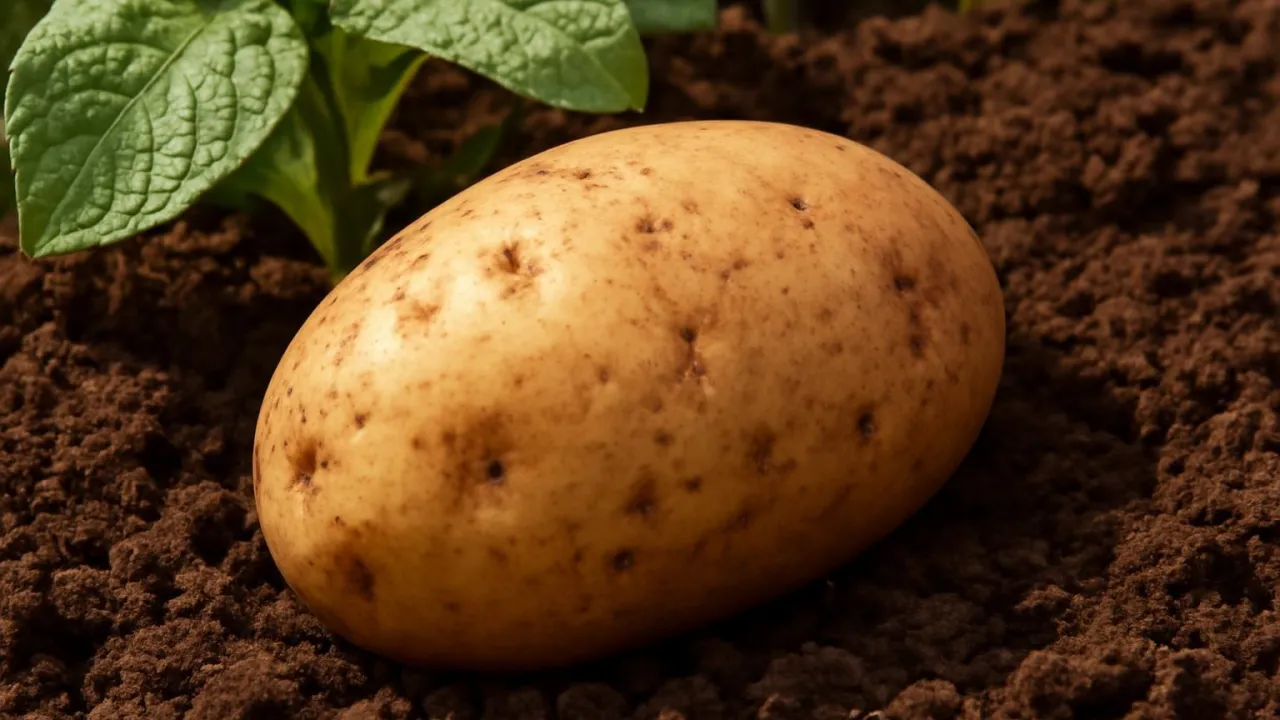
Russet potatoes are the most common type used to make French fries!
✨ Word Sparks (Grade 2 Glossary)
Tap 🔊 to hear
tuber
A thick part of a plant that stores food
starch
A kind of food stored in potatoes
seed potato
A piece of potato used to grow new plants
🪝
Have you ever wondered how potatoes grow underground?
1
What Does a Russet Potato Look Like?
Russet potatoes have brown, rough skin and are large and heavy. They feel dry and bumpy when you touch them. Their shape is usually oval or long. These potatoes are easy to spot in the garden.
2
Where Do Russet Potatoes Grow?
Russet potatoes grow underground in loose, moist soil. They need plenty of sunlight to grow strong leaves above ground. Farmers plant them in temperate places with good weather. When ready, the potatoes are dug up carefully.
3
How Do Russet Potatoes Grow?
Potatoes start as small seeds or pieces of potato called '.' They grow roots and stems that store food underground. The potato stores for energy. This helps the plant survive and grow bigger.
Russet potatoes can store enough starch to feed a growing plant for months underground!
✨ Word Sparks (Grade 3 Glossary)
Tap 🔊 to hear
tuber
A thick underground stem that stores food
photosynthesis
How plants use sunlight to make food
camouflage
How something blends into its surroundings
🪝
Did you know russet potatoes have a special way to store energy?
1
Appearance and Texture
Russet potatoes have thick, rough brown skin that protects them underground. Their flesh is white and starchy inside. The skin helps stop water loss and damage from pests. This rough texture is an important adaptation.
2
Growing Underground
Russet potatoes grow as beneath the soil surface in temperate climates. They need loose, well-drained soil to develop properly. The underground growth helps protect them from predators and harsh weather. This keeps them safe.
3
Energy Storage and Growth
Russet potatoes store energy as starch inside their for the plant’s survival. This starch provides nutrients for new shoots in spring. The plant uses in leaves above ground to make this starch. This adaptation helps the potato survive winter.
4
Life Cycle and Uses
Farmers plant seed potatoes to start new plants each season. The potato grow bigger as they absorb nutrients from soil. Russet potatoes are popular for cooking because of their fluffy texture. They play a key role in human food systems worldwide.
Russet potatoes are the most popular potato type grown in the United States today!
✨ Word Sparks (Grade 4 Glossary)
Tap 🔊 to hear
tuber
An underground stem that stores food
photosynthesis
Plants making food from sunlight
ecosystem
A community of plants and animals living together
🪝
How does the russet potato’s underground growth affect ecosystems and people?
1
Physical Features and Adaptations
Russet potatoes have thick, rough brown skin that protects the from drying out and from pests. Their dense, starchy flesh stores energy needed for the plant’s survival during winter months. This adaptation allows them to thrive in temperate climates with cold seasons. The skin also helps prevent damage during harvesting.
2
Growth and Environmental Needs
Russet potatoes grow underground in loose, well-drained soil that allows to expand easily. They require full sunlight for the leaves to perform efficiently. Adequate water is essential to prevent the tubers from shriveling and to support healthy growth. Without these conditions, the potato yield decreases significantly.
3
Role in Ecosystems and Human Use
As a staple crop, russet potatoes provide vital nutrients to humans and animals, forming a key part of many food webs. They also support soil health by cycling nutrients when plants decompose. However, farming practices can impact the environment through soil erosion or pesticide use. Sustainable farming helps protect while producing food.
4
Geographic Distribution and Farming
Originally native to the Andes Mountains, russet potatoes are now widely cultivated in temperate regions worldwide. Major producers include the United States, Canada, and parts of Europe. Their ability to grow underground makes them adaptable to many farming systems. This wide distribution helps feed millions globally.
1. Why do russet potatoes need loose soil to grow?
2. How do russet potatoes help ecosystems?
🤯 Mind-Blowing Fact • Grade 5
Russet potatoes can store up to 20% starch by weight, fueling both plants and people worldwide!
✨ Word Sparks (Grade 5 Glossary)
Tap 🔊 to hear
tuber
An underground stem that stores food
photosynthesis
How plants make food from sunlight
starch
A carbohydrate stored in potatoes for energy
🪝
What scientific secrets make the russet potato a vital global food crop?
1
Taxonomy and Botanical Characteristics
The russet potato, scientifically named Solanum tuberosum, belongs to the nightshade family Solanaceae. It is a tuberous crop native to the Andes Mountains in South America. Its thick, rough skin and starchy white flesh distinguish it from other potato varieties. This species has been selectively bred for size, texture, and disease resistance.
2
Physiological Mechanics of Growth
Russet potatoes develop underground that store synthesized by in the leaves. The plant’s vascular system transports sugars from leaves to tubers, where enzymes convert sugars into starch for long-term storage. This starch accumulation supports sprout growth during dormancy and ensures survival through winter.
3
Conservation and Agricultural History
Potatoes were first domesticated over 7,000 years ago in the Andes, becoming a staple crop worldwide after European introduction. Russet varieties emerged in the 19th century, favored for baking and frying qualities. Conservation efforts now focus on preserving genetic diversity to protect against pests and climate change impacts.
4
Quantitative Comparisons and Growth Conditions
Russet potatoes typically grow 4 to 6 inches long and weigh between 5 and 10 ounces each. They require 90 to 120 frost-free days and temperatures between 60 and 70 degrees Fahrenheit for optimal growth. Their content can reach up to 20% of fresh weight, making them ideal for processing into fries and chips.
5
Ecological and Economic Impact
As a major global food source, russet potatoes contribute significantly to food security and economies. Their cultivation influences soil nutrient cycles and requires sustainable farming to reduce environmental harm. Advances in breeding aim to improve yield, disease resistance, and climate adaptability, securing future production.