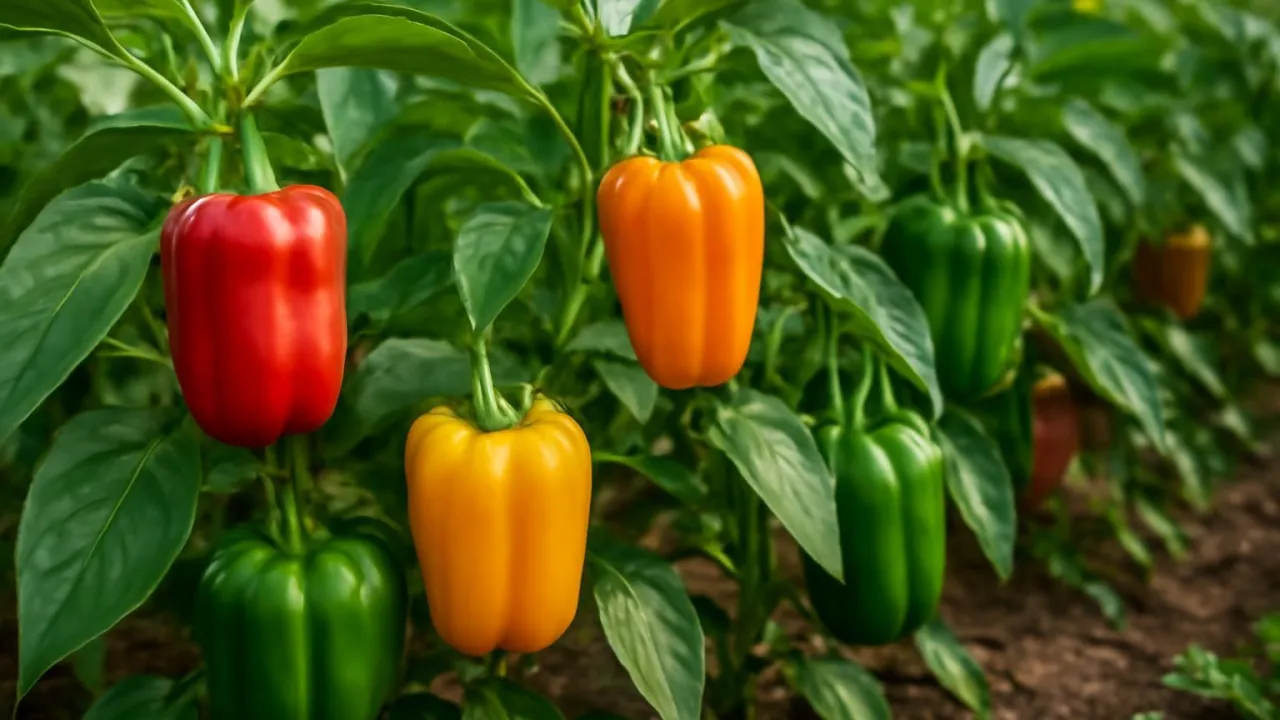
Bell peppers start green and turn red, yellow, or orange as they ripen and get sweeter!
✨ Word Sparks (Grade 2 Glossary)
Tap 🔊 to hear
ripen
When fruit gets ready to eat
sunlight
Light from the sun that helps plants grow
seeds
Tiny parts that grow into new plants
🪝
Have you ever seen a bell pepper change its color as it grows?
1
Colorful Bell Peppers
Bell peppers grow in many colors like green, red, yellow, and orange. They are shiny and smooth with thick skin. When they , their color changes and they taste sweeter. People enjoy eating them raw or cooked in meals.
2
Where They Grow
Bell peppers grow best in warm places with lots of . They need regular watering to stay healthy and strong. These plants usually grow in gardens or farms where the soil is rich and loose. Bees visit the flowers to help make the peppers grow.
3
A Special Feature
One cool thing about bell peppers is their thick, crunchy walls. These walls protect the inside and keep the pepper fresh. The peppers also have tiny seeds that can grow into new plants. This helps bell peppers keep growing year after year.
Bell peppers’ bright colors are a clever way to attract animals that help spread their seeds.
✨ Word Sparks (Grade 3 Glossary)
Tap 🔊 to hear
pollinate
When bees help flowers make fruit
adaptation
A way plants survive better
nutrients
Food that plants get from soil
🪝
Did you know bell peppers use bright colors to show when they are ready to eat?
1
Color Changes and Ripening
Bell peppers start green and change color as they ripen to red, yellow, or orange. This color change helps animals and people know the pepper is ready to eat. The ripening process also makes the pepper taste sweeter and less bitter. This helps the plant spread its seeds.
2
How Bell Peppers Grow
Bell peppers grow on bushy plants in warm climates with plenty of sunlight. The plants need water and from the soil to grow strong. Bees visit the flowers to them, which helps the peppers develop. This pollination is important for the plant’s reproduction.
3
Protective Walls and Seeds
The thick, crunchy walls of bell peppers protect the seeds inside from predators. These walls also help keep the pepper fresh longer. Inside, many small seeds can grow into new pepper plants. This is how bell peppers reproduce and continue their life cycle.
4
Bell Peppers in Our Food
People use bell peppers in many dishes because of their sweet flavor and crunchy texture. They can be eaten raw in salads or cooked in soups and stir-fries. Bell peppers provide vitamins like vitamin C, which helps keep us healthy. Their bright colors also make meals look beautiful.
1. Why do bell peppers change color as they ripen?
2. What helps bell pepper flowers turn into peppers?
🤯 Mind-Blowing Fact • Grade 4
Bell peppers’ bright colors and thick walls help them survive, attract animals, and spread seeds effectively.
✨ Word Sparks (Grade 4 Glossary)
Tap 🔊 to hear
symbiotic
Two living things help each other
ecosystem
All plants and animals in one place
chemical
A substance that causes changes
🪝
How do bell peppers’ colors and structure help them survive and feed others?
1
Color Signals and Ripening Effects
Bell peppers begin green and gradually change to red, yellow, or orange as they ripen, signaling to animals and humans that they are ready to eat. This color transformation occurs because of changes inside the pepper that increase sweetness and reduce bitterness. These signals encourage animals to eat the peppers, which helps spread the seeds inside. This cause-and-effect relationship supports the plant’s reproduction and survival.
2
Role in the Ecosystem
Bell peppers play an important role in food webs by providing nourishment to insects, birds, and mammals. Their flowers attract pollinators like bees, which are essential for fruit production. In return, the peppers’ seeds are spread by animals that eat the fruit, creating a relationship. Humans also cultivate bell peppers widely, impacting agricultural through farming practices.
3
Physical Adaptations for Protection
The thick, crunchy walls of bell peppers serve as a protective barrier against predators and environmental damage. This structural adaptation helps maintain moisture and freshness, allowing the fruit to last longer. Inside, the numerous seeds are shielded and ready to grow new plants when dispersed. These features increase the pepper’s chances of successful reproduction.
4
Geographic Distribution and Cultivation
Originally from Central and South America, bell peppers are now grown worldwide in warm climates. They thrive in well-drained soil with consistent watering and full sun exposure. Farmers cultivate different colored varieties to meet market demands and culinary preferences. This widespread distribution shows how humans have influenced bell pepper growth globally.
Bell peppers contain no capsaicin, making them sweet and mild unlike their spicy pepper relatives.
✨ Word Sparks (Grade 5 Glossary)
Tap 🔊 to hear
pericarp
The thick wall of a fruit
carotenoid
Pigments that give fruits bright colors
germinate
When a seed starts to grow
🪝
How do bell peppers’ biology and human cultivation shape their role in nature and food?
1
Scientific Classification and Origin
Bell peppers belong to the species Capsicum annuum within the Solanaceae family, which includes tomatoes and potatoes. They originated in Central and South America, where indigenous peoples first cultivated them thousands of years ago. This botanical fruit is unique because it does not produce capsaicin, the compound that makes other peppers spicy. Its domestication has led to many colorful varieties enjoyed worldwide today.
2
Physiology and Ripening Mechanisms
The ripening of bell peppers involves complex physiological changes, including chlorophyll breakdown and synthesis that cause the fruit’s color to shift from green to red, yellow, or orange. These pigments not only attract animals but also protect the fruit from ultraviolet light damage. The thick , or fruit wall, provides structural support and moisture retention, enhancing shelf life. Inside, numerous seeds develop, each capable of germinating into a new plant.
3
Ecological Role and Agricultural Impact
Bell peppers contribute to ecosystems by providing food for various animals and supporting pollinators like bees, which are vital for agricultural productivity. Their cultivation requires careful soil management, irrigation, and pest control to maximize yield. Human farming practices have expanded bell pepper growth beyond native regions, influencing global food markets and biodiversity. Sustainable farming methods help reduce environmental impacts while maintaining crop health.
4
Conservation and Botanical History
The history of bell peppers reflects a long journey from wild ancestors to cultivated crops, with genetic diversity preserved through seed saving and breeding programs. Conservation efforts focus on protecting heirloom varieties and wild relatives to maintain resilience against diseases and climate change. Botanical research continues to explore traits like flavor, color, and disease resistance to improve cultivation. These efforts ensure bell peppers remain a valuable food source.
5
Quantitative Comparisons and Nutritional Value
Bell peppers typically measure between 3 and 6 inches in length and weigh about 4 to 5 ounces when ripe. They grow best in temperatures ranging from 70 to 85 degrees Fahrenheit and require at least six hours of direct sunlight daily. Nutritionally, bell peppers are rich in vitamin C, providing over 150% of the daily recommended intake per 100 grams. Their crisp texture and vibrant colors make them popular in diets worldwide.