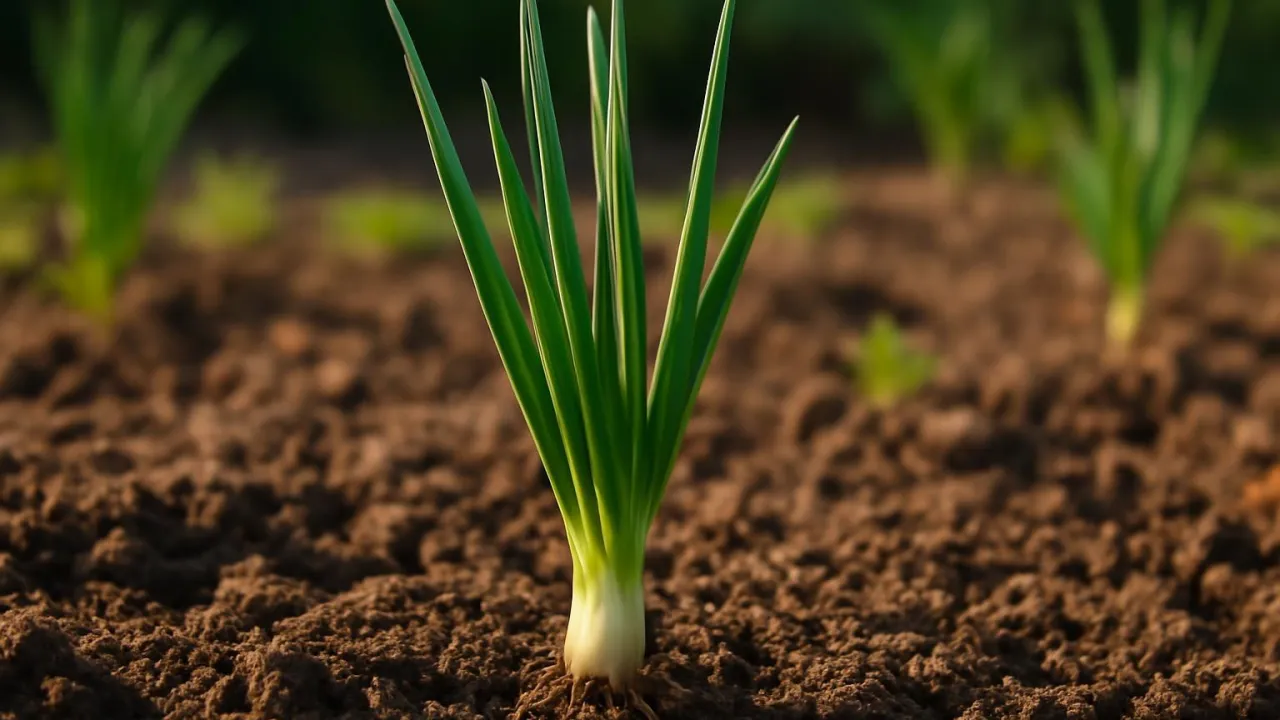
Scallions can regrow many times from the same roots after cutting!
✨ Word Sparks (Grade 2 Glossary)
Tap 🔊 to hear
harvest
To pick plants when they are ready
roots
Parts under the soil that drink water
moist
A little wet, not too dry
🪝
Have you ever seen a green onion grow fast in a garden?
1
What Scallions Look Like
Scallions have long green stalks and white below the soil. They look like tall grass blades. People often use them fresh in salads or cooked in meals.
2
Where Scallions Grow
Scallions grow best in gardens with full sun and soil. They come from Asia but are grown worldwide now. They grow quickly and can be harvested many times.
3
A Special Feature
Scallions regrow after cutting because their stay alive underground. This makes them very useful for cooks who want fresh green onions all year.
Scallions’ hollow stalks help keep water inside and protect them from drying out.
✨ Word Sparks (Grade 3 Glossary)
Tap 🔊 to hear
adaptation
A special way plants survive better
nutrients
Food plants get from soil to grow
harvest
To pick plants when they are ready
🪝
Did you know scallions use their hollow stalks to survive and grow fast?
1
How Scallions Look and Grow
Scallions have hollow, tube-like green stalks that help reduce water loss. Their white roots grow deep in the soil to absorb and water. This helps them survive in many gardens and climates.
2
Scallions’ Role in Cooking
Scallions add a mild onion flavor to food and are often used fresh or cooked. Their crisp texture and bright green color make meals look tasty and fresh. They are a popular vegetable in many cuisines worldwide.
3
Regrowth and Adaptation
After cutting, scallions regrow quickly because their roots store underground. This allows them to survive repeated harvesting by humans. It also helps them compete with other plants for sunlight and space.
4
Where Scallions Live
Scallions grow in temperate zones where the soil is moist and fertile. They are cultivated in home gardens and farms globally. Their ability to regrow makes them a sustainable crop for many farmers.
Scallions help stop soil erosion and support insects in garden food webs worldwide.
✨ Word Sparks (Grade 4 Glossary)
Tap 🔊 to hear
ecosystem
All living things in one place
erosion
When soil is washed or blown away
cultivate
To grow plants for food or use
🪝
How do scallions fit into garden food webs and help people around the world?
1
Physical Traits and Survival
Scallions have hollow, tubular leaves that reduce water loss, which helps them survive in dry conditions. Their white roots absorb water and nutrients efficiently from fertile soil. These adaptations allow scallions to thrive in many temperate regions globally. Their hollow leaves also help them resist damage from strong winds.
2
Ecosystem Role and Human Use
Scallions serve as food for insects and small animals, supporting local food webs and biodiversity. Humans scallions widely because they regrow quickly after cutting, making them a sustainable vegetable choice. Their root systems also help enrich soil and prevent in gardens and farms.
3
Geographic Distribution and Growth
Originally from temperate Asia, scallions are now grown worldwide in gardens and farms. They prefer moist, fertile soil and full sun exposure for best growth. Their ability to regrow after harvest allows multiple crops per season, benefiting farmers economically and reducing the need for replanting.
4
Cause and Effect in Growth
Because scallions have strong roots and meristematic tissue, they can regrow after cutting, which causes continuous fresh harvests. This regrowth reduces the need for replanting seeds frequently, saving time and resources for gardeners and farmers. As a result, scallions are an efficient and eco-friendly crop.
Scallions can be harvested multiple times yearly due to their unique ability to regrow from roots after cutting.
✨ Word Sparks (Grade 5 Glossary)
Tap 🔊 to hear
meristematic
Plant tissue where new cells grow fast
morphological
How a plant's shape looks and works
agroecosystem
Farm environment with plants and animals
🪝
What makes scallions scientifically unique among Allium species in global agriculture?
1
Taxonomy and Botanical Characteristics
Scallions, scientifically named Allium fistulosum, belong to the Amaryllidaceae family and differ from bulb onions by lacking a swollen bulb. Their hollow, cylindrical leaves are a distinctive trait that aids in water conservation and gas exchange. Unlike bulb onions, scallions remain green and slender throughout their growth cycle.
2
Physiological Mechanics of Growth
Scallions grow via tissue at their base, allowing rapid vertical elongation and regrowth after cutting. Their extensive fibrous root system absorbs water and essential nutrients efficiently from moist, fertile soils, supporting continuous harvest cycles. This physiology enables scallions to be harvested multiple times per growing season.
3
Agricultural History and Conservation
Originating in temperate regions of East Asia, scallions have been cultivated for thousands of years and spread globally due to their ease of growth and regrowth. Sustainable farming practices leverage their perennial regrowth to reduce seed use and soil disturbance. This makes scallions an environmentally friendly crop choice worldwide.
4
Ecological and Economic Importance
Scallions contribute to by preventing soil erosion through dense root mats and providing habitat for beneficial insects. Economically, their rapid regrowth reduces labor and input costs, making them valuable in both small-scale gardens and large commercial farms. Their presence supports biodiversity and healthy soil structure.
5
Quantitative Growth Comparisons
Scallions typically grow 12 to 18 inches tall, with regrowth rates allowing harvest cycles every 30 to 45 days. They thrive in temperatures ranging from 55 to 75 degrees Fahrenheit and require consistent moisture for optimal yield. Compared to bulb onions, scallions mature faster and provide multiple harvests per season.