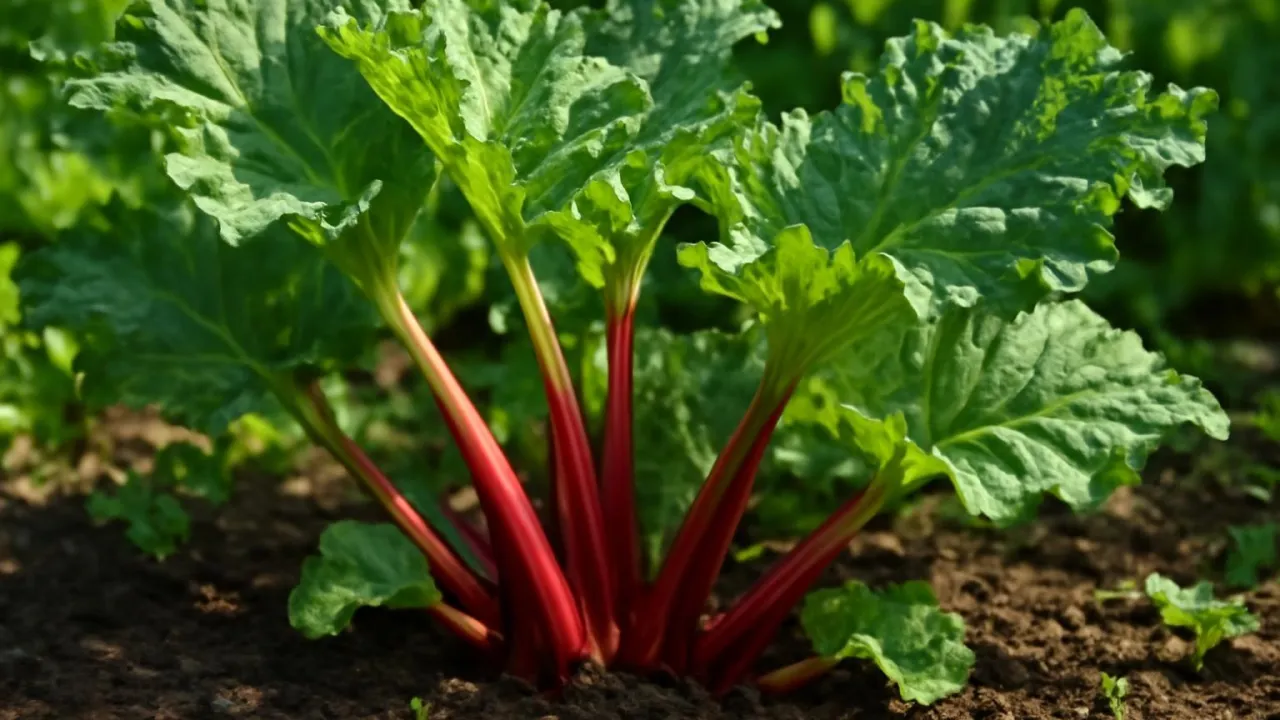
Rhubarb leaves contain poisons that can make people very sick if eaten.
✨ Word Sparks (Grade 2 Glossary)
Tap 🔊 to hear
stalks
The thick, long parts of a plant you can eat.
moist
A little wet or damp, like soil after rain.
tangy
A sharp, sour taste that wakes up your tongue.
🪝
Have you ever tasted something as sour as rhubarb stalks?
1
Rhubarb’s Bright Red Stalks
Rhubarb has bright red that grow tall and thick in gardens. The large green leaves grow above the stalks and look like big fans. People usually only eat the stalks because the leaves can be harmful.
2
Where Rhubarb Grows
Rhubarb grows best in places with cool weather and plenty of sunlight. It needs soil to stay healthy and grow strong . Many gardeners plant rhubarb in spring and harvest it in early summer.
3
A Tangy and Sour Taste
The of rhubarb taste very sour and , like a lemon. People often cook rhubarb with sugar to make pies and jams taste sweet and yummy. The sour flavor makes rhubarb special in many recipes.
Rhubarb’s sour taste comes from natural acids that help protect it from hungry animals.
✨ Word Sparks (Grade 3 Glossary)
Tap 🔊 to hear
toxic
Something that can hurt or poison living things.
nutrients
Food parts plants need to grow strong and healthy.
adaptation
A change that helps plants or animals survive better.
🪝
Did you know rhubarb is a vegetable with bright red stalks and poisonous leaves?
1
Rhubarb’s Color and Structure
Rhubarb has thick, bright red stalks that stand tall above the ground. Its large green leaves spread wide but are to humans. The stalks’ color helps gardeners spot them easily during harvest.
2
Where Rhubarb Thrives
Rhubarb grows best in temperate climates with cool springs and moist soil. It needs plenty of sunlight to produce strong stalks. These conditions help the plant absorb and grow quickly.
3
Rhubarb’s Sour Taste and Use
The stalks have a sour taste caused by natural acids, which makes rhubarb unique. People often cook rhubarb with sugar to balance its tangy flavor in pies and jams. This sourness is an that may protect it from some predators.
4
Safety and Plant Adaptations
Rhubarb leaves contain oxalic acid, which is poisonous if eaten by humans. This chemical acts as a defense to keep animals from eating the leaves. The stalks, however, are safe and nutritious when prepared properly.
Rhubarb’s poisonous leaves protect the plant, while its tasty stalks support humans and local ecosystems.
✨ Word Sparks (Grade 4 Glossary)
Tap 🔊 to hear
herbivores
Animals that eat plants for food.
symbiotic
A helpful relationship between living things.
ecosystem
A community of plants, animals, and their environment.
🪝
How does rhubarb’s sour stalk help it survive in gardens and wild places?
1
Rhubarb’s Bright Stalks and Toxic Leaves
Rhubarb plants produce bright red stalks that attract people but have large toxic leaves that protect the plant from . This cause-and-effect relationship helps rhubarb survive by deterring animals from eating its leaves while allowing humans to harvest its stalks safely and enjoy their tangy flavor.
2
Where Rhubarb Grows Naturally
Rhubarb originally grew in temperate regions of Asia and Europe, thriving in cool climates with moist soil. Today, it is cultivated worldwide in gardens and farms, where it plays a role in local food webs by providing nutrients to pollinators and soil organisms that help keep balanced.
3
Rhubarb’s Role in Ecosystems and Humans
Rhubarb contributes to by supporting soil health and offering food for some insects. Humans use rhubarb stalks in cooking, especially in pies and jams, which shows a relationship between people and plants. However, the poisonous leaves require careful handling to avoid health risks and protect both people and animals.
4
Growing Rhubarb and Human Impact
Gardeners grow rhubarb in full sun with moist, well-drained soil to maximize stalk growth and flavor. Human cultivation has spread rhubarb far beyond its native range, impacting by introducing a new plant species that interacts with local wildlife and soil microbes, sometimes changing natural balances.
Rhubarb’s poisonous leaves contain oxalic acid, but its stalks have been a tasty vegetable for thousands of years.
✨ Word Sparks (Grade 5 Glossary)
Tap 🔊 to hear
rhizomes
Underground plant parts that store food and water.
oxalic acid
A chemical that can be poisonous in plants.
domestication
When people grow plants for food or use.
🪝
Did you know rhubarb is a vegetable with a unique botanical history and important ecological roles?
1
Scientific Classification and Origins
Rhubarb, scientifically named Rheum rhabarbarum, belongs to the Polygonaceae family and is native to temperate regions of Asia. It was first cultivated thousands of years ago for medicinal and culinary uses, spreading through Europe and eventually worldwide. Its classification as a vegetable is due to its edible stalks, despite being botanically related to buckwheat.
2
Physiological Traits and Growth Mechanics
Rhubarb grows from thick, fleshy underground that store nutrients and water, supporting rapid spring growth. The plant requires full sun and moist, well-drained soil to produce large, tart stalks up to three feet tall. Its large leaves contain , a chemical defense that deters herbivores but makes the leaves toxic to humans.
3
Ecological and Agricultural Significance
Rhubarb plays a role in garden ecosystems by providing habitat and nutrients for soil microbes and some insect species. Its cultivation impacts local biodiversity by introducing a non-native species that interacts with native plants and animals. Agriculturally, rhubarb is valued for its unique sour flavor used in pies, jams, and sauces, contributing to human diets and economies.
4
Conservation and Botanical History
While rhubarb is widely cultivated, wild populations in native habitats face threats from habitat loss and climate change. Botanical studies have traced rhubarb’s history, revealing its importance in traditional medicine and cuisine across cultures. Conservation efforts focus on preserving genetic diversity and sustainable farming practices.
5
Quantitative Comparisons and Interesting Facts
Rhubarb stalks can grow up to 3 feet (1 meter) tall and weigh several pounds per plant. Its content varies but can be toxic in large amounts, requiring careful preparation. The plant thrives in temperatures between 55 and 75 degrees Fahrenheit (13 to 24 degrees Celsius), making it suited for temperate climates worldwide.