1. What turns the giant white blades on a wind turbine?
2. Why are sunshine and wind called 'renewable' energy?
🤯 Mind-Blowing Fact • Grade 2
Just one slow, single spin of today's largest offshore wind turbines can make enough electricity to power an average family home for two whole days!
✨ Word Sparks (Grade 2 Glossary)
Tap 🔊 to hear
harness
Strong safety straps keeping high climbers secure
inverter
Equipment preparing solar electricity for home outlets
offshore
Built out in ocean waters away from land
🪝
What is the view like from the top of a three-hundred-foot wind tower?
1
Climbing Into the Clouds
Clip on your safety and ride an internal service lift three hundred feet up inside a hollow steel tower! Stepping out into the generator room at the top is part of an exciting day for a renewable energy technician.
2
Caring for Wind and Sun Machines
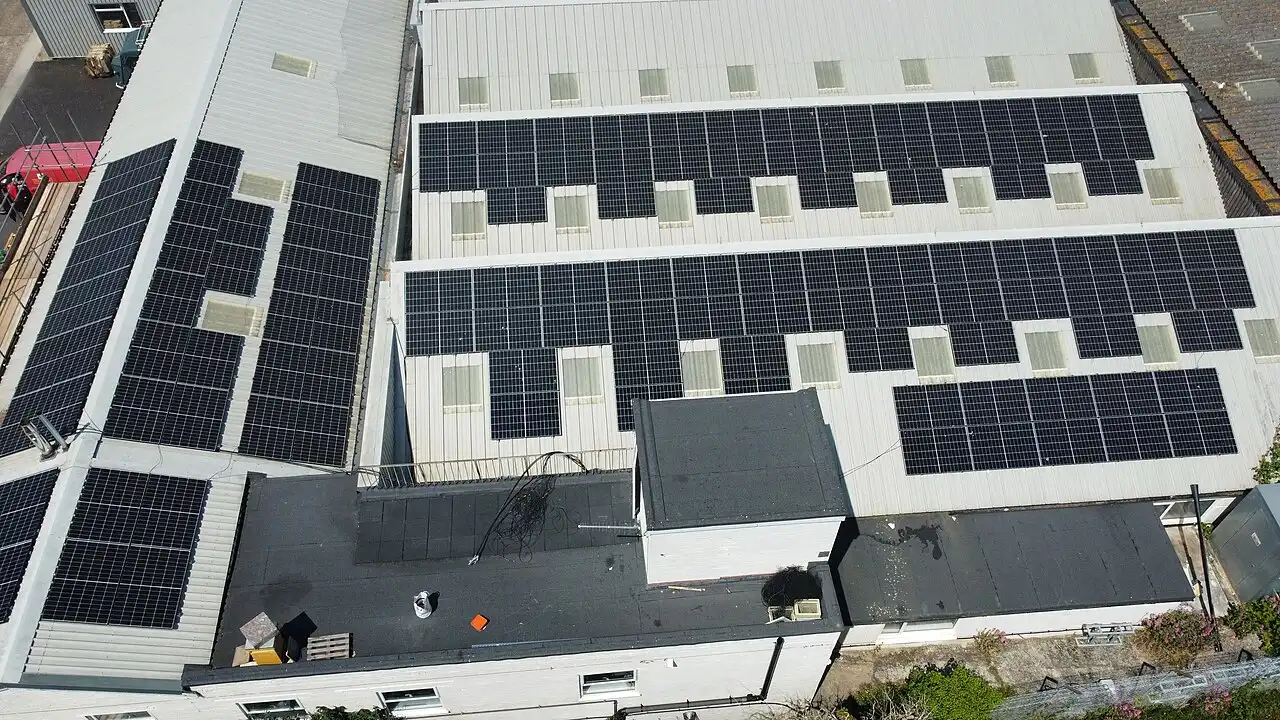
Some technicians inspect giant wind turbine gears, sensors, and lightning rods high above farms or ocean waves. Others install gleaming solar arrays across school rooftops and sunny meadows, wiring that send clean electricity into town.
3
Saving Power for Nighttime
Because clouds pass by and night falls, technicians also connect giant rechargeable battery banks that store extra daytime sunshine to light homes after sunset!
1. How do communities keep using solar electricity after the sun goes down at night?
2. What safety equipment must a wind technician always clip on when climbing tall towers?
🤯 Mind-Blowing Fact • Grade 3
Many solar farms plant native wildflowers for honeybees or let woolly sheep graze happily in the cool shade underneath the panels to keep tall grass trimmed naturally!
✨ Word Sparks (Grade 3 Glossary)
Tap 🔊 to hear
nacelle
Bus-sized room atop a wind tower holding generators
photovoltaic
Turning light rays directly into electric current
lockout-tagout
Padlocking power switches off before starting repairs
🪝
How do flying heat-camera drones help technicians spot a single tired solar cell among ten thousand shiny panels?
1
Hands-On Heroes of Clean Power
Across breezy ridges, sunny school roofs, and ocean horizons, clean power stations are growing faster than almost any industry in America! Keeping those machines humming at peak performance is the hands-on career of a renewable energy technician.
2
Inside the Nacelle
At the top of a wind turbine sits a bus-sized housing called the . Inside, wind technicians lubricate massive bearings, test hydraulic brakes, and check computer motors that automatically turn the turbine to face shifting breezes and tilt the blades during fierce storms.
3
Solar Trackers and Thermal Drones
Down on solar farms, cells turn packets of sunlight directly into Direct Current electricity with zero moving parts! Instead of checking ten thousand panels one by one with a meter, technicians fly thermal camera drones overhead—any faulty cell shows up as a warm bright spot on screen.
4
Safety First, Always
Before touching any wire or shaft, technicians follow strict '' steps—padlocking switches off so nothing can energize unexpectedly while they work.
1. How does a thermal camera drone help a technician inspect a huge solar farm quickly?
2. Why do technicians always follow 'lockout-tagout' safety rules before repairing a turbine?
🤯 Mind-Blowing Fact • Grade 4
Underwater steel foundations supporting offshore wind turbines off Virginia's coast quickly become thriving artificial reefs covered in mussels, barnacles, and schools of Atlantic fish!
✨ Word Sparks (Grade 4 Glossary)
Tap 🔊 to hear
pitch control
Tilting turbine blade angles to match wind speed
Direct Current
Electric charge flowing steadily in one single direction
SCADA
Computer system monitoring live turbine sensors remotely
🪝
Why are giant wind turbines standing twenty-seven miles out in the Atlantic Ocean off Virginia Beach?
1
Harvesting Ocean Winds off Virginia
Sail twenty-seven miles east of Virginia Beach, and towering white turbines rise above the Atlantic waves—part of the Coastal Virginia Offshore Wind project, one of the largest clean-energy builds in the nation! Boarding specialized crew boats to maintain turbines at sea or climbing onshore solar and wind sites is the dynamic work of a renewable energy technician.
2
Why Ocean Breezes Blow Stronger
On land, hills, forests, and tall buildings slow wind down. Out over open ocean water, breezes blow much steadier and stronger—especially on hot afternoons when coastal homes and schools run air conditioning! Technicians calibrate pitch-control motors that twist each 350-foot fiberglass blade to capture maximum wind energy without overspeeding in gales.
3
DC to AC Power Electronics
Solar photovoltaic arrays generate (DC), where electrons flow in one steady direction, whereas homes, hospitals, and schools run on Alternating Current (AC). Technicians wire weatherproof string combiners, torque storm-resistant steel racking across sunny fields, and program smart power inverters that convert DC electricity smoothly into grid-ready 60-hertz AC.
4
Diagnostics From Sea to Screen
Combining calibrated torque wrenches, insulated voltage testers, fiber-optic sensor dashboards, and certified high-angle tower rescue training, technicians spot worn parts early and keep zero-emission electricity flowing reliably to hundreds of thousands of families in every season.
1. Why are offshore wind turbines built miles out over open ocean water like off Virginia Beach?
2. What critical job does a solar inverter perform between solar panels and your school's outlets?
🤯 Mind-Blowing Fact • Grade 5
Bifacial ('two-sided') solar panels capture direct sunlight on top while their glass undersides simultaneously harvest extra light reflected off white gravel or winter snow below!
✨ Word Sparks (Grade 5 Glossary)
Tap 🔊 to hear
feathering
Turning turbine blades edge-on to stop safely in storms
bifacial solar
Double-sided panels capturing both direct and reflected sunlight
yaw drive
Motor rotating the entire turbine top toward wind
🪝
How do physics limits like Betz's Law and the photoelectric effect guide technicians maintaining multi-megawatt clean power plants?
1
Where Applied Physics Meets Skilled Trades
Modern utility-scale clean energy stations are marvels of electro-mechanical precision: offshore wind turbines rated at fourteen megawatts stand nearly as tall as the Washington Monument and Eiffel Tower, while trackers follow the sun's arc across hundreds of acres. Commissioning, troubleshooting, and optimizing that hardware is the profession of a renewable energy technician.
2
Aerodynamic Pitch, Yaw, and Betz's Law
German physicist Albert Betz proved in 1919 that no wind turbine can capture more than 59.3 percent of the kinetic energy in wind—because if air stopped completely behind the rotor, fresh wind could never blow through! Technicians maintain ultrasonic anemometers, that rotate the nacelle into the wind, and hydraulic blade-pitch actuators that keep turbines near peak aerodynamic efficiency in light breezes while '' blades edge-on during hurricane gusts.
3
Photovoltaics and Battery Energy Storage
Inside solar modules, photons of light knock electrons loose across doped silicon junctions via the photovoltaic effect—the cousin of Einstein's Nobel-winning photoelectric discovery. Technicians trace high-voltage 1,500-volt DC strings with insulated clamp meters, analyze IV-curve tracer diagnostics, and maintain utility-scale lithium-iron-phosphate battery containers equipped with liquid thermal management.
4
Predictive Maintenance With Vibration and Ultrasound
Replacing a multi-ton main shaft eight hundred feet above sea swells requires giant jack-up vessels, so catching wear early is crucial. Technicians analyze gearbox oil particles, ultrasonic acoustic sensors, and SCADA vibration spectra to replace worn bearings months before a breakdown occurs.
5
Powering Resilient Local Communities
Certified in NFPA arc-flash safety, high-voltage switching, and tower rescue, renewable energy technicians stand on the front lines of energy independence—cutting air pollution while building lasting, local STEM careers.