1. Where might you meet a registered nurse in your own neighborhood?
2. What does the little glowing clip on your finger measure?
🤯 Mind-Blowing Fact • Grade 2
During a single twelve-hour hospital shift, a busy registered nurse often walks four to five miles up and down hallways caring for patients!
✨ Word Sparks (Grade 2 Glossary)
Tap 🔊 to hear
vital signs
Key measurements like pulse, breathing, and temperature
pulse
Steady beat of blood pumping through arteries
shift
Scheduled hours a worker is on duty
🪝
Why are registered nurses often the very first people to spot tiny changes in a patient's health?
1
Eyes and Ears of the Hospital
Pump, pump, whoosh goes the soft cuff wrapped around your arm! Registered nurses spend more time right beside patients than almost anyone else in healthcare. By checking blood pressure, , breathing, and temperature, they notice right away if someone is getting stronger or needs quick help.
2
Safe Medicine and Clean Bandages
Nurses scan wristbands carefully before giving medicine, bandage healing wounds, and explain doctor's instructions in clear, friendly words families can understand.
3
Nurses Everywhere
Some registered nurses care for tiny babies, some work as school nurses, and flight nurses even ride inside medical helicopters!
1. Which measurements are part of a patient's 'vital signs' checked by a nurse?
2. Why does a hospital nurse scan a patient's wristband before giving medicine?
🤯 Mind-Blowing Fact • Grade 3
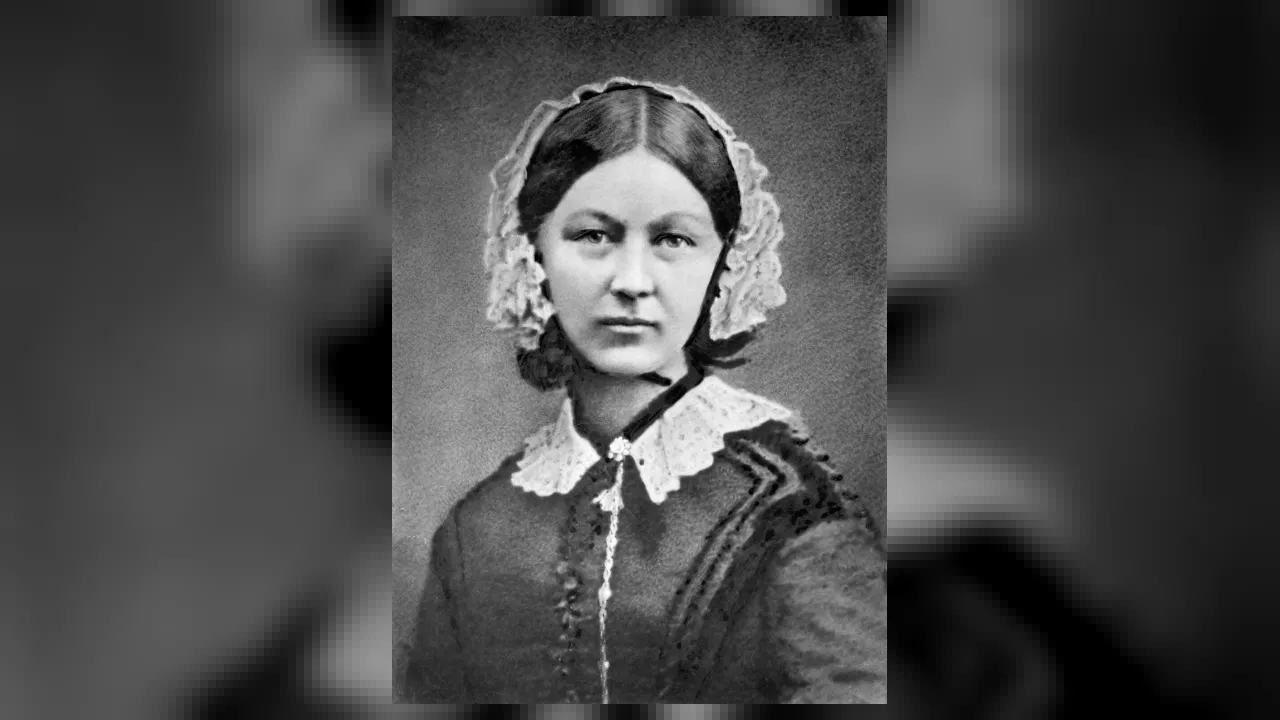
Florence Nightingale was not only a famous nurse—she was also a brilliant mathematician who invented colorful circular 'rose diagrams' to prove clean hospitals saved lives!
✨ Word Sparks (Grade 3 Glossary)
Tap 🔊 to hear
intravenous
Delivering fluids gently into a vein
hygiene
Clean habits that stop germs from spreading
licensure
Official state permission earned by passing exams
🪝
How did pioneers like Florence Nightingale and Clara Barton turn nursing into a modern lifesaving science?
1
Science Meets Compassion
Step onto a busy hospital floor at 7:00 a.m., where night-shift and day-shift registered nurses share careful updates on every patient! Registered nurses—often called RNs—blend biology, pharmacology, and warm communication to guide patients from illness back to health.
2
The Famous 'Five Rights'
Before administering any treatment, RNs follow the 'Five Rights' of medication safety: right patient, right medicine, right dose, right route, and right time. They also manage (IV) fluid lines, run bedside lab checks, and teach families how to care for injuries or asthma at home.
3
Trailblazers of Nursing History
In the 1850s, Florence Nightingale used math charts and clean hospital to save thousands of lives. Soon after in America, Civil War nurse Clara Barton founded the American Red Cross in 1881, and Mary Eliza Mahoney became the nation's first African American professionally trained nurse in 1879.
4
Becoming an RN
Future nurses earn a college nursing degree, practice in real hospitals, and pass a national licensing exam called the NCLEX-RN.
1. Which famous Civil War nurse went on to found the American Red Cross in 1881?
2. What did Florence Nightingale use alongside clean hospital care to persuade leaders to improve sanitation?
🤯 Mind-Blowing Fact • Grade 4
A fingertip pulse oximeter measures your blood oxygen without a single needle stick by shining tiny red and infrared light beams right through your finger!
✨ Word Sparks (Grade 4 Glossary)
Tap 🔊 to hear
telemetry
Wireless monitoring of a patient's heartbeats
infusion
Steady, measured flow of liquid medicine
microbiology
Scientific study of microscopic bacteria and viruses
🪝
Why is a registered nurse called the 'quarterback of bedside care' inside modern hospitals and community clinics?
1
Coordinating the Entire Care Team
Watch a registered nurse in an intensive care unit interpret waveforms scrolling across a bedside monitor while adjusting an pump to the exact milliliter per hour! Because physicians, surgeons, pharmacists, and physical therapists each visit a patient at different times, the RN serves as the constant hub connecting every specialist—translating lab results, spotting subtle early warning signs, and speaking up as the patient's strongest advocate.
2
Technology at the Point of Care
Modern RNs wield sophisticated diagnostic and therapeutic tools: pulse oximeters beaming red and infrared light through capillaries to calculate blood oxygen saturation, portable ultrasound wands locating deep veins for IV lines, electronic health records, and monitors tracking heart rhythms beat by beat.
3
Specialties for Every Interest
With over three million RNs nationwide, nursing offers dozens of career paths. Pediatric nurses comfort children, emergency-room trauma nurses stabilize urgent injuries, operating-room circulating nurses guard sterile safety, public-health nurses lead vaccination clinics, and school nurses keep thousands of students safe and ready to learn.
4
Education and Growth
Students complete an Associate Degree in Nursing (ADN) or four-year Bachelor of Science in Nursing (BSN) covering anatomy, , and clinical rotations before passing the NCLEX-RN exam—and many later earn graduate degrees to become Nurse Practitioners.
1. How does a fingertip pulse oximeter measure oxygen in your blood without using a needle?
2. What national exam must nursing graduates pass to earn their official RN license?
🤯 Mind-Blowing Fact • Grade 5
In 1902, nursing pioneer Lillian Wald placed nurse Lina Rogers in four New York City schools—and within just one month, student absences from treatable illnesses dropped by nearly ninety percent, launching school nursing worldwide!
✨ Word Sparks (Grade 5 Glossary)
Tap 🔊 to hear
pathophysiology
How illness changes normal body functions
titrate
Adjusting medicine flow in tiny careful steps
electrocardiogram
Graph recording electrical signals of heartbeats
🪝
How do clinical reasoning, biostatistics, pharmacology, and patient advocacy converge in twenty-first-century registered nursing?
1
Clinical Vigilance at the Bedside
Inside a pediatric cardiac unit at 2:00 a.m., a registered nurse notices a child's respiratory rate creeping subtly upward alongside a two-percent dip in oxygen saturation—thirty minutes before an alarm threshold would ever sound. Alerting the on-call physician immediately prevents a serious complication. Across more than 3.1 million licensed professionals in the United States, registered nurses combine continuous physiological observation with rapid critical thinking, serving as healthcare's frontline safeguard.
2
From Nightingale's Statistics to Evidence-Based Practice
Scientific nursing began during the 1850s when Florence Nightingale tracked infection mortality and designed polar-area statistical graphs proving that clean water, ventilation, and handwashing slashed hospital deaths drastically. American pioneers expanded access and training: Clara Barton organized battlefield supply chains and founded the American Red Cross in 1881; Mary Eliza Mahoney graduated in 1879 from the New England Hospital for Women and Children as America's first Black professionally licensed nurse; and Lillian Wald established Henry Street Settlement in 1893, inventing both public-health nursing and the world's first public-school nurse program.
3
Pharmacology, Hemodynamics, and Care Plans
Today's RNs master anatomy, , microbiology, and pharmacokinetics—understanding how medications absorb, circulate, and clear through liver and kidney pathways. At the bedside, nurses vasoactive intravenous drips, interpret (ECG) rhythms, maintain sterile central-line dressings to prevent bloodstream infections, and verify barcode-assisted medication administration across every patient encounter.
4
Academic Pathways and Advanced Practice
Prospective RNs earn either an Associate Degree in Nursing (ADN) or a four-year Bachelor of Science in Nursing (BSN) integrating simulation-lab scenarios with hundreds of supervised clinical hours, then sit for the computer-adaptive National Council Licensure Examination (NCLEX-RN). Many experienced RNs pursue Master of Science in Nursing (MSN) or Doctor of Nursing Practice (DNP) degrees to become Nurse Practitioners, Certified Registered Nurse Anesthetists, or Nurse Educators.
5
The Human Heart of Healthcare
Even in high-tech trauma bays and flight helicopters, patients remember the nurse who translated complex medical terms into calm reassurance, honored family dignity, and turned frightening moments into confident recovery.