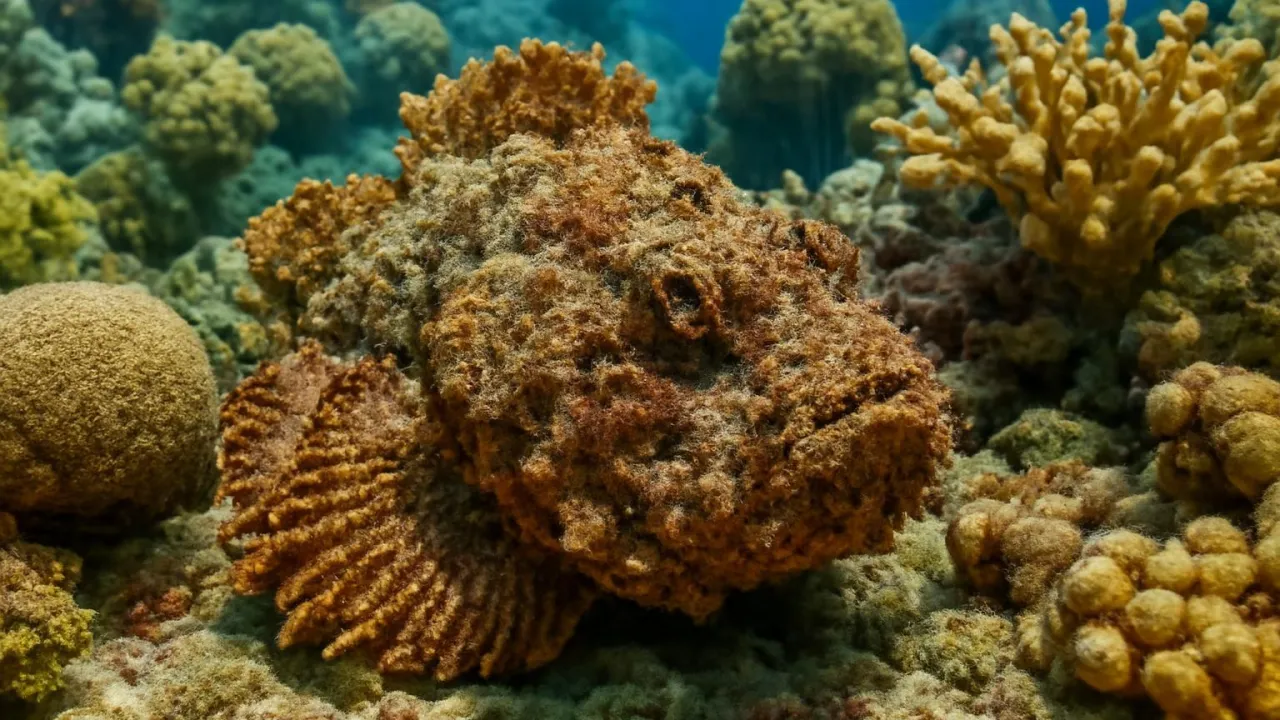
The reef stonefish’s venom can cause serious pain and needs quick medical help!
✨ Word Sparks (Grade 2 Glossary)
Tap 🔊 to hear
venomous
Having poison that can hurt or sting
predator
An animal that hunts other animals
coral reef
A colorful underwater home for fish
🪝
Have you ever seen a fish that looks just like a rock?
1
Amazing Camouflage
The reef stonefish can hide by looking like a rough rock on the ocean floor. It stays very still to avoid being seen by other fish and . This helps it surprise its prey easily.
2
Where It Lives
This fish lives in warm across the Indo-Pacific oceans. It hides among coral and rocks where many small fish swim and crustaceans crawl.
3
Dangerous Defense
The stonefish has sharp spines on its back that can sting and hurt animals or people who get too close. Its sting is a strong defense.
Reef stonefish venom is so strong it can cause paralysis and needs immediate medical treatment!
✨ Word Sparks (Grade 3 Glossary)
Tap 🔊 to hear
adaptation
A special body change to survive better
ambush
To wait quietly and then surprise attack
dorsal fin
The fin on a fish’s back
🪝
Did you know the reef stonefish is one of the best camouflaged fish in the ocean?
1
Master of Camouflage
The reef stonefish uses camouflage to blend perfectly with rocks and coral on the ocean floor. This helps it avoid predators and sneak up on prey. Its rough skin and mottled colors make it almost invisible.
2
Habitat and Behavior
It lives mainly in shallow coral reefs of the Indo-Pacific region. The stonefish often stays motionless for hours, waiting for small fish or crustaceans to come close. This hunting style helps it get food easily.
3
Venom and Defense
The stonefish has venomous spines on its that can inject poison when touched. This venom is a strong defense against predators and can cause severe pain to humans. Its venomous spines are a key survival feature.
4
Role in the Ecosystem
As a predator, the reef stonefish helps control small fish populations on reefs. It is also prey for larger animals that can tolerate its venom. Its presence supports the balance of the coral reef ecosystem.
Reef stonefish venom can cause excruciating pain and requires antivenom treatment to save lives.
✨ Word Sparks (Grade 4 Glossary)
Tap 🔊 to hear
toxin
A poison that can harm animals or people
predator
An animal that hunts other animals for food
ecosystem
A community of living things and their home
🪝
How does the reef stonefish’s camouflage help it survive in coral reefs?
1
Camouflage and Survival
The reef stonefish’s rough, mottled skin allows it to blend seamlessly with coral and rocky ocean floors, making it nearly invisible to both and prey. This camouflage is a vital adaptation that helps it avoid being eaten while also enabling it to ambush prey effectively. Its ability to remain motionless for hours increases its chances of catching food.
2
Ecosystem Role and Behavior
Living primarily in Indo-Pacific coral reefs, the stonefish plays an important role as a controlling populations of small fish and crustaceans. Its ambush hunting strategy involves lying motionless for long periods, which conserves energy and increases hunting success. This behavior helps maintain the balance of the reef .
3
Venomous Defense Mechanism
The stonefish’s venomous dorsal spines deliver a powerful when threatened, causing intense pain and potentially serious injury to or humans. This defense mechanism deters most predators and helps maintain its place in the reef’s complex food web. The venom can be fatal if not treated promptly.
4
Human Interaction and Conservation
While dangerous to humans, the reef stonefish is not aggressive and only stings when accidentally stepped on. Coral reef degradation threatens its habitat, making conservation of reef vital for the stonefish’s survival and the overall health of marine biodiversity. Protecting reefs helps preserve many species, including the stonefish.
1. Why is the reef stonefish’s camouflage important?
2. What happens if a person is stung by a stonefish?
🤯 Mind-Blowing Fact • Grade 5
The reef stonefish’s venom can cause paralysis and intense pain within minutes, making it one of the deadliest fish worldwide.
✨ Word Sparks (Grade 5 Glossary)
Tap 🔊 to hear
neurotoxin
A poison that attacks nerves and causes harm
ambush predator
An animal that waits quietly to catch prey
antivenom
Medicine that stops poison from hurting people
🪝
What makes the reef stonefish one of the most venomous and camouflaged fish in the world?
1
Scientific Classification and Habitat
The reef stonefish, scientifically named Synanceia verrucosa, belongs to the family Synanceiidae, known for venomous species. It inhabits shallow coral reefs and rocky substrates across the Indo-Pacific, from the Red Sea to northern Australia, thriving in tropical marine environments with temperatures between 24 and 30 degrees Celsius.
2
Physiological Adaptations and Venom Mechanism
This fish measures up to 40 centimeters and has specialized dorsal spines connected to venom glands. When pressure is applied, these spines inject a potent that can cause paralysis, severe pain, and even death in predators or humans. Its mottled skin texture provides excellent camouflage, mimicking reef rocks and algae.
3
Ecological Role and Behavioral Strategies
As an , the reef stonefish conserves energy by remaining motionless for hours, waiting for prey such as small fish and crustaceans. Its camouflage allows it to blend into the reef, making it nearly invisible both to prey and potential predators, thus maintaining balance within the coral reef ecosystem.
4
Conservation Status and Human Impact
Although not aggressive, the reef stonefish poses risks to humans who accidentally step on it, requiring prompt treatment. Coral reef degradation due to climate change and pollution threatens its habitat, underscoring the importance of marine conservation efforts to protect this species and its ecosystem.
5
Quantitative Comparisons and Fascinating Facts
The stonefish’s venom is among the most potent of all fish, capable of causing pain lasting several hours and paralysis within minutes. It can survive out of water for up to 24 hours, and its camouflage effectiveness rivals that of the leaf scorpionfish. These remarkable traits make it a fascinating subject of marine biology research.