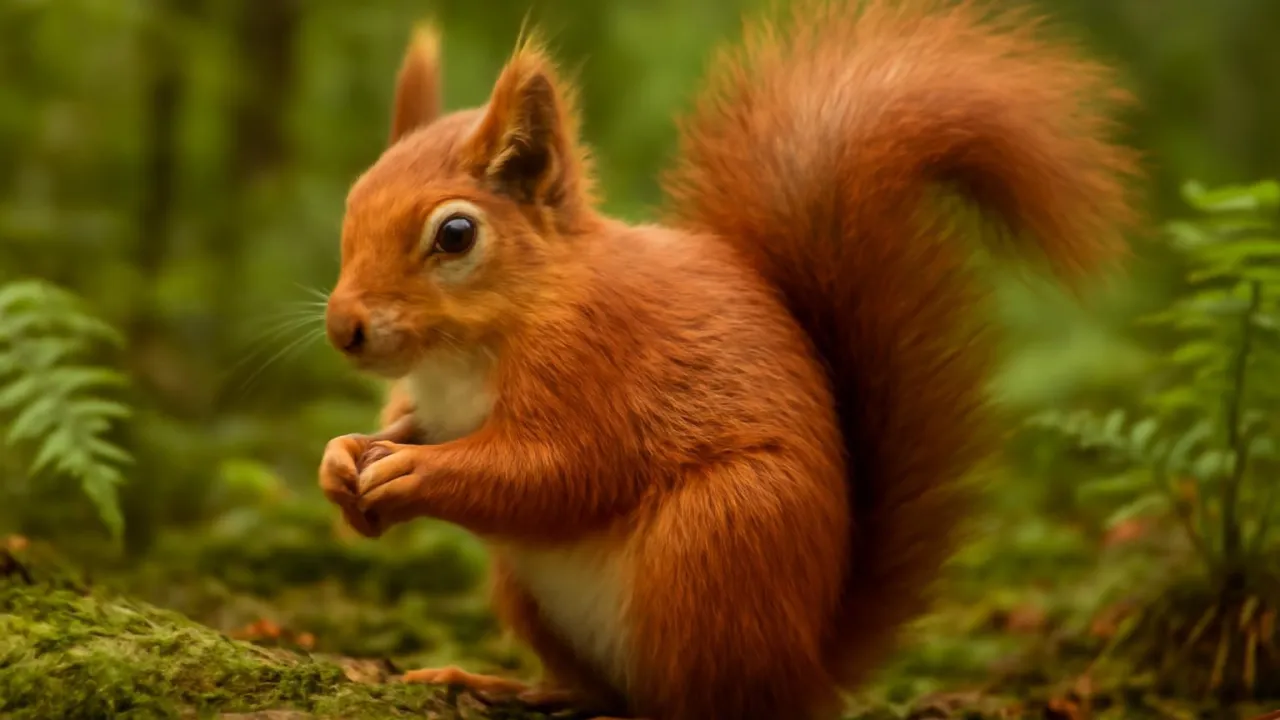
Red squirrels can leap up to ten feet to escape predators or find food.
✨ Word Sparks (Grade 2 Glossary)
Tap 🔊 to hear
predator
An animal that hunts other animals
nest
A home made by animals in trees
fungi
Plants like mushrooms that squirrels eat
🪝
Have you ever seen a red squirrel jump from tree to tree?
1
Bright Red Fur and Fluffy Tail
Red squirrels have bright red fur that helps them blend in with trees. Their fluffy tails help them balance while they jump. They use their tails to keep warm in winter.
2
Where Do They Live?
Red squirrels live in forests across Europe and Asia. They build high in the trees. Their homes protect them from cold and .
3
What Do They Eat?
They eat nuts, seeds, berries, and . Red squirrels gather and store food for winter. Their sharp teeth help them crack open hard nuts.
Red squirrels can leap up to ten feet between trees to escape predators or reach food.
✨ Word Sparks (Grade 3 Glossary)
Tap 🔊 to hear
camouflage
Colors that help animals hide
predator
An animal that hunts others
drey
A squirrel’s nest made of leaves
🪝
Did you know red squirrels use camouflage to hide from predators?
1
Camouflage and Adaptations
Red squirrels have reddish fur that helps them blend into autumn leaves. This protects them from like hawks and foxes. Their sharp claws help them climb trees quickly and safely. Their fluffy tails help balance when they leap between branches.
2
Habitat and Nesting
These squirrels live in temperate forests across Europe and Asia. They build nests called high in tree branches using leaves and twigs. The nests protect them from weather and . Red squirrels often live alone to avoid competition for food.
3
Diet and Food Storage
Red squirrels eat seeds, nuts, berries, and fungi found in their forest habitat. They gather food in autumn and hide it in many places to eat during winter. This behavior helps them survive when food is scarce. Their strong teeth allow them to crack open hard nutshells easily.
4
Survival Skills and Behavior
Red squirrels are quick and agile climbers, able to leap up to ten feet between trees. This ability helps them escape and find food. They use vocal calls to warn others of danger. Their keen senses help them detect threats early and stay safe.
2. Why do red squirrels store food in many places?
🤯 Mind-Blowing Fact • Grade 4
Red squirrels help forests grow by spreading seeds and fungi spores as they gather food.
✨ Word Sparks (Grade 4 Glossary)
Tap 🔊 to hear
ecosystem
A community of living things and their home
seed dispersal
How seeds spread to grow new plants
deforestation
Cutting down many trees in forests
🪝
How does the red squirrel’s role in forests help other plants and animals?
1
Adaptations for Survival
Red squirrels have reddish fur that blends well with forest leaves, providing camouflage from predators like hawks and foxes. Their sharp claws allow them to climb and leap with agility, which is crucial for escaping threats. The bushy tail aids in balance and warmth during cold months. These adaptations increase their survival chances in temperate forests.
2
Ecosystem Role and Food Web
Red squirrels play an important role in forest by dispersing seeds and fungi spores while gathering food. This helps new plants grow, supporting forest health and biodiversity. They also serve as prey for larger predators, linking different levels of the food web. Their activity influences the growth of trees and plants over time.
3
Geographic Range and Habitat
Red squirrels inhabit temperate forests across Europe and northern Asia, preferring coniferous and mixed woodlands. They build dreys high in trees, which protect them from weather and predators. Human activities like affect their habitat, sometimes causing population declines. Conservation efforts focus on preserving forest habitats to support red squirrel populations.
4
Cause and Effect in Behavior
When food is scarce during winter, red squirrels rely on stored nuts and seeds to survive cold months. Their food caching behavior causes them to scatter seeds, which helps new trees grow. If predators increase in number, squirrels become more cautious and use their agility to avoid capture. These behaviors show how environment changes affect their survival.
2. What happens when predators increase in red squirrels’ homes?
🤯 Mind-Blowing Fact • Grade 5
Red squirrels can leap ten times their body length, making them one of the most agile forest mammals.
✨ Word Sparks (Grade 5 Glossary)
Tap 🔊 to hear
taxonomy
How scientists classify living things
incisors
Sharp front teeth for biting
habitat connectivity
How well habitats connect for animals
🪝
What fascinating scientific facts explain how red squirrels thrive in their forest homes?
1
Scientific Classification and Taxonomy
The red squirrel, Sciurus vulgaris, belongs to the family Sciuridae, which includes tree squirrels worldwide. It is a small rodent adapted to temperate forests across Europe and northern Asia. Its reflects evolutionary traits like sharp and bushy tails that aid survival. Understanding its classification helps scientists study its behavior and conservation.
2
Physiological Mechanics and Adaptations
Red squirrels have powerful hind limbs that enable leaps up to ten feet between trees, enhancing escape from predators. Their sharp claws provide grip on bark surfaces, while their bushy tails serve as a balancing tool and insulation during cold weather. Their digestive system efficiently processes nuts and fungi, extracting vital nutrients for energy and growth.
3
Conservation and Botanical History
Historically, red squirrels were widespread, but habitat loss and competition from invasive grey squirrels have reduced populations in some regions. Conservation programs focus on protecting native forests and controlling grey squirrel numbers to preserve red squirrel habitats. Botanical studies of their food sources, like conifer seeds and fungi, inform habitat management strategies.
4
Quantitative Comparisons and Behavior
Red squirrels typically measure 9 to 11 inches in body length and weigh between 8 to 13 ounces. They can leap distances of up to ten feet, which is roughly ten times their body length, showcasing remarkable agility. Their nests, or dreys, are built high in trees to avoid predators and withstand harsh weather conditions. These quantitative traits highlight their specialized forest lifestyle.
5
Ecological Impact and Future Challenges
Red squirrels contribute to forest regeneration through seed dispersal, influencing tree species distribution and forest composition. Climate change and deforestation pose ongoing threats by altering habitats and food availability. Future conservation efforts require monitoring population genetics and to ensure long-term survival of red squirrels in their native ecosystems.