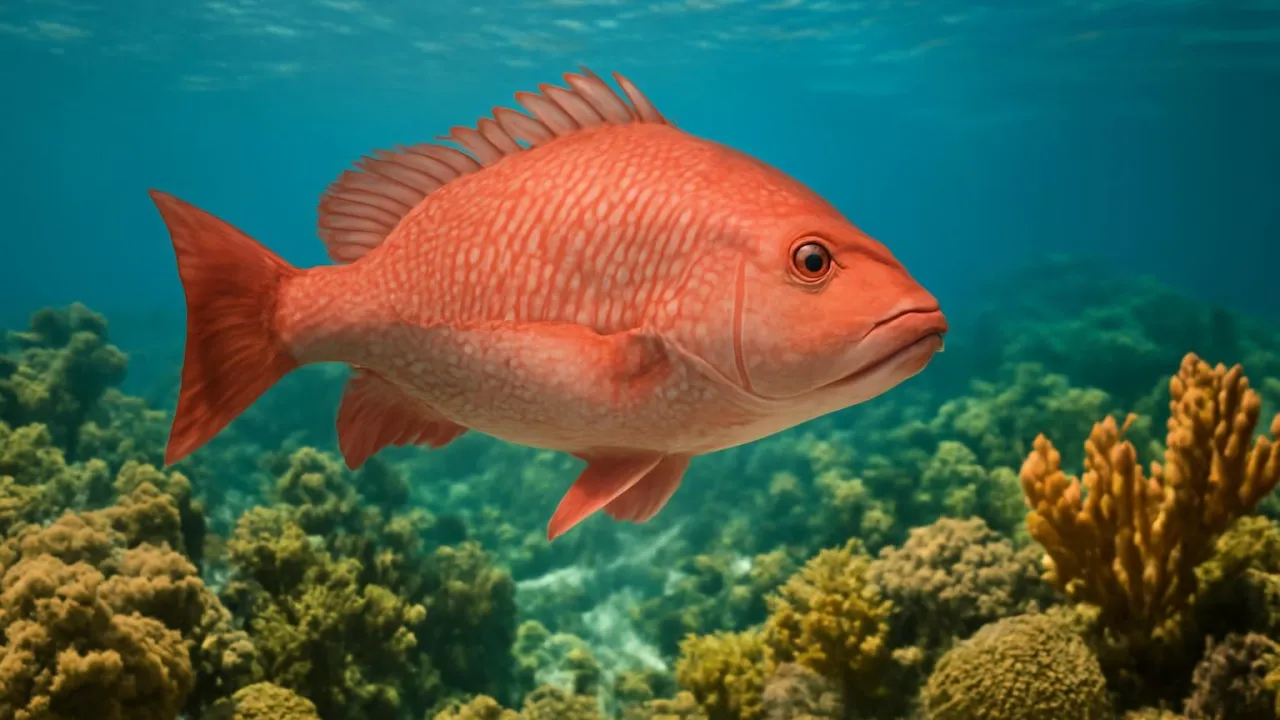
Red snappers can lay thousands of eggs at one time!
✨ Word Sparks (Grade 2 Glossary)
Tap 🔊 to hear
scales
Hard, shiny pieces on a fish's skin
reef
A rocky or coral place under the sea
school
A big group of fish swimming together
🪝
Did you know some fish can change their color to blend in?
1
A Bright Red Body
Red snappers have shiny red and big eyes, which help them see well. Their bodies are long and strong, so they can swim fast. Their fins help them turn quickly in the water.
2
Where They Live
Red snappers live in the warm waters of the Atlantic Ocean and Gulf of Mexico. They like to stay near coral and rocky places, where they can hide. These fish swim in groups called .
3
How They Eat
Red snappers eat small fish, shrimp, and crabs that live near the bottom. They use their sharp teeth to catch their food quickly. Sometimes, they even change their color to hide from bigger fish.
Red snappers can change their shade of red to hide from danger!
✨ Word Sparks (Grade 3 Glossary)
Tap 🔊 to hear
camouflage
Colors or patterns that help hide
predator
An animal that hunts other animals
larvae
Baby animals that hatch from eggs
🪝
How does a bright red fish stay safe in the deep blue sea?
1
Red Snapper Appearance
Red snappers have a deep pink-red color and sharp, spiny fins. Their large eyes help them see in dim, deep water. They can grow up to 40 inches long and weigh as much as a medium dog. Their scales protect them from scrapes and bites.
2
Habitat and Adaptations
Red snappers live near reefs and rocky bottoms in warm ocean water. Their color helps them blend in with the shadows, which is a type of . They often swim in schools for protection from . Young snappers start life in shallow water, then move deeper as they grow.
3
Diet and Hunting
Red snappers are carnivores that eat fish, shrimp, and crabs. They hunt by waiting near rocks and then darting out to catch prey. Their sharp teeth and strong jaws help them grab slippery food. Sometimes, they even eat smaller red snappers.
4
Life Cycle
A female red snapper can lay over 75,000 eggs at once. The eggs float in the water until they hatch into tiny . As they grow, young snappers find shelter in sea grass beds. Adult red snappers can live for more than 50 years in the wild.
Red snappers can live longer than most cats, dogs, or even parrots—over 50 years!
✨ Word Sparks (Grade 4 Glossary)
Tap 🔊 to hear
dorsal fin
The fin on a fish’s back
ecosystem
A community of living things and places
conservation
Protecting nature so it stays healthy
🪝
Can a fish’s color help it survive in the wild ocean?
1
Brilliant Color and Clever Design
Red snappers are easily recognized by their deep red scales and streamlined bodies, which help them swim efficiently. Their large eyes are specially adapted to detect movement in the dim light of deep reefs. These fish can reach up to 40 inches in length and weigh as much as 50 pounds. Their sharp and tough scales protect them from predators and rough coral.
2
Ocean Homes and Distribution
Red snappers are found mostly in the western Atlantic Ocean, especially in the Gulf of Mexico and along the southeastern United States. They prefer warm, salty waters and live near reefs, shipwrecks, and rocky bottoms. Juvenile red snappers often stay in shallow sea grass beds, while adults move to deeper habitats. Their distribution is influenced by water temperature and the availability of hiding places.
3
Role in the Food Web
Red snappers are important predators in their , feeding on fish, shrimp, and crabs. They help control the populations of smaller animals, which keeps the reef community balanced. Snappers themselves are hunted by sharks, barracudas, and humans. Overfishing by people has reduced their numbers in some areas, affecting the whole food web.
4
Life Cycle and Human Impact
A single female red snapper can produce up to 75,000 eggs in a single spawning event, and she may spawn several times each season. The eggs drift with ocean currents until they hatch, and young snappers seek shelter among sea grass and reefs. Because red snappers grow slowly and live long lives, they are vulnerable to overfishing. rules now protect them, helping their populations recover in the Gulf of Mexico.
1. Why are red snappers important to their ecosystem?
2. How do humans affect red snapper numbers?
🤯 Mind-Blowing Fact • Grade 5
A red snapper’s otolith can reveal its exact age, just like reading tree rings!
✨ Word Sparks (Grade 5 Glossary)
Tap 🔊 to hear
chromatophores
Special skin cells that change color
otolith
A tiny bone in a fish’s ear
sustainable
Using resources so they last a long time
🪝
What secrets does the red snapper’s crimson color reveal about life beneath the waves?
1
Taxonomy and Scientific Identity
The red snapper, Lutjanus campechanus, belongs to the family Lutjanidae and is a true snapper distinguished by its sloped profile, pointed anal fin, and vibrant coloration. This species is native to the western Atlantic Ocean, particularly abundant in the Gulf of Mexico and along the southeastern coast of the United States. Red snappers are often confused with other snapper species, but scientists identify them by their unique body shape and the number of fin spines. Their genus name, Lutjanus, comes from a Malay word for snapper, highlighting their global scientific significance.
2
Physiology and Color Adaptations
Red snappers possess specialized pigment cells in their skin called , which allow them to subtly shift their shade of red to better camouflage with their surroundings. This adaptation is especially useful in deeper water, where red wavelengths are absorbed, making the fish nearly invisible to predators. Their large eyes are adapted to low-light conditions, enhancing their ability to hunt and avoid danger at depths of up to 300 feet (91 meters). The species’ streamlined body and powerful tail muscles enable bursts of speed exceeding 20 miles per hour (32 kilometers per hour) when escaping threats.
3
Life Cycle, Growth, and Longevity
Red snappers are slow-growing and long-lived, with some individuals reaching ages of over 50 years and lengths up to 40 inches (102 centimeters). Females become mature at about two to six years old and can produce several million eggs during a spawning season, with each spawning event releasing up to 75,000 eggs. The eggs and larvae drift in ocean currents before settling into shallow habitats like sea grass beds. Juveniles face high predation rates, but survivors gradually migrate to deeper reefs as they mature, forming large schools for protection and feeding.
4
Ecological Role and Human Impact
As mid-level predators, red snappers play a crucial role in controlling populations of smaller fish and invertebrates, maintaining balance within reef ecosystems. They are preyed upon by larger predators such as sharks and groupers, forming an important link in the marine food web. Overfishing, especially by commercial and recreational fisheries, has historically caused severe declines in red snapper populations, prompting strict management regulations. Conservation measures, including catch limits and protected spawning areas, are now helping populations recover in parts of their range.
5
Red Snapper in Science and Culture
Red snappers are highly valued in both culinary and scientific communities for their firm, mild-flavored flesh and their role as indicators of reef health. Scientists study their age by examining , or ear bones, which display annual growth rings like tree trunks. In some regions, red snapper fisheries support local economies and traditions, but illegal fishing and habitat loss remain ongoing threats. Quantitative studies show that red snapper populations can take decades to recover from overfishing, highlighting the importance of practices for future generations.