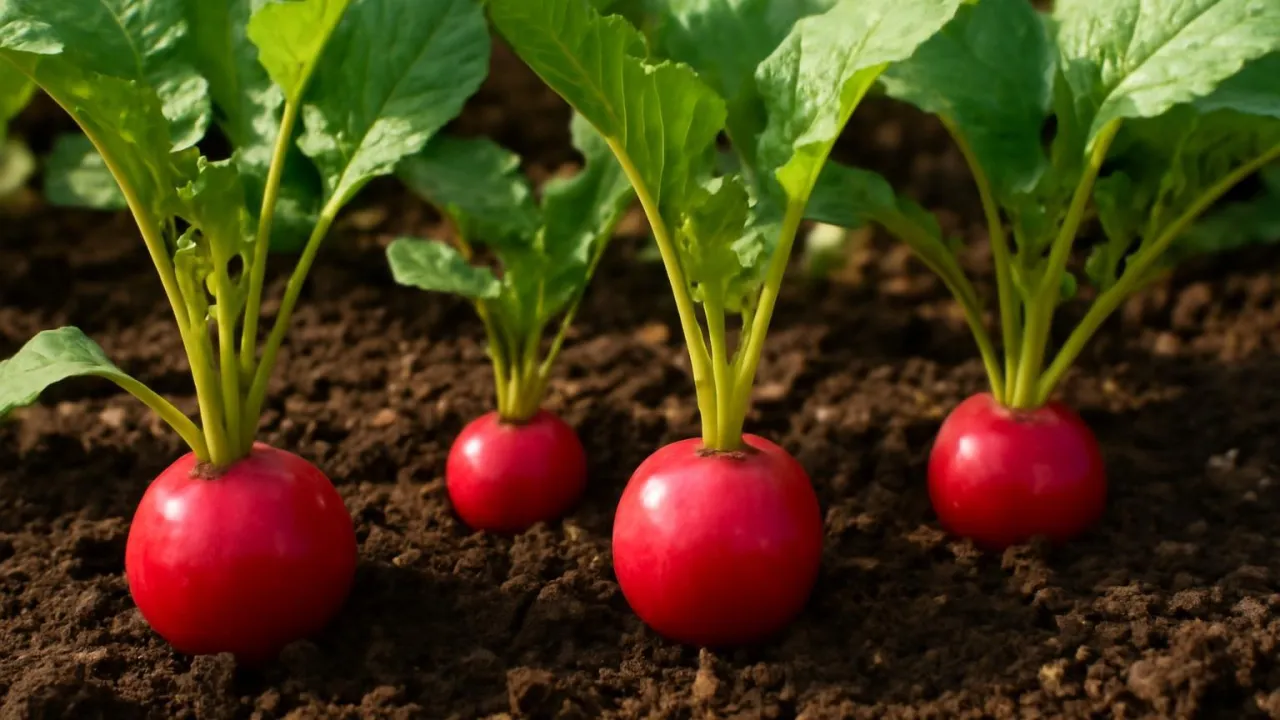
Radishes can be ready to eat in as little as three weeks after planting.
✨ Word Sparks (Grade 2 Glossary)
Tap 🔊 to hear
harvest
To gather plants from the garden or farm
peppery
A spicy taste like pepper
vegetable
A plant people eat for food
🪝
Have you ever tasted a crunchy red radish with a spicy bite?
1
Bright Red and Round
Red radishes have bright red skin and are round in shape. They grow underground in soil. People like to eat them fresh and crunchy. Their color makes them easy to spot in gardens.
2
Fast Growing Vegetable
Radishes grow quickly in gardens when they get enough sun and water. Farmers plant radishes in spring and them soon after. This fast growth helps farmers have fresh early.
3
Spicy Taste and Uses
Radishes have a spicy, taste that adds flavor to salads and sandwiches. They can also be cooked or pickled for different dishes. Many people enjoy their crunchy texture and bright color.
Radishes can grow from seed to harvest in just 20 to 30 days, one of the fastest for vegetables!
✨ Word Sparks (Grade 3 Glossary)
Tap 🔊 to hear
adaptation
A change that helps a plant survive
photosynthesis
How plants use sunlight to make food
nutrients
Food that helps plants grow strong
🪝
Did you know red radishes use their spicy taste to protect themselves?
1
Red Radish Roots
Red radishes grow underground and have bright red skin that helps them stand out. Their round shape stores for growth. The root is crunchy and full of water, which helps it stay fresh.
2
Spicy Defense
The spicy taste of radishes comes from natural chemicals that protect them from predators. This helps radishes survive in gardens and wild areas. Animals often avoid eating spicy radishes.
3
Growing Fast in Soil
Radishes grow quickly because they absorb and water from the soil efficiently. Their leaves collect sunlight for , which fuels growth. This fast growth helps radishes complete their life cycle quickly.
4
From Seed to Harvest
Radish seeds sprout in just a few days and develop roots fast. The plant grows leaves above ground to gather sunlight. After about three weeks, the radish root is ready to be harvested and eaten.
Radishes help farmers by breaking up soil and supporting beneficial insects in gardens.
✨ Word Sparks (Grade 4 Glossary)
Tap 🔊 to hear
ecosystem
A community of plants and animals living together
symbiotic
A helpful relationship between living things
cover crop
Plants grown to protect and improve soil
🪝
Have you ever wondered how red radishes fit into garden food webs and ecosystems?
1
Radishes and Their Environment
Red radishes grow best in temperate climates where soil is moist and rich in nutrients, which allows them to develop their spicy roots. Their fast growth cycle means they can be harvested before many pests become a problem. This quick growth helps farmers produce radishes efficiently in many parts of the world.
2
Role in Food Webs
Radishes serve as food for humans and some animals, but their spicy taste deters many herbivores, acting as a natural defense. They also support beneficial insects by providing habitat for pollinators during their flowering stage. This relationship helps maintain healthy garden .
3
Agricultural Impact and Uses
Farmers use radishes to improve soil health because their roots break up compacted soil, allowing better water flow and nutrient absorption. Radishes are also grown as to prevent soil erosion and add organic matter. Their quick harvest cycle makes them valuable in crop rotation systems.
4
Global Distribution
Red radishes are cultivated worldwide, especially in Asia, Europe, and North America, thriving in temperate zones. Their adaptability to different soils and climates has made them a popular vegetable globally. This wide distribution helps people enjoy radishes in many cuisines and cultures.
Red radishes can mature in as little as 20 days, making them one of the fastest-growing root vegetables worldwide.
✨ Word Sparks (Grade 5 Glossary)
Tap 🔊 to hear
glucosinolates
Natural chemicals that protect plants from insects
taproot
The main root that grows deep underground
genetic diversity
Different types of plants in one species
🪝
Did you know red radishes belong to the mustard family and have fascinating growth mechanics?
1
Scientific Classification and History
Red radishes, scientifically named Raphanus sativus, belong to the Brassicaceae family, which includes mustard and cabbage. They have been cultivated for thousands of years, originating from Southeast Asia and spreading globally due to their fast growth and culinary uses. Their botanical classification helps scientists understand their traits and relationships.
2
Physiological Growth and Defense
Radishes develop a swollen that stores water and nutrients, enabling rapid growth within 20 to 30 days. Their spicy flavor results from , sulfur-containing compounds that act as natural pesticides against insects and herbivores. This chemical defense mechanism protects the plant while attracting beneficial insects during flowering.
3
Conservation and Agricultural Importance
While red radishes are widely cultivated, heirloom varieties are preserved to maintain and resilience against pests and diseases. Sustainable farming practices encourage crop rotation with radishes to improve soil structure and reduce chemical use. Conservation of diverse radish varieties supports global food security and ecosystem health.
4
Quantitative Growth and Environmental Needs
Red radishes typically grow to about 1 to 2 inches in diameter and require full sun exposure with consistent moisture for optimal growth. They thrive in temperatures ranging from 50 to 70 degrees Fahrenheit (10 to 21 degrees Celsius). Their rapid maturation allows multiple harvests in a single growing season, making them efficient crops for farmers.
5
Culinary and Botanical Surprises
Although commonly treated as vegetables in cooking, red radishes are botanically roots that develop from the plant’s system. Their crunchy texture and spicy taste add flavor and nutrients to salads and dishes worldwide. Understanding their botanical nature helps people appreciate the diversity of edible plant parts in our diets.