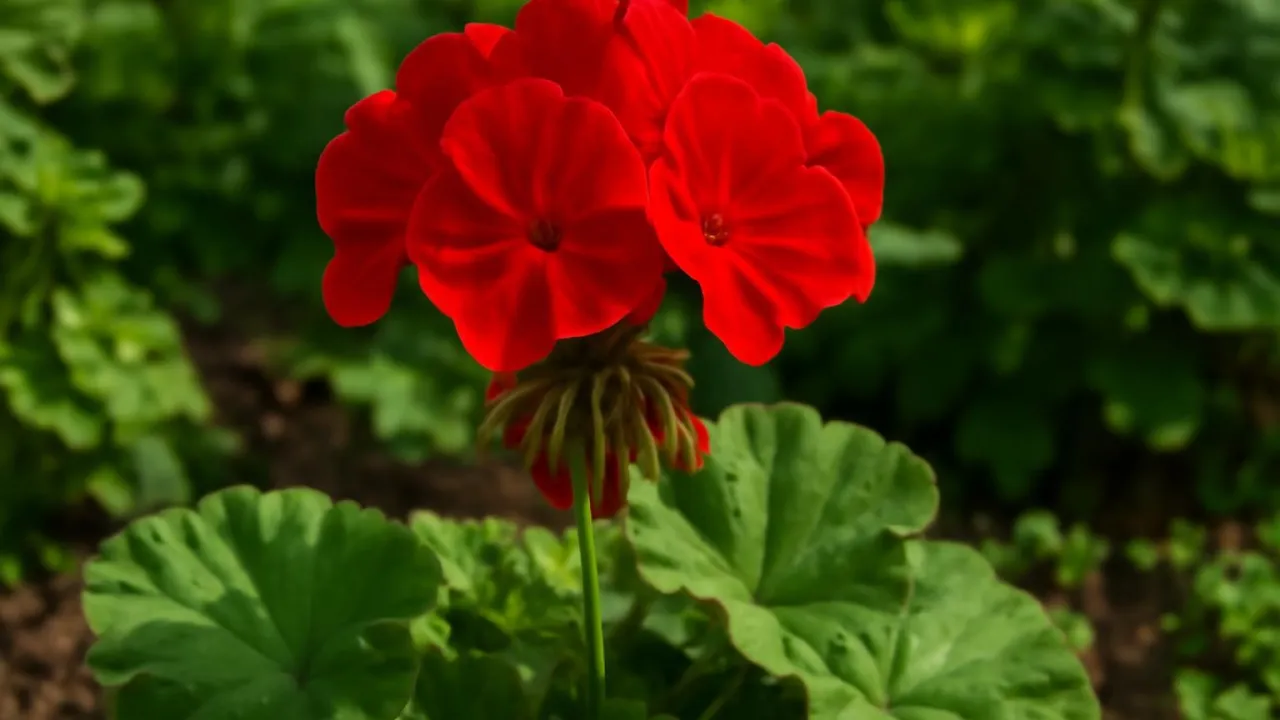
Red geraniums can bloom for many months if they get enough sun and water.
✨ Word Sparks (Grade 2 Glossary)
Tap 🔊 to hear
nectar
Sweet juice inside flowers for bees
pollinate
Help flowers make seeds by moving pollen
petals
Colorful flower parts that attract animals
🪝
Have you seen a bright red flower that smells nice in a garden?
1
Where Red Geraniums Live
Red geraniums grow best in sunny gardens and warm places. They like fresh air and open spaces. These flowers need well-drained soil to stay healthy and strong.
2
How They Grow
These flowers start as small seeds and then grow leaves and stems. They bloom with bright red in spring and summer. Geraniums need regular watering but not too much water.
3
Special Flower Parts
The are bright red and smell sweet to attract insects. Bees and butterflies visit to collect and help flowers. This helps the plant make seeds and grow new plants.
Red geraniums can bloom continuously for several months in the right conditions.
✨ Word Sparks (Grade 3 Glossary)
Tap 🔊 to hear
pollination
When pollen moves to help make seeds
camouflage
Colors or shapes that help hide plants
nutrients
Food plants get from soil and sun
🪝
Did you know red geraniums use bright colors to hide from predators and attract insects?
1
Habitat and Growth
Red geraniums thrive in warm climates where sunlight is abundant all day. They grow in gardens and pots, adapting well to many environments. Their roots absorb and water from the soil to stay healthy. This adaptation helps them survive in places with moderate rainfall.
2
Flower Structure and Function
The bright red petals act as a signal to attract pollinators like bees and butterflies. happens when insects carry pollen from one flower to another, helping the plant make seeds. The leaves use sunlight for photosynthesis, turning light into energy. This process provides needed for growth and blooming.
3
Defense and Camouflage
Geranium leaves have a slightly fuzzy texture that deters some predators from eating them. Their green color helps them blend into garden foliage, offering from insects that might harm the plant. This natural defense keeps the plant safe and thriving. These adaptations improve the geranium’s chances of survival.
4
Life Cycle and Reproduction
Red geraniums start as seeds that germinate in warm soil. After sprouting, they develop stems and leaves before producing flowers. The flowers attract pollinators that help with reproduction by spreading pollen. Once pollinated, the plant produces seeds to grow new geraniums.
Red geraniums help support pollinator populations important for many plants worldwide.
✨ Word Sparks (Grade 4 Glossary)
Tap 🔊 to hear
symbiotic
Two living things help each other
biodiversity
Many different plants and animals living together
adaptation
A change that helps plants survive better
🪝
How do red geraniums play an important role in their ecosystems and gardens?
1
Ecosystem Role and Location
Red geraniums are native to South Africa but are now grown worldwide in gardens and parks. Their bright red flowers attract many pollinators, which helps maintain healthy ecosystems. Pollinators like bees and butterflies rely on geranium nectar for food, creating a relationship. This interaction supports food webs by helping plants reproduce and animals survive.
2
Growth and Adaptation
These plants grow best in full sun with well-drained soil and moderate watering. Their leaves have tiny hairs that reduce water loss and protect against pests, an important . Geraniums can survive in different climates by adjusting their growth cycles. This flexibility allows them to thrive in diverse environments around the world.
3
Human Impact and Gardening
Gardeners often plant red geraniums because they are easy to care for and bloom brightly. They help improve garden by attracting beneficial insects that control pests naturally. However, overwatering or poor soil can harm geraniums and reduce their flowering. Proper care supports healthy plants and vibrant gardens that benefit people and wildlife.
4
Cause and Effect in Nature
When red geraniums receive enough sunlight and water, they produce more flowers that attract pollinators. Increased pollination leads to more seeds and new plants, which helps spread geraniums in gardens. If conditions are poor, flowering decreases, reducing food for pollinators. This cause-and-effect cycle shows how plants and animals depend on each other for survival.
2. What happens if red geraniums get too little water?
🤯 Mind-Blowing Fact • Grade 5
Red geraniums’ pigments not only attract pollinators but also protect the plant from harmful ultraviolet rays.
✨ Word Sparks (Grade 5 Glossary)
Tap 🔊 to hear
anthocyanins
Pigments that give flowers red and purple colors
transpiration
Water loss from leaves into the air
hybrid
A plant made by crossing two different species
🪝
What makes the red geranium a fascinating subject in botany and ecology worldwide?
1
Taxonomy and Scientific Context
The red geranium, scientifically named Pelargonium × hortorum, belongs to the Geraniaceae family. It is a species commonly cultivated for ornamental purposes worldwide. This plant is part of the order Geraniales, which includes many species adapted to diverse climates. Understanding its taxonomy helps botanists classify and study its evolutionary relationships.
2
Physiological Mechanics and Adaptations
Red geraniums use photosynthesis in their broad green leaves to convert sunlight into chemical energy efficiently. Their leaf hairs reduce , conserving water in dry conditions, which is vital for survival. The bright red petals contain pigments called that protect against UV damage and attract pollinators. These physiological traits enable the plant to thrive in various environments.
3
Conservation and Botanical History
Originally native to South Africa, red geraniums were introduced globally during the 18th century as popular garden plants. Though not endangered, their cultivation supports pollinator populations in urban and rural ecosystems. Botanical gardens preserve diverse Pelargonium species to maintain genetic variety and study adaptation mechanisms. Conservation efforts focus on sustainable gardening practices to protect pollinators.
4
Quantitative Comparisons and Growth Data
Red geraniums typically grow between 12 to 24 inches tall and can spread up to 18 inches wide. Their flowers measure about 1 to 2 inches in diameter, producing nectar that attracts pollinators like bees and butterflies. They flourish in temperatures ranging from 60 to 75 degrees Fahrenheit and require moderate watering approximately once a week. These quantitative measures help gardeners optimize growth conditions.
5
Ecological and Human Impact
Red geraniums play a crucial role in supporting urban biodiversity by providing nectar for pollinators in city gardens. Their cultivation reduces the need for chemical pesticides by attracting beneficial insects that control pests naturally. However, overwatering and poor soil management can lead to fungal diseases, impacting plant health. Educating gardeners on proper care promotes ecological balance and sustainable horticulture.