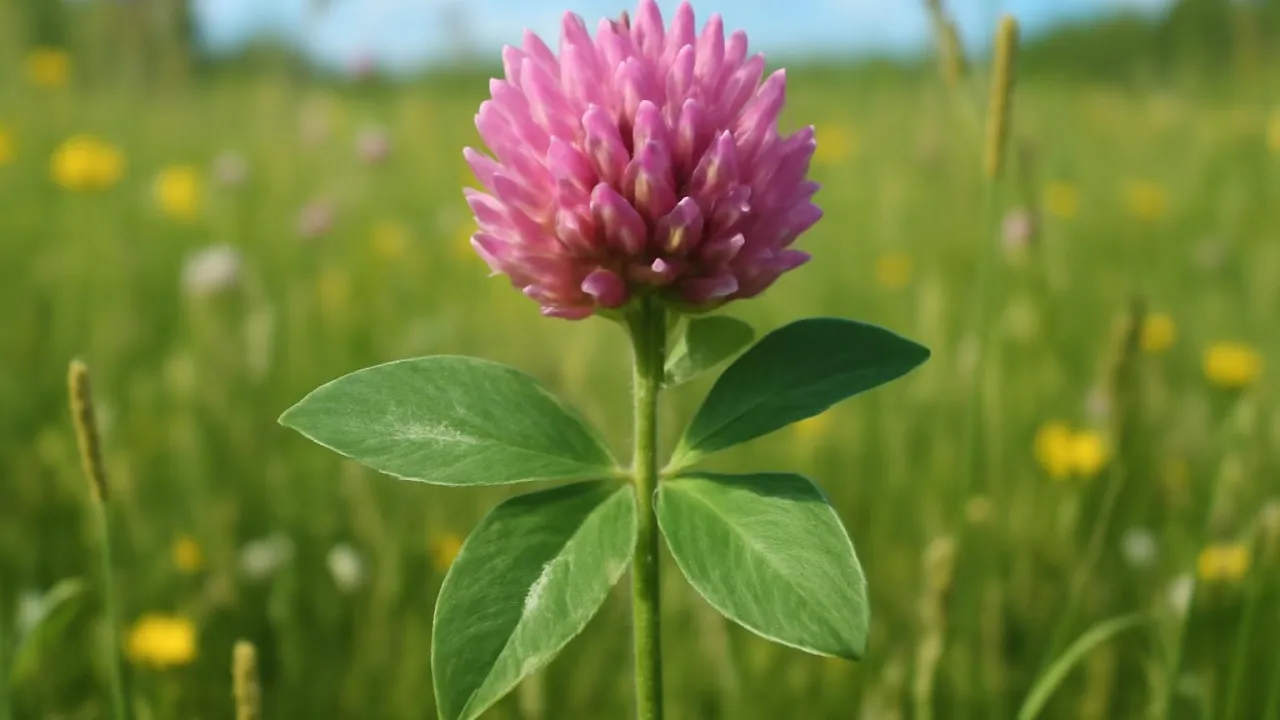
Red clover flowers bloom from spring to fall, giving food to many insects!
✨ Word Sparks (Grade 2 Glossary)
Tap 🔊 to hear
nectar
Sweet juice inside flowers that bees drink.
temperate
A place that is not too hot or cold.
nitrogen
A gas that helps plants grow strong.
🪝
Have you ever seen a flower that helps soil grow better?
1
What Red Clover Looks Like
Red clover has round flower heads that are bright red or pink. It grows low to the ground in fields or gardens. Bees and butterflies visit the flowers often to drink .
2
Where Red Clover Grows
This flower grows best in sunny places with good soil and water. It is common in regions like Europe and Asia. Farmers plant red clover to help their fields grow better crops.
3
Why Red Clover Is Special
Red clover can make the soil healthy by adding . This helps other plants grow strong and tall. Because of this, red clover is very useful for farmers and gardeners.
Red clover’s nitrogen-fixing roots can add up to 150 pounds of nitrogen per acre yearly!
✨ Word Sparks (Grade 3 Glossary)
Tap 🔊 to hear
pollinators
Animals that help flowers make seeds by moving pollen.
fixation
Changing nitrogen gas into a form plants can use.
ecosystem
A community of plants, animals, and their environment.
🪝
Did you know red clover uses a special trick to help plants grow?
1
Red Clover’s Bright Flowers
Red clover has round flower heads with many tiny red or pink flowers. These flowers attract like bees and butterflies, which help the plant reproduce. The bright colors also help the flowers stand out in meadows. This is a great example of adaptation to attract insects.
2
Where Red Clover Lives
Red clover grows in temperate regions across Europe and Asia, often found in meadows and fields. It prefers sunny spots where it can get enough sunlight for photosynthesis. This flower also needs moderate water and well-drained soil to thrive. Its ability to grow in many places shows its strong adaptation.
3
How Red Clover Helps the Soil
Red clover has a special ability called nitrogen that helps add nutrients to the soil. It works with bacteria in its roots to change nitrogen from the air into a form plants can use. This process improves soil health and helps other plants grow better. It is an important part of many .
4
Why Red Clover Matters
Because red clover improves soil nutrients, it supports healthy food webs by feeding insects and animals. It also helps farmers by naturally enriching their fields without chemicals. This flower plays a key role in sustainable farming and balance. Its presence benefits many living things.
1. What helps red clover fix nitrogen in the soil?
2. Why do pollinators visit red clover flowers?
🤯 Mind-Blowing Fact • Grade 4
Red clover can fix up to 150 pounds of nitrogen per acre each year, enriching soils naturally.
✨ Word Sparks (Grade 4 Glossary)
Tap 🔊 to hear
symbiosis
A helpful relationship between two living things.
fertility
How healthy and rich soil is for growing plants.
biodiversity
Many different kinds of plants and animals living together.
🪝
How does red clover’s special root power help entire ecosystems thrive?
1
Red Clover’s Bright Adaptations
Red clover produces dense, round flower heads with tiny red or pink flowers that attract many pollinators, including bees and butterflies, which help the plant reproduce and spread its seeds. Its bright colors and sweet nectar create a cause-and-effect relationship that supports local insect populations. This adaptation helps maintain in meadows and fields where it grows.
2
Growing Conditions and Distribution
Red clover thrives in temperate climates across Europe, Asia, and parts of North America, preferring sunny, well-drained soils with moderate moisture. It can grow in fields, meadows, and pastures, where it often forms symbiotic relationships with soil bacteria to fix nitrogen. This ability allows it to enrich poor soils and supports sustainable land use and agriculture.
3
Role in Ecosystems and Agriculture
By fixing nitrogen in the soil, red clover plays a vital role in food webs by improving soil , which benefits many plants and animals. It supports with bacteria, which convert nitrogen gas into usable nutrients, reducing the need for chemical fertilizers. Farmers use red clover in crop rotations to naturally replenish soil nutrients and improve crop yields.
4
Human Impact and Conservation
Red clover has been cultivated for centuries for its soil-enriching properties and as forage for livestock, but habitat loss and intensive farming can reduce wild populations. Conservation efforts encourage planting red clover to maintain soil health and . Its continued use in sustainable agriculture highlights its importance for environmental balance and food security.
Red clover’s nitrogen fixation can supply up to 70% of nitrogen needs for following crops in rotation systems.
✨ Word Sparks (Grade 5 Glossary)
Tap 🔊 to hear
legume
A plant that helps soil by fixing nitrogen.
nodules
Small bumps on roots where bacteria live.
symbiotic
Two living things helping each other survive.
🪝
What makes red clover a key player in sustainable agriculture and ecosystem health?
1
Scientific Classification and Description
Red clover, scientifically named Trifolium pratense, belongs to the Fabaceae family, known for nitrogen-fixing . It is a perennial herbaceous plant growing 6 to 20 inches tall with trifoliate leaves and dense, globular flower heads composed of numerous small reddish-pink flowers. This species is native to Europe and Asia but has been widely introduced to North America and other temperate regions for agricultural purposes.
2
Physiological Mechanics of Nitrogen Fixation
Red clover forms a relationship with Rhizobium bacteria in root , which convert atmospheric nitrogen gas into ammonia usable by plants. This biological nitrogen fixation enriches soil nitrogen content, reducing the need for synthetic fertilizers and improving soil fertility. The plant’s root system also enhances soil structure, promoting aeration and water retention essential for healthy crop growth.
3
Ecological and Agricultural Importance
By fixing nitrogen, red clover plays a crucial role in sustainable agriculture, supporting crop rotations and reducing chemical fertilizer dependence. It provides nectar for pollinators, contributing to biodiversity and food web stability. Additionally, red clover serves as forage for livestock, offering high-protein feed that supports animal health and farm productivity.
4
Conservation and Historical Use
Historically, red clover has been cultivated since ancient times for its soil-enhancing and fodder qualities. Conservation efforts focus on preserving wild populations and promoting its use in organic farming systems to maintain soil health and biodiversity. Habitat loss and intensive agriculture threaten some native populations, highlighting the need for sustainable land management practices.
5
Quantitative Comparisons and Environmental Impact
Red clover can fix approximately 100 to 150 pounds of nitrogen per acre annually, significantly improving soil nutrient levels. It thrives in temperatures ranging from 50 to 77 degrees Fahrenheit and grows best in well-drained soils with moderate moisture. Compared to synthetic fertilizers, red clover’s natural nitrogen fixation reduces environmental pollution and supports long-term soil sustainability.