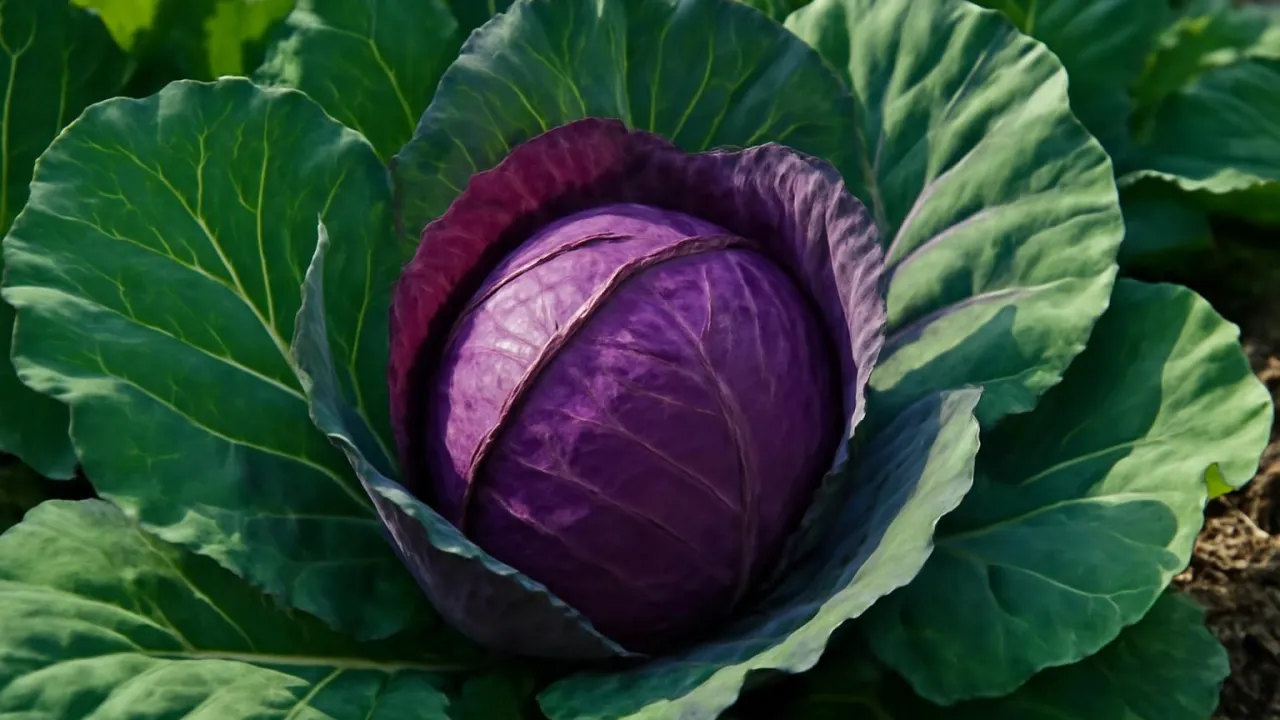
The color of red cabbage changes based on the soil’s acidity level!
✨ Word Sparks (Grade 2 Glossary)
Tap 🔊 to hear
pigments
Colors inside leaves or plants
acidic
A sour type of soil or juice
sunlight
Light from the sun plants need
🪝
Have you ever seen a vegetable that changes colors like a chameleon?
1
Colorful Leaves
Red cabbage has bright purple leaves that look shiny and fresh. When cooked, it can turn blue or even red. This color change happens because of special inside the leaves.
2
Growing in Gardens
Red cabbage grows best in cool weather and needs plenty of . Farmers plant seeds in soil and water the plants every day. The cabbage heads grow round and firm over several weeks.
3
Eating and Using
People eat red cabbage raw in salads or cooked in meals. It tastes crunchy and slightly sweet when raw. Cooking it changes both the taste and color, making it fun to eat.
Red cabbage’s pigments can test liquids’ acidity by changing colors!
✨ Word Sparks (Grade 3 Glossary)
Tap 🔊 to hear
anthocyanins
Plant pigments that change color
nutrients
Food plants need to grow strong
ecosystem
A community of plants and animals
🪝
Did you know red cabbage can act like a natural pH indicator?
1
Bright Leaves and Pigments
Red cabbage leaves contain pigments called that give them their purple color. These pigments change color when exposed to acids or bases, showing blue, red, or green hues. This natural color change helps the plant adapt to different soil types. It also makes red cabbage useful in science experiments.
2
Growing and Adapting
Red cabbage grows well in temperate climates with cool temperatures and moist soil. It develops a large, dense head of tightly packed leaves that protect the inner parts from pests and cold weather. This dense structure helps the plant survive in different environments. The cabbage uses from the soil to grow strong and healthy.
3
Role in Ecosystems
Red cabbage is part of a food web where insects like caterpillars eat its leaves, and birds may feed on those insects. The plant also supports pollinators when it flowers. Farmers grow red cabbage for food, and it provides important vitamins to people. Its presence helps keep soil healthy by adding organic matter when leaves decay.
4
Eating and Uses
People enjoy red cabbage raw in salads or cooked in many dishes because of its crunchy texture and mild flavor. Cooking changes its color and softens the leaves, making it easier to digest. It is rich in vitamin C and fiber, which help keep the body healthy. Red cabbage is also used in pickling and fermentation.
Red cabbage’s color reveals if soil is acidic or alkaline, a natural pH test!
✨ Word Sparks (Grade 4 Glossary)
Tap 🔊 to hear
alkaline
Soil that is the opposite of acidic
cultivate
To grow plants for food or use
fermentation
A process that changes food with bacteria
🪝
Why does red cabbage change color when cooked or in different soils?
1
Color Change and Soil pH
Red cabbage contains anthocyanins that react to soil’s pH level, causing leaves to change colors from red to purple to blue. Acidic soils make the leaves appear red, while soils turn them blue or green. This chemical reaction helps the plant adapt to different environments and signals soil conditions to farmers. It also influences the cabbage’s taste and texture.
2
Growing Conditions and Adaptations
Red cabbage thrives in temperate climates with cool temperatures and moist, well-drained soil. Its dense, leafy head protects inner leaves from pests and harsh weather, increasing survival rates. The plant’s ability to grow in various soil types allows cultivation worldwide, from Europe to North America and Asia. Its root system efficiently absorbs water and nutrients, supporting healthy growth.
3
Role in Food Webs and Agriculture
As a leafy vegetable, red cabbage serves as food for many insects, including caterpillars and aphids, which in turn feed birds and small mammals. Farmers red cabbage for human consumption because it provides essential nutrients like vitamin C and fiber. Its cultivation supports local economies and contributes to sustainable agriculture when crop rotation and organic methods are practiced.
4
Human Uses and Environmental Impact
People use red cabbage in salads, cooked dishes, and fermented foods like sauerkraut. Cooking changes its color and flavor due to chemical reactions with heat and soil minerals. Growing red cabbage requires water and sunlight, and sustainable farming practices reduce environmental impact while providing healthy food. Its colorful leaves also inspire art and science education.
1. What causes red cabbage leaves to change color?
2. Why is red cabbage important to farmers?
🤯 Mind-Blowing Fact • Grade 5
Red cabbage’s anthocyanins shift color based on pH, making it a natural, edible pH indicator!
✨ Word Sparks (Grade 5 Glossary)
Tap 🔊 to hear
anthocyanin
Plant pigment that changes color with pH
pH
A scale that shows how acidic or basic things are
photosynthesis
How plants use sunlight to make food
🪝
How does red cabbage’s unique chemistry make it a natural pH indicator and a nutritious vegetable?
1
Scientific Classification and Origin
Red cabbage belongs to the species Brassica oleracea, variety capitata, and is classified under the family Brassicaceae. It originated in Europe and has been cultivated for centuries due to its nutritional value and unique pigmentation. This vegetable is closely related to green cabbage, kale, and Brussels sprouts, sharing many genetic traits.
2
Physiological Mechanisms of Color Change
The vivid purple color of red cabbage comes from pigments located in the leaf vacuoles. These pigments change color depending on the hydrogen ion concentration () of their environment, shifting from red in acidic conditions to blue or green in alkaline conditions. This chemical property allows red cabbage to serve as a natural pH indicator in scientific experiments.
3
Growth, Cultivation, and Environmental Adaptations
Red cabbage grows best in temperate climates with temperatures between 55 and 75 degrees Fahrenheit (13 to 24 degrees Celsius). It requires well-drained, fertile soil with a between 6.0 and 7.5 for optimal growth. The dense, compact head of leaves protects the inner leaves from pests and cold, while the plant’s deep root system helps absorb nutrients and water efficiently.
4
Nutritional Benefits and Human Uses
Rich in vitamin C, fiber, and antioxidants, red cabbage supports immune health and digestion. It is consumed raw in salads, cooked in various dishes, or fermented to produce sauerkraut and kimchi. The color changes during cooking result from pigment reactions with heat and , which can affect the flavor and nutrient availability.
5
Conservation, Agricultural Impact, and Quantitative Facts
Red cabbage cultivation contributes to sustainable agriculture through crop rotation and organic farming methods that reduce pesticide use. Average heads weigh between 2 and 4 pounds (0.9 to 1.8 kilograms) and can grow to 12 inches (30 centimeters) wide. Understanding its -sensitive pigments has also advanced botanical research and educational science, linking plant biology with chemistry.