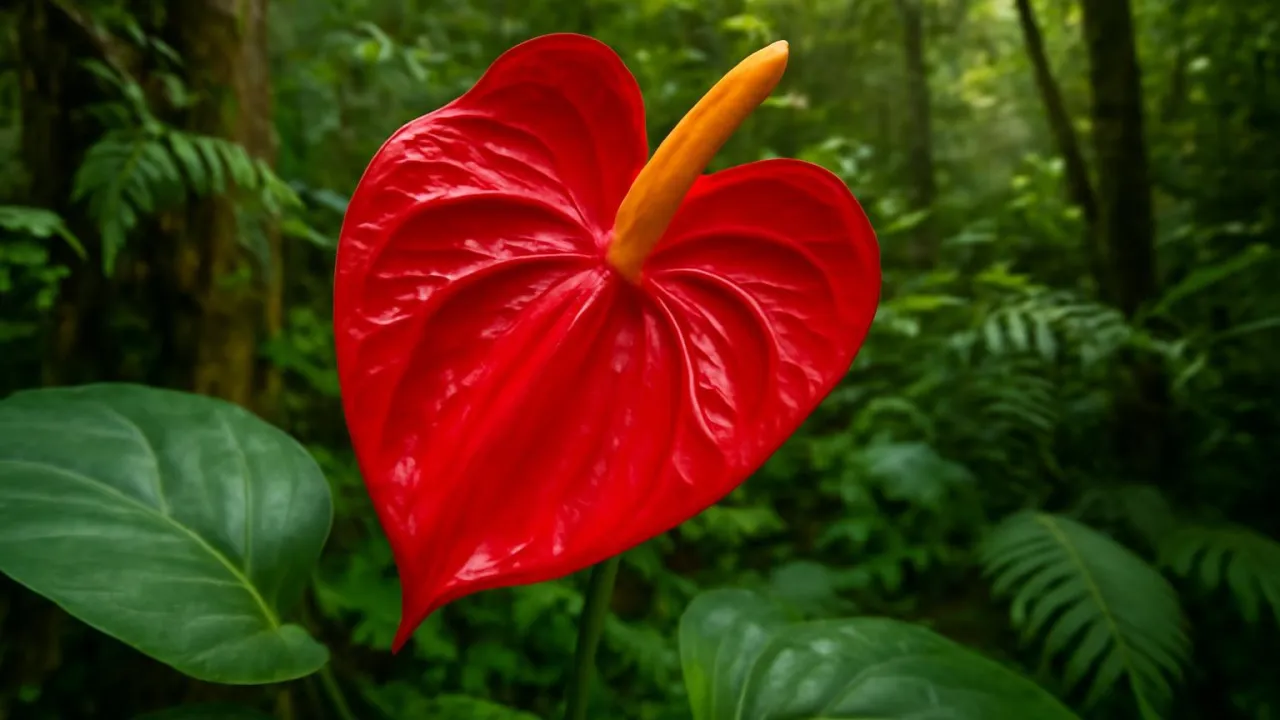
Anthurium flowers can last up to six weeks when cared for properly!
✨ Word Sparks (Grade 2 Glossary)
Tap 🔊 to hear
nectar
Sweet juice inside flowers that bees drink
indirect sunlight
Light that is not very bright or direct on plants
moist
Slightly wet, like damp soil or air
🪝
Have you ever seen a flower shaped like a shiny red heart?
1
Bright Red and Shiny
The red anthurium has a shiny, heart-shaped flower that catches your eye. Its bright red color stands out in the green forest. Bees and butterflies often visit it to drink .
2
Where It Grows Best
This flower grows in warm, wet rainforests where there is shade. It needs soft, soil and to stay healthy. Rain helps keep the soil wet so the plant can drink.
3
Big Leaves and Long Life
The anthurium has big, green leaves that help it catch sunlight. Its flower can stay fresh for many days without wilting. This makes it a popular flower for homes and gardens.
The waxy coating on anthurium flowers helps them resist rain and mold in wet forests!
✨ Word Sparks (Grade 3 Glossary)
Tap 🔊 to hear
pollination
When pollen moves to help plants make seeds
camouflage
How plants or animals hide by blending in
nutrients
Food and minerals plants need to grow strong
🪝
Did you know the red anthurium’s shiny flower helps it survive in rainforests?
1
Shiny Heart-Shaped Flower
The red anthurium has a bright, shiny spathe shaped like a heart that attracts pollinators. This colorful part helps the plant stand out in the dense rainforest. It aids in by guiding insects to the flower’s spadix. The flower’s waxy texture helps water slide off, preventing mold.
2
Where It Lives and Grows
Anthuriums grow in tropical rainforests where the air is moist and warm. They prefer shaded areas under tall trees to avoid direct sunlight. These plants absorb from the rich soil and use moisture from the air. Their large leaves help capture light for photosynthesis in low-light conditions.
3
How It Survives
The shiny spathe acts as a by reflecting light, confusing some predators. Its waxy coating protects the flower from excess rain and fungal infections. The plant’s broad leaves collect water droplets that slowly drip to the roots. This adaptation helps it survive in wet environments.
4
Pollination and Growth
Pollinators like bees and butterflies visit the anthurium to collect nectar. This helps transfer pollen from one flower to another, allowing seeds to grow. After , the plant produces bright red berries containing seeds. These seeds spread to new areas, continuing the plant’s life cycle.
1. Why does the anthurium have a shiny waxy flower?
2. What helps anthurium plants get light in shaded rainforests?
🤯 Mind-Blowing Fact • Grade 4
Anthuriums support rainforest life by feeding insects and birds that spread seeds far away.
✨ Word Sparks (Grade 4 Glossary)
Tap 🔊 to hear
symbiosis
When two living things help each other survive
canopy
The top layer of trees in a forest
deforestation
Cutting down many trees and hurting forests
🪝
How does the red anthurium’s shiny flower help it thrive in tropical rainforests?
1
Protective Shiny Flower
The red anthurium’s heart-shaped spathe is shiny and waxy, which helps rainwater slide off quickly. This prevents fungal growth that could damage the flower and reduces disease risks. Its bright red color attracts pollinators like bees and butterflies, ensuring successful reproduction. The flower’s shape also protects the spadix, where pollen is produced, from harsh weather.
2
Role in the Ecosystem
Anthuriums provide nectar to many insects, supporting the rainforest food web and helping pollinators survive. They also offer shelter to small creatures among their large leaves, creating microhabitats. The plant’s berries feed birds, which help spread seeds to new locations, promoting forest growth. This symbiotic relationship benefits both the anthurium and other rainforest animals.
3
Growing Conditions and Distribution
Native to Colombia and Ecuador, anthuriums thrive in warm, humid climates with filtered sunlight beneath forest canopies. They grow best in rich, moist soils that retain water but drain well to avoid root rot. Human activities like threaten their natural habitats and reduce their populations. Many people cultivate anthuriums indoors worldwide as decorative houseplants, helping conserve the species.
4
Cause and Effect of Adaptations
Because the anthurium’s waxy spathe repels water, it avoids diseases common in wet environments and remains healthy longer. Its bright color causes more pollinators to visit, increasing seed production and plant reproduction success. Large leaves capture limited sunlight under dense canopies, helping the plant photosynthesize efficiently. These adaptations allow the anthurium to survive and reproduce successfully in challenging rainforest conditions.
1. Why does the anthurium’s waxy flower help it survive?
2. How do birds help anthuriums in the rainforest?
🤯 Mind-Blowing Fact • Grade 5
Anthurium flowers can produce heat and scent to attract specific pollinators in rainforests!
✨ Word Sparks (Grade 5 Glossary)
Tap 🔊 to hear
hydrophobic
Water-repelling surface that keeps plants dry
frugivorous
Animals that eat mostly fruit from plants
floriculture
The business of growing and selling flowers
🪝
What scientific secrets make the red anthurium a tropical rainforest superstar?
1
Taxonomy and Botanical Context
The red anthurium, scientifically named Anthurium andraeanum, belongs to the Araceae family. This family includes many tropical plants known for their unique spathe and spadix flower structures. Unlike typical flowers, the anthurium’s spathe is a modified leaf that attracts pollinators. Botanically, the plant produces berries classified as fruits, although many people think of it only as a flower.
2
Physiological Adaptations and Mechanics
The anthurium’s waxy spathe has a surface that repels water, preventing fungal infections in humid rainforests. Its large, broad leaves maximize photosynthesis by capturing scarce sunlight beneath dense canopies. The plant’s root system efficiently absorbs moisture and nutrients from rich, moist soils. Additionally, the spadix produces heat and scent compounds that attract specific pollinators, enhancing reproductive success.
3
Conservation and Botanical History
Native to Colombia and Ecuador, the red anthurium faces habitat loss due to deforestation and climate change. Conservation efforts focus on protecting tropical rainforests and cultivating anthuriums in botanical gardens worldwide. Historically, indigenous peoples valued anthuriums for ornamental and cultural uses. Today, the plant is a popular houseplant and cut flower, contributing economically through industries.
4
Quantitative Comparisons and Environmental Data
Red anthuriums typically grow between 12 to 18 inches tall, with leaves spanning up to 12 inches wide. Their flowers can remain fresh for up to six weeks indoors under ideal conditions. They thrive in temperatures ranging from 65 to 80 degrees Fahrenheit and require humidity levels above 60 percent. Compared to other tropical flowers, anthuriums have one of the longest-lasting blooms, making them highly valued.
5
Ecological Role and Human Impact
In tropical ecosystems, anthuriums contribute to biodiversity by supporting insect pollinators and birds that disperse seeds. Their presence aids nutrient cycling within forest soils through leaf litter decomposition. However, human activities such as deforestation threaten their natural habitats, reducing population sizes. Sustainable cultivation and habitat preservation are crucial to maintaining anthurium populations and rainforest health.