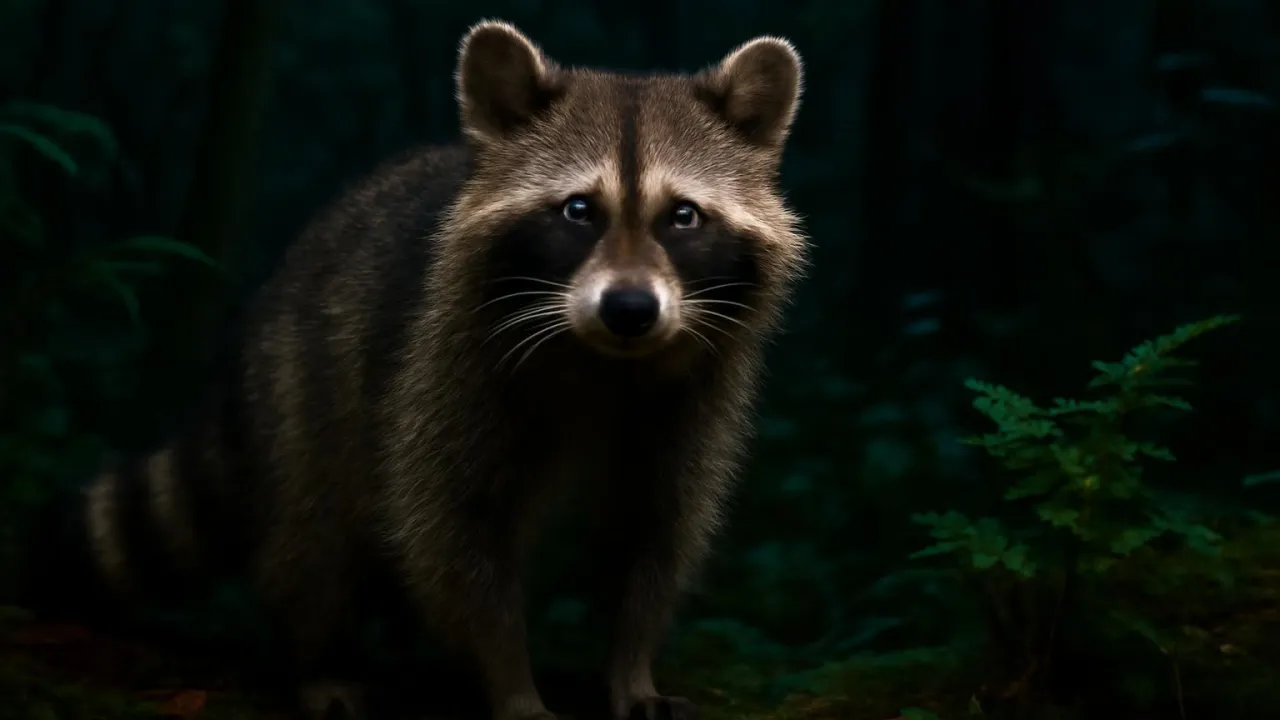
Raccoons can remember the solution to puzzles for at least three years!
✨ Word Sparks (Grade 2 Glossary)
Tap 🔊 to hear
claws
Sharp nails on animal paws
nests
Homes made by animals
active
Moving and working a lot
🪝
Have you ever seen a raccoon washing its food near water?
1
Raccoons Wear Masks
Raccoons have black masks that make them look like little bandits. Their gray fur helps them blend into forests. They use their sharp to climb trees easily.
2
Where Do They Live?
Raccoons live in forests and cities near water like rivers or lakes. They build in tree holes or under buildings. They are most at night when it is dark.
3
What Do They Eat?
Raccoons eat fruits, insects, small animals, and sometimes garbage. They use their clever paws to grab food and wash it before eating. This helps remove dirt and bugs.
Raccoons can remember how to open locks and latches even years later!
✨ Word Sparks (Grade 3 Glossary)
Tap 🔊 to hear
camouflage
Colors that help hide animals
nocturnal
Active and awake at night
omnivore
Animal that eats plants and meat
🪝
Did you know raccoons have clever paws that help them solve problems?
1
Masked Bandits of the Night
Raccoons have black masks that help them in the dark forest. Their gray fur blends with tree bark and shadows for protection. This camouflage helps raccoons avoid predators at night.
2
Habitat and Behavior
Raccoons live in forests, wetlands, and urban areas where water is nearby. They are animals, meaning they are active mostly at night. They build dens in tree hollows or abandoned burrows.
3
Diet and Adaptations
Raccoons are that eat fruits, insects, eggs, and small animals. Their sensitive front paws allow them to find and handle food carefully. Washing food in water helps remove dirt and makes it easier to eat.
4
Survival Skills
Raccoons use their sharp claws to climb trees quickly to escape danger. Their keen sense of touch helps them open containers and find hidden food. These adaptations make raccoons very good survivors.
Raccoons can remember solutions to complex problems for years, showing remarkable intelligence.
✨ Word Sparks (Grade 4 Glossary)
Tap 🔊 to hear
scavenging
Searching for leftover food
omnivores
Animals eating plants and meat
ecosystem
Community of living things and places
🪝
How do raccoons’ clever paws and masks help them survive in cities and forests?
1
Camouflage and Protection
Raccoons’ black facial masks reduce glare and improve their night vision, helping them spot food and avoid predators. Their gray fur blends with tree bark and shadows, providing excellent camouflage. This helps raccoons stay hidden from both predators and humans in urban and forest environments.
2
Habitat and Ecosystem Role
Raccoons thrive in diverse habitats including forests, wetlands, and urban areas near water sources. They play important roles in by controlling insect and small animal populations. Their also helps clean up waste, but they sometimes cause problems by raiding garbage bins.
3
Diet and Physical Adaptations
As , raccoons eat fruits, insects, eggs, and small animals, adapting their diet to available food. Their highly sensitive front paws allow them to open containers, solve puzzles, and wash food before eating to remove dirt and parasites. These adaptations increase their chances of survival in varied environments.
4
Human Interaction and Conservation
Raccoons often live near humans and can become pests by trash or nesting in attics. Despite this, they are not endangered and adapt well to urban life. Conservation efforts focus on managing human-wildlife conflict and educating people about living safely alongside raccoons.
Raccoons’ tactile front paws rival primates, enabling complex problem solving and tool use.
✨ Word Sparks (Grade 5 Glossary)
Tap 🔊 to hear
omnivore
Animal eating both plants and meat
nocturnal
Active during the night hours
taxonomy
Science of classifying living things
🪝
What makes the raccoon’s dexterous paws and masked face perfect for survival in diverse environments?
1
Taxonomy and Scientific Classification
The raccoon, scientifically named Procyon lotor, belongs to the family Procyonidae within the order Carnivora. Despite its carnivore classification, it is an with a highly varied diet. This classification highlights its evolutionary adaptations to diverse habitats across North America and parts of Central America.
2
Physiological Mechanics and Adaptations
Raccoons possess highly sensitive, nimble front paws with five fingers, allowing them to manipulate objects and open complex containers. Their facial mask reduces glare and improves night vision, aiding foraging. Their strong claws enable efficient climbing and digging, essential for escaping predators and finding food.
3
Ecological Role and Human Impact
Raccoons play a critical role as omnivorous scavengers in ecosystems, controlling insect populations and dispersing seeds through fruit consumption. Urban expansion has increased raccoon-human interactions, sometimes causing conflicts due to their scavenging behavior. Conservation efforts aim to balance coexistence and reduce negative impacts on both raccoons and humans.
4
Conservation Status and History
Currently, raccoons are classified as Least Concern by the IUCN due to their adaptability and wide distribution. Historically, raccoons were hunted for their fur but have rebounded due to protective laws and urban adaptability. Their ability to thrive in varied environments demonstrates impressive evolutionary success.
5
Quantitative Comparisons and Facts
Adult raccoons typically weigh between 8 and 20 pounds (3.6 to 9 kg) and measure 16 to 28 inches (40 to 70 cm) long. They can run up to 15 miles per hour (24 km/h) and climb trees swiftly to escape danger. Their front paws have tactile sensitivity comparable to primates, making them uniquely skilled among mammals.